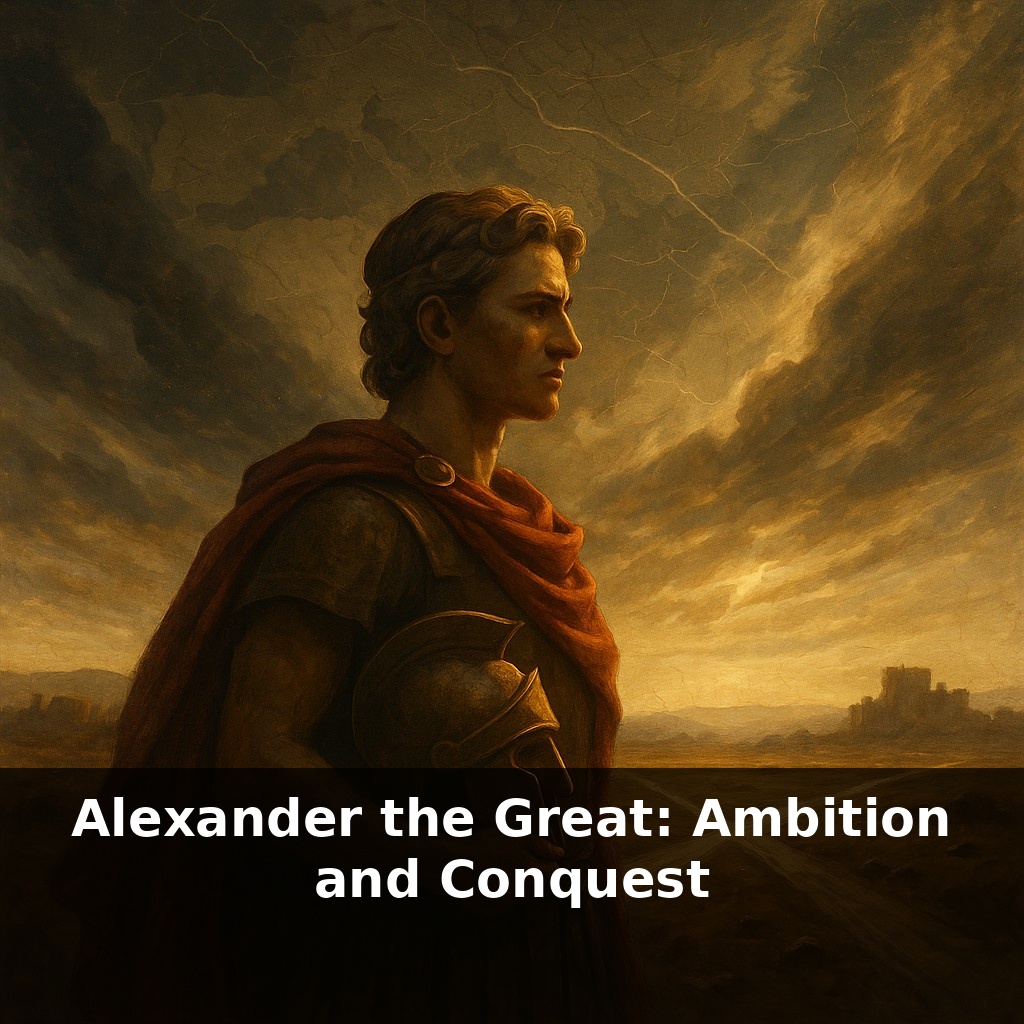
By his early thirties, Alexander controlled more land than any previous Western ruler—yet he never saw a single “map” of his own empire. Tonight, we drop into one dusty crossroads on his march east and ask: was this brilliance in motion…or an empire already cracking?
Alexander moved like a storm front: one city debating surrender while the next, hundreds of miles away, had already fallen. To his officers, the pace felt less like a march and more like being pulled along by weather—unpredictable, but with a clear prevailing direction: always forward, always east. Behind the urgency sat years of planning he hadn’t done himself. Philip II had drilled the army into a hardened instrument; Alexander used it like an improvising musician, bending a familiar tune into something startling. He shifted columns over mountain passes in days that should have taken weeks, appeared where Persian scouts said he couldn’t possibly be, and forced enemies to fight on his terms. Yet every time he lunged ahead, lines of supply stretched thinner, local resentments grew quieter—but not weaker—and the distance between his presence and his authority widened. That gap is where our story really tightens.
His great advantage was that he began with a machine already humming. Philip II had turned seasonal peasant levies into year‑round professionals paid to fight, march, and drill. Alexander inherited not just soldiers, but a culture where discipline was muscle memory. He added something Philip never fully had: reach. Persian royal roads, seized ports, and captured treasuries let him move men, grain, and silver like currents in a widening river. And because he pushed into regions with their own deep traditions, he learned to keep existing elites in place, tweaking customs just enough to point them toward his next objective rather than against him.
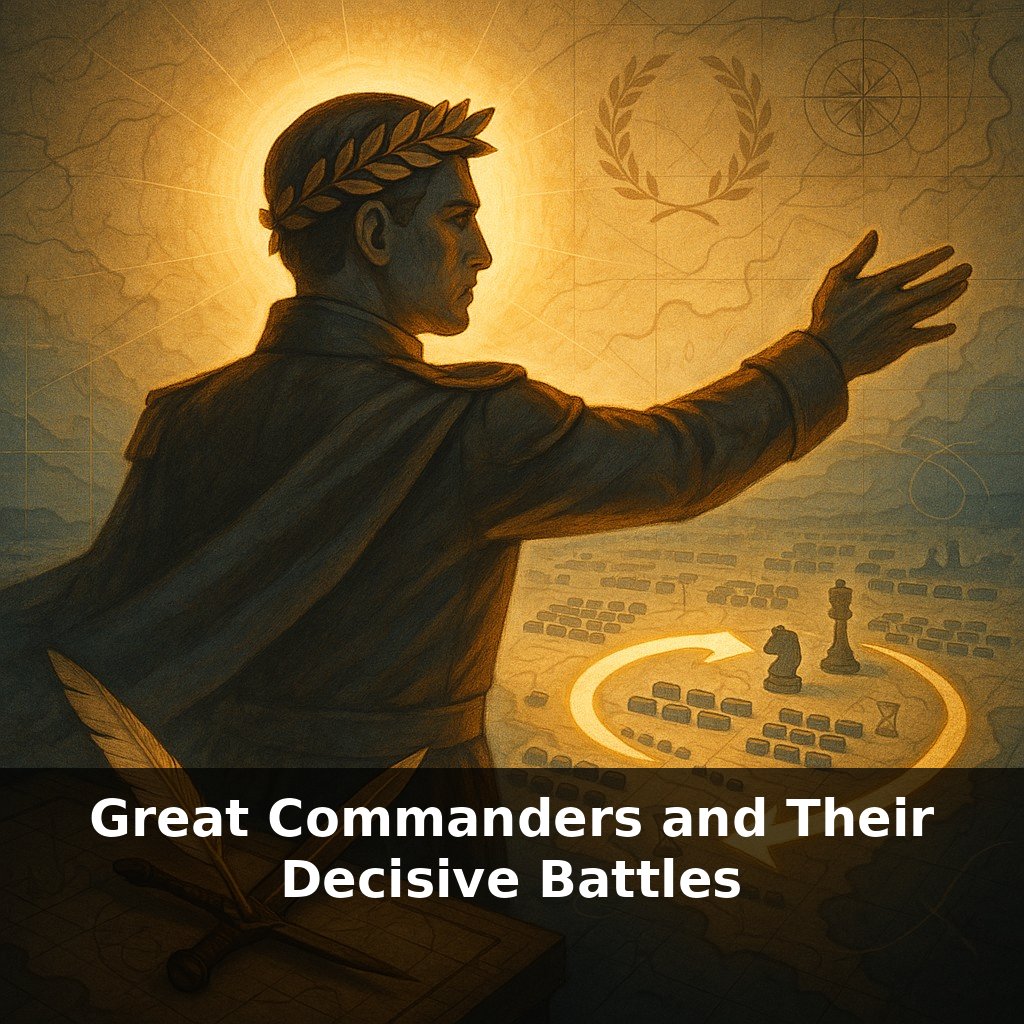
The sharpened tool Philip left him had three main cutting edges: the sarissa phalanx, the elite Companion cavalry, and a growing set of specialist troops. Alexander’s genius was how he swung all three together at speed.
The phalanx was his anvil. Six‑meter pikes bristled out in dense ranks, not designed to chase but to pin. Once an enemy line fixed on that moving hedge of spear‑points, shifting away was slow and costly. Alexander didn’t ask these men to win by themselves; he asked them to hold attention, absorb shock, and create a predictable center around which he could improvise.
The hammer was the Companion cavalry, several thousand horsemen who fought close to him personally. They were not scattered raiders; they were a precision wedge aimed at moments, not just places. At Issus and Gaugamela, he waited for tiny misalignments—Persian units overpursuing, gaps opening as commanders tried to outflank him—then drove in at an angle toward the opposing king. Killing Darius outright was ideal, but routing his guard and shattering his nerve worked almost as well. Strategic objectives—enemy leadership, cohesion, and morale—mattered more than the ground itself.
Around this core, Alexander layered what we’d now call “enablers”: archers who could disrupt enemy formations before contact; agile light infantry from the Balkans who handled broken terrain; engineers who turned rivers, walls, and siege towers into solvable problems rather than show‑stoppers. A stubborn city was not just battered; it was isolated by causeways, mining, and naval blockades, and then assaulted from unexpected directions.
His movement philosophy was equally aggressive. He refused to let his opponents dictate the tempo. Forced marches carried troops to battlefields days before they were “supposed” to arrive. Night crossings of rivers flipped assumptions about where an army of his size could appear. When setbacks hit—disease, local revolts, hostile geography—he compensated with overconcentration of force at key points, battering through bottlenecks rather than pausing for a neat, conservative buildup.
It all looked unstoppable from the outside. Inside, the system depended heavily on one man’s nerve: a commander willing to be physically present at the decision point, where the anvil held, the hammer struck, and failure meant more than a lost skirmish—it meant the unraveling of every careful piece around it.
Alexander’s campaigns often felt less like a straight march and more like conducting a piece of music in shifting time signatures. He’d let one “section” fall nearly silent—say, a quiet garrison in a recently taken city—while another exploded in sound: a sudden cavalry thrust far ahead. To his enemies, this looked like recklessness; to his staff, it was pattern and counter‑pattern.
Take his handling of elites in new territories. He didn’t just leave local rulers in place; he frequently married into their networks, promoted their nobles into his command structure, and staged joint religious ceremonies. The signal was calculated: resistance meant isolation, cooperation meant elevation. Over time, some cities sent contingents to his army not out of fear alone, but because serving under him became a route to prestige.
Yet every time he reassigned veterans to hold distant satrapies, the core that knew his methods intimately thinned. New recruits came from farther afield, bringing different loyalties, dialects, and expectations. The more varied the “orchestra,” the more essential the single conductor at its center—and the harder it became for anyone else to step onto that podium.
Alexander’s story points forward as much as back. Modern states and firms still chase gains faster than they can train successors or align distant teams. His arc warns that speed without depth turns victory into a mirage: dazzling, then gone. Think of leadership like soil after a flash flood—briefly soaked, then cracking if roots are shallow. As new digs, inscriptions, and DNA work re‑open his world, they also sharpen current debates on soft power, legitimacy, and how far any single will can really stretch.
Alexander’s arc leaves us with a live question: how much strain can any system take before its center snaps? His officers soon carved up what he’d linked, like ice breaking along hidden fractures. Follow those cracks forward and you see a pattern resurfacing in boardrooms, startups, even online communities whenever momentum outruns memory.
Start with this tiny habit: When you sit down at your desk each morning, whisper to yourself one “Alexander move” for the day by finishing this sentence: “Today I’ll advance my empire by taking one step toward ______,” and fill in a single, concrete goal like “emailing that potential mentor” or “reading two pages on leadership.” Right after you say it, draw the tiniest “map” in the corner of your notebook—a dot for where you are and an X for where that one step leads, like Alexander planning a mini‑campaign. In the evening, when you touch your phone to plug it in, glance at that little map and say out loud, “Campaign continued,” whether you nailed the step or not, just to reinforce that you’re thinking long-term like he did.