“Your best collaborator might already be on your laptop—and it doesn’t sleep, get bored, or run out of ideas.” A developer types a single comment, and seconds later a full function appears. A teacher drafts a lesson in minutes. The paradox: more automation, yet more deeply human work.
Developers are shipping features in hours that used to take days. Support teams are handling more conversations with less burnout. Designers are testing ten versions of a concept before lunch. The common thread isn’t just speed; it’s a quiet shift in *who* does what in our work.
In earlier episodes, we talked about how LLMs learn and where they can go wrong. Here, we zoom in on the frontier that matters most for your daily life: how humans and models can split the workload so both do what they’re best at.
Early pilots point in a clear direction: when people stay “in the loop” as editors, strategists, and decision‑makers, quality rises along with output. The surprising part is that the biggest gains don’t come from replacing tasks, but from redesigning workflows so the model handles the mechanical scaffolding—and you reclaim time for judgment, nuance, and genuinely original thinking.
But this shift isn’t automatic; tools alone don’t guarantee better outcomes. The real leverage comes from *how* you structure the back‑and‑forth. Think of a researcher skimming dozens of papers: the model can surface patterns, but the human decides which threads are worth tugging. A marketer might ask for ten campaign angles, not to accept one blindly, but to notice what’s missing and refine the brief. In practice, the most effective teams treat the model less like a vending machine and more like a fast, opinionated collaborator they must still supervise.
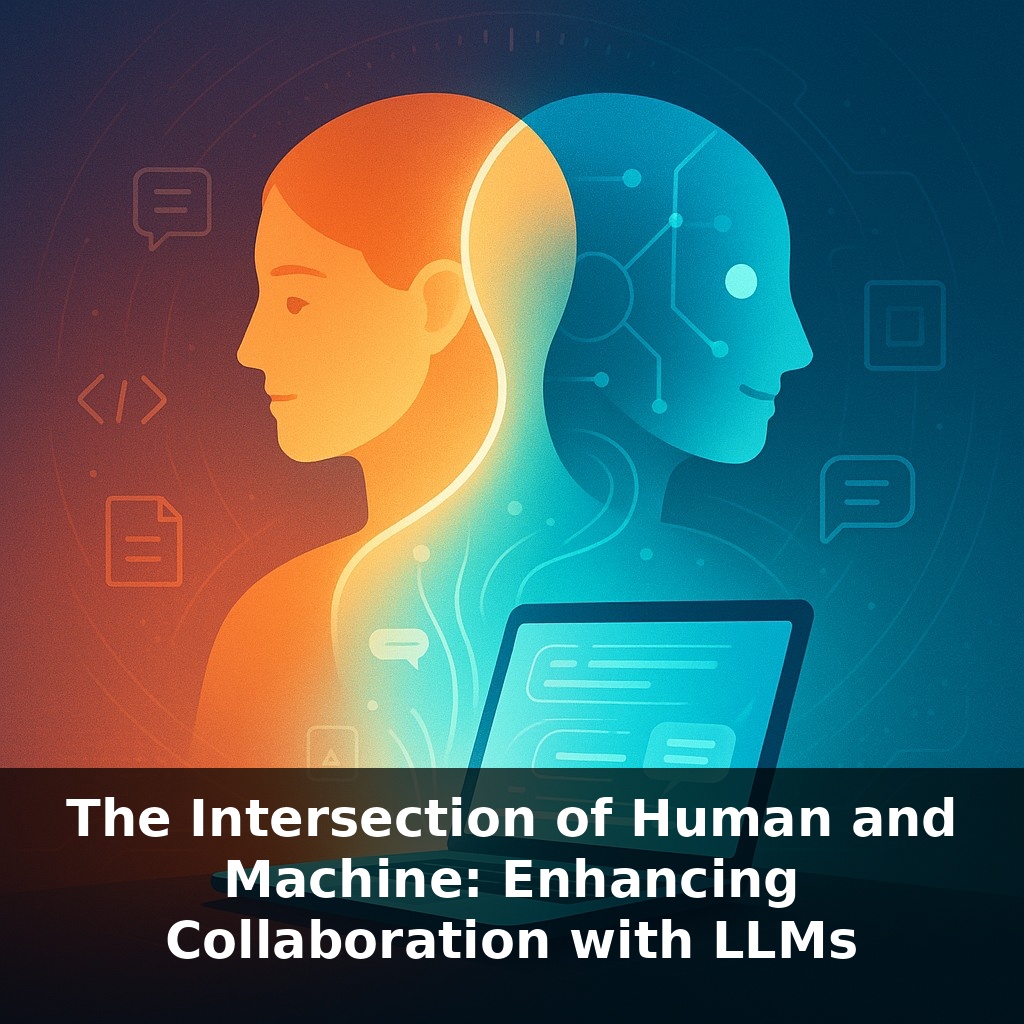
Developers, teachers, and support agents aren’t just “doing the same job faster” with LLMs; their *job boundaries* are quietly shifting. The most effective uses so far point to a division of labor that looks less like automation and more like a relay race: the model explodes the space of possibilities, the human narrows, judges, and integrates.
You can see this in the numbers. GitHub’s 2023 study of 12,000 developers didn’t just show Copilot users finishing coding tasks 55% faster; those developers also reported feeling *less drained* and more satisfied. In customer support, the NBER study led by Erik Brynjolfsson found that agents assisted by GPT-style tools resolved issues 14% faster while boosting customer satisfaction by 19%. What changed wasn’t just speed—it was *where* humans invested their energy: de‑escalation, tone, and complex edge cases that no static script could anticipate.
Executives are noticing the same pattern at a strategic level. In an Accenture survey, 87% said they expect AI to augment roles rather than replace them. That expectation only makes sense when you accept a hard truth: these systems don’t “understand” the way we do. They’re extraordinary pattern machines, not conscious colleagues. Treat them as if they were infallible thinkers and you invite subtle failures: plausible‑sounding but incorrect answers, or decisions that quietly encode training‑data biases.
The practical implication is a new craft: *prompting as design*, and *review as responsibility*. A product manager might ask for five alternative user stories, then deliberately probe the weakest one: “Where would this break?” A lawyer might draft a clause with help, then manually cross‑check every reference against current law. The model accelerates the first draft; the human owns the factual backbone and the ethical frame.
One useful mental model comes from finance: think of the LLM as a high‑volatility asset in your portfolio of thinking. It can deliver outsized returns in idea generation and synthesis, but only if balanced with “lower‑risk” processes—your domain knowledge, checks, and slow, careful reasoning. Over‑allocate to the model and you court hallucinations; under‑allocate and you leave value on the table.
In practice, the frontier skill isn’t asking, “What can this replace?” but, “Where am I cognitively overloaded—and which parts are safe to offload without surrendering judgment?”
A product designer might start with a rough sketch and ask the model to propose five drastically different directions: one minimalist, one playful, one accessibility‑first, one premium, one experimental. None will be perfect, but each exposes blind spots—constraints the designer hadn’t considered, audiences they weren’t targeting, failure modes they hadn’t stress‑tested. A researcher can paste messy interview notes and ask, “Show me three conflicting themes, and how they might both be true.” The value isn’t in a final answer; it’s in surfacing tensions you can then probe with real users.
Consider how teams at companies like Duolingo use this in practice: writers define tone, pedagogy, and guardrails, then let the model draft many micro‑variations of hints, explanations, or jokes. Human experts keep or discard them, but over weeks they notice patterns—common misunderstandings, phrases that delight learners in certain regions, edge cases where confusion spikes. The tool doesn’t replace their judgment; it widens the search space so those judgments land where they matter most.
Teams that treat AI as a thinking partner will soon cultivate new micro‑roles: one person curates examples, another stress‑tests outputs, a third translates insights for stakeholders. Your “AI fluency” may matter as much as traditional credentials. Expect hiring screens to include live collaboration with a model, much like a pair‑programming session. And just as cities grew around railways, office cultures may re‑organize around shared AI workspaces—persistent, searchable trails of questions, drafts, and decisions.
Your challenge this week: pick one recurring task—planning a meeting, outlining a report, reviewing code—and turn it into a live experiment. First, do it solo and note your choices. Next time, bring an LLM in *only* for exploration: alternatives, edge cases, missing perspectives. Compare outcomes. Where did your judgment sharpen because you had more “raw material” to shape?