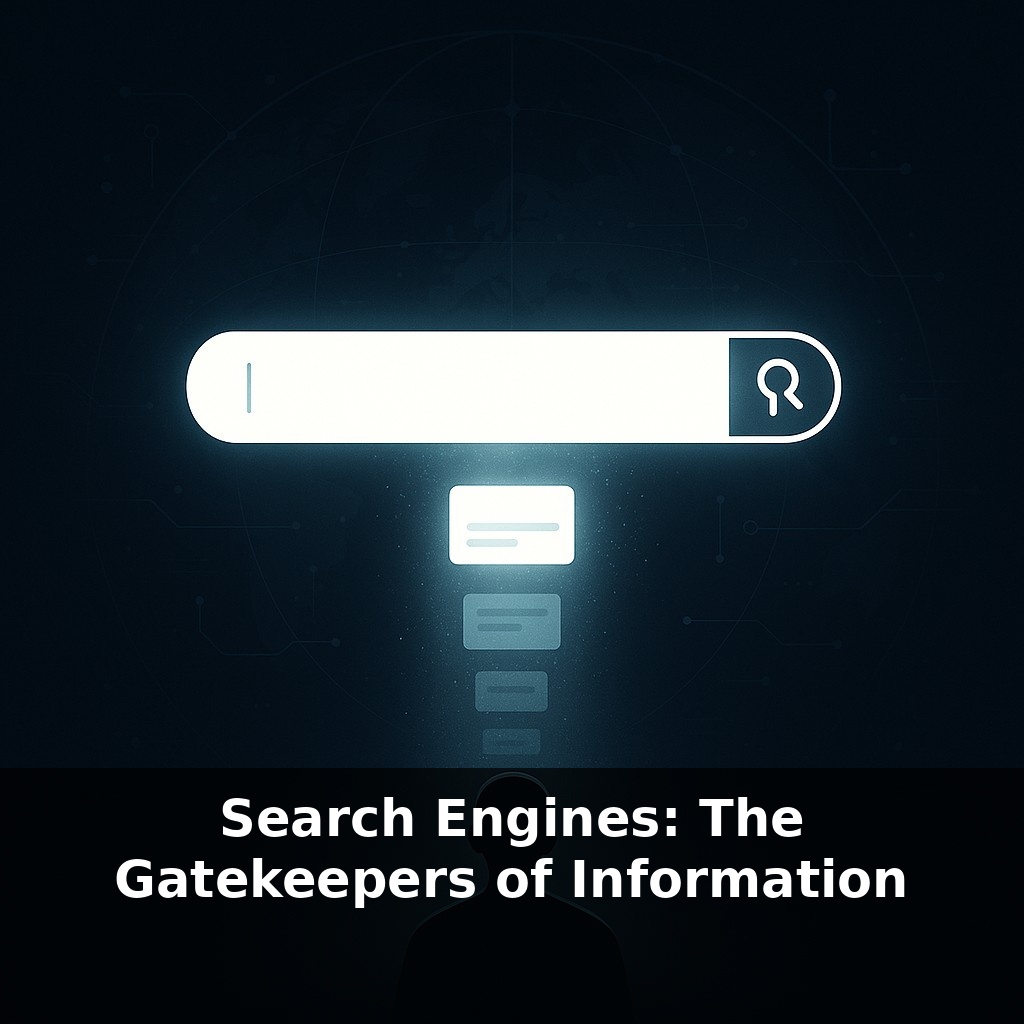
Roughly half the visits to websites start the same way: someone types a few words into a search box. One silent decision later, a short list appears—and most people never click beyond the first result. With a single keystroke, an unseen system decides the scope of your knowledge access.
That quiet moment after you hit enter on a query doesn’t just surface facts—it sets the starting line for everything else you’ll learn on that topic. Studies suggest that more than half of all website visits begin with a search, and that most clicks stop at the first few results. That means the order of links on a single page silently tilts entire conversations: which news stories spread, which products sell, which ideas feel “common sense.”
Behind the scenes, ranking systems don’t just match words; they infer what you *meant*, weigh what others clicked, and promote pages that fit corporate rules about safety, quality, and legality. In practice, a handful of companies now sit between almost any question and its plausible answers. In this episode, we’ll trace how that power works in detail—and what it means when the map of the web is drawn by entities you don’t elect and can’t easily audit.
Think about everything you *don’t* search for. Health scares you’d rather ignore, political topics that feel overwhelming, niche questions you assume “won’t be in there anyway.” Those absences matter, because search data doesn’t just answer questions—it trains the system on what society appears to care about. When millions of people suddenly search for a new virus, a celebrity scandal, or a conspiracy theory, rankings shift, news outlets respond, advertisers follow, and regulators pay attention. Search stops being a private tool and becomes a collective spotlight that can distort as much as it reveals.
Type “best baby formula,” “climate change hoax,” or “how to invest” into a search bar and you’re not just asking a question—you’re entering a quiet competition. Behind the single line of text you see, thousands of pages are being scored, sorted, and silently discarded in milliseconds. To win, they have to pass three broad tests: *Can we find it? Can we trust it? Will people like it?*
“Can we find it?” is about crawling and indexing at industrial scale. Bots race across the web, following links, parsing code, and extracting text, images, and structured data. Pages that load slowly, block crawlers, or sit in isolated corners of the web may exist, but effectively vanish from what feels like “the internet” to most users. Access to attention begins as a technical eligibility problem.
“Can we trust it?” turns that giant index into a hierarchy. Systems estimate “authority” using signals like links from reputable sites, consistency across sources, and expertise indicators (think medical institutions vs. anonymous blogs). They down-rank spam, malware, and low‑effort content farms. Officially, paid ads don’t influence these organic judgments, but commercial interests still seep in through which sites invest in optimization, compliance, and legal teams.
“Will people like it?” feeds user behavior back into the loop. Did searchers bounce immediately? Did they reformulate the query? Do similar users stick with certain results? Engagement metrics help reshape rankings over time, so each click is also a vote that trains the system. That can improve relevance—but it also risks amplifying the familiar, the sensational, and the already popular.
To refine all of this, search engines increasingly lean on machine learning: systems that detect intent (“jaguar” the car vs. the animal), infer synonyms, and generate direct answers on the page. Helpful—but when the answer box appears, many never click through, shifting power from publishers to the platform itself.
Like a fast-moving stock market where algorithms price assets every second, this ranking never fully settles. A breaking news story, a new law, a wave of coordinated spam, or a shift in public mood can reorder results overnight—changing which voices cash out in attention and which go quietly to zero.
Open a private window and search “news.” Then do it again, signed in, on your phone. The lists you see may overlap—but not perfectly. Past clicks, location, device, and language nudge different outlets and stories upward, even for a seemingly neutral topic. Now try something messier, like “diet advice.” One person might see government guidelines and university hospitals; another might see influencers, supplement shops, or a subreddit thread. The intent looks similar, but the surrounding data about each searcher pulls the result set in different directions.
Here’s where things get stranger: change only the *timing*. Search “mortgage rates” right after a major central bank announcement, and financial blogs, newsroom explainers, and lender pages are reshuffled within hours. A week later, the same query can feel calmer, dominated by longer‑lived guides. It’s less like opening a reference book and more like checking tides: location, past behavior, and current events quietly combine to decide which shoreline of information you’re allowed to stand on.
As generative answers move into the spotlight, search starts to look less like a map and more like a custom itinerary, stitched together on the fly. That’s convenient—until you realize fewer people are visiting the “towns” (publishers) funding journalism, research, and niche forums. New rules, audits, and open‑source alternatives might rebalance this, but they’ll also raise fresh questions: who pays for the crawl, and who decides which voices get surfaced—or synthesized—next?
Your challenge this week: instead of accepting the top result, deliberately scroll to page two once a day. Treat it like exploring side streets off a busy avenue—notice which viewpoints, smaller sites, or unfamiliar sources appear only when you wander. By week’s end, ask: did those detours change how confident you felt about any topic?