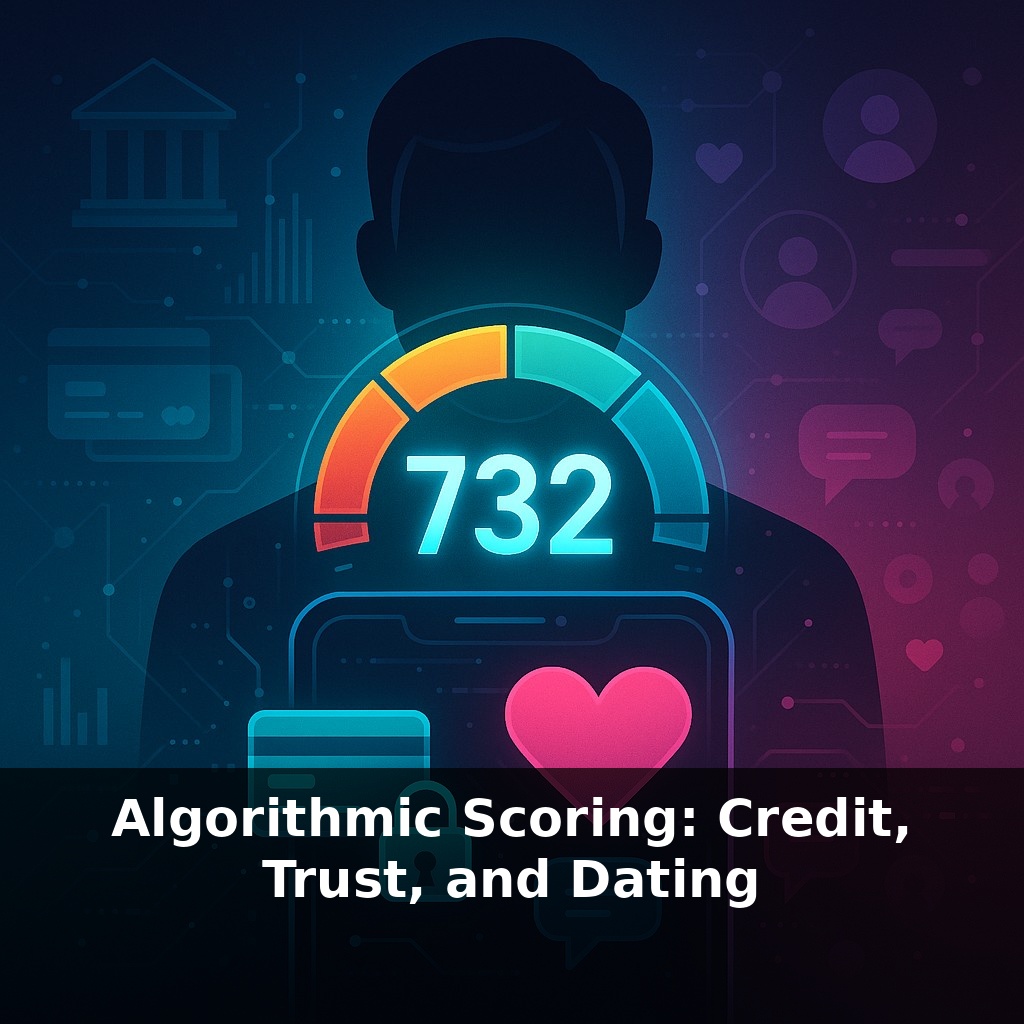
Without you knowing, an unseen scorecard is impacting your financial freedom, your evening plans, and even your romantic future. In one major dating app, every swipe once fed an invisible “desirability” number you were never allowed to see—yet it quietly shaped who you met, and who never appeared on your screen at all.
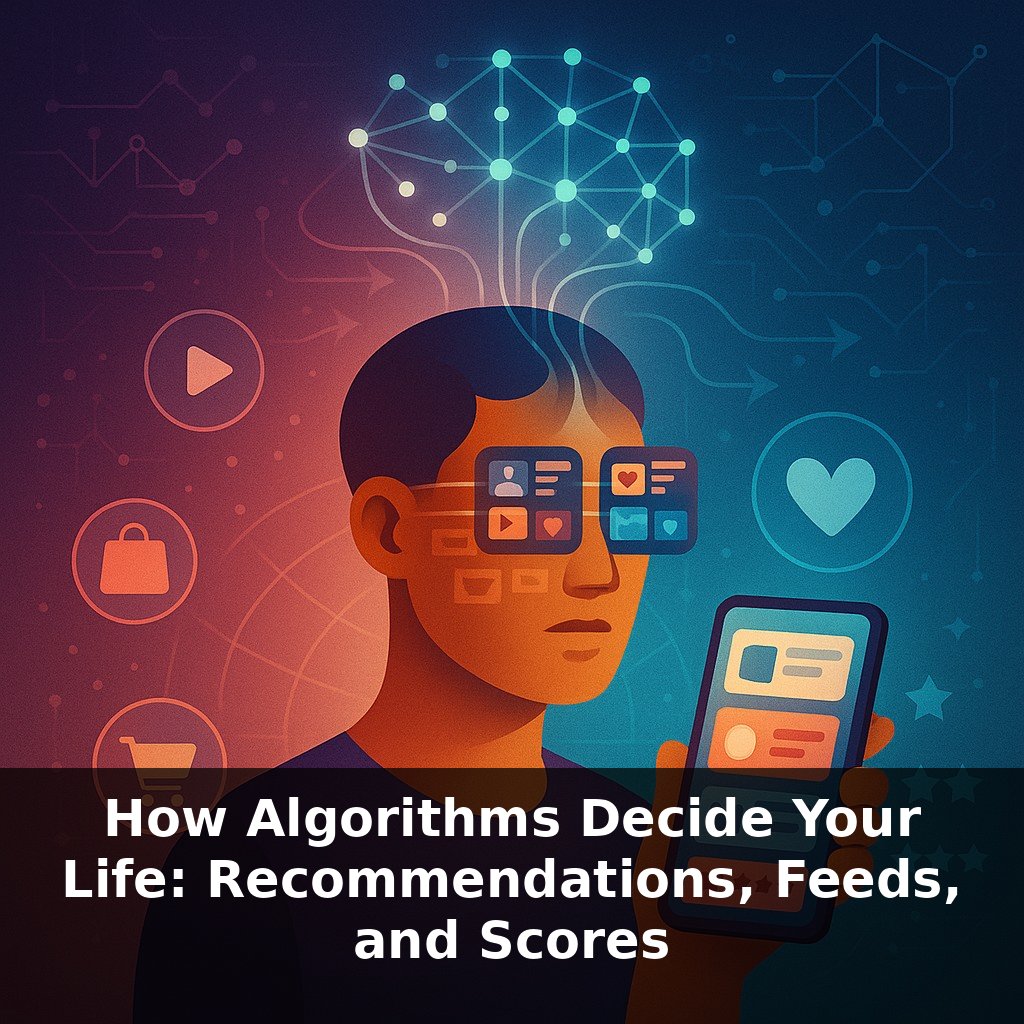
Roughly nine out of ten consumer lending decisions in the US lean on a three‑digit credit score most people never helped design and barely understand. And credit is just one front. Platform “trust” scores now seep into everyday life: a slightly higher Uber driver rating can mean noticeably fuller paychecks; an Airbnb guest with a past complaint may see fewer welcoming doors; a dating profile’s past swipes can quietly shift who appears as a “good match” tomorrow. In earlier episodes we talked about feeds and recommendations deciding what you see. Here, the stakes jump: these scores can decide where you live, who will drive you, and who might love you back. Many rely on data you didn’t realize was being recorded, processed by models you’re not allowed to inspect, used for decisions you may never be told were algorithmic at all.
Those numbers don’t just sit in a database; they travel with you. A low score might mean a pricier car loan today, but also a landlord declining your rental application next month, or a bank lowering your credit limit next year. On platforms, your past five-star rides or complaints can follow you like a subtle reputation trail, shaping which hosts accept you or which riders you’re matched with. And not all scores are official. Some operate in the background as quiet ranking systems, blending fragments of your behaviour into a single judgment that others act on, even if they never see the number itself.
Think of three broad families of scoring systems. First are formal, regulated scores like FICO. They mostly draw from familiar financial records: payment history, how much credit you use, length of accounts, new credit, and mix of loans. Lenders like them because they’re standardized and easy to plug into risk models. Regulators like them because at least there are rules about what can be used and how you can dispute errors. But the flip side is rigidity: if you’ve never had a credit card or traditional loan, you might not exist in this universe at all.
That’s where the second family comes in: “alternative data” scores. Here, companies reach for phone bills, rent payments, even patterns in your bank account transactions to infer how reliably you handle money. The pitch is inclusion: roughly 60 million thin‑file or “invisible” consumers could be assessed. But inclusion via data comes with strings attached. Suddenly, how often you overdraft, which subscriptions you keep, or how irregular your income looks can be fed into a risk model. Some firms even experiment with behavioural cues—time of day you apply for a loan, how fast you scroll through terms—on the theory that they correlate with default. These signals may be weak individually, but in huge datasets they can sway decisions.
The third family lives mostly on platforms: star ratings, complaint histories, and internal rankings. A slight bump in a ride‑share rating can change which trips you’re offered or how often you’re matched in surge zones. A past dispute on a home‑sharing site might nudge you down in search results. Dating apps quietly model not just what you say you want, but who you linger on, who you like back, and who people “like you” tend to choose. Over time, that feedback loop can cluster users into semi‑visible tiers, where people with similar engagement or response patterns increasingly see one another.
Across all three families, the same tensions show up. Data pulled in for one purpose gets reused for another. Variables that seem neutral—ZIP code, device type, even preferred payment method—can act as stand‑ins for race, class, or age. And while models are sold as objective, they’re trained on past decisions shaped by human prejudice. If a bank historically approved fewer loans in certain neighbourhoods, a model trained on that history can “learn” to keep doing it—just faster and with better math.
A landlord might never see your ride‑share history, but a tenant‑screening company might quietly fold an eviction filing, a missed utility bill, and a scraped court record into a “risk index” that nudges your rental application to the bottom of the pile. A dating app won’t label you “tier 3,” yet its pairing model could still learn that people who match with you tend to reply less often, and slowly throttle how widely you’re shown. In some countries, phone‑based lending apps turn call logs and top‑up patterns into micro‑loan limits, so a broken phone or a change in SIM card can suddenly shrink your borrowing power. Even your phone model or browser can matter: some fraud systems flag older devices or shared computers as “riskier,” quietly steering you toward higher deposits or stricter checks. Like a portfolio manager constantly rebalancing investments, these systems can keep updating their view of you—only here, the “asset” they’re repricing is your future access to money, housing, and relationships.
Portable reputation could soon travel with you like a digital passport: one tap and a landlord, lender, or host sees a condensed history from many apps. Regulators are floating “algorithmic nutrition labels” so you can glimpse what feeds these scores. New tools may let you contest bad data without exposing everything, using privacy tech that shares patterns, not raw details. But if life’s key doors all start asking for the same pass, opting out may feel less like a choice and more like self‑exile.
So the frontier isn’t just higher scores, but fairer ones: systems that explain themselves, let you appeal, and don’t punish you forever for one rough season. Your future leverage may be less about gaming numbers and more about demanding “show your work”—treating these scores not as verdicts carved in stone, but drafts you’re allowed to read, question, and help rewrite.
Here’s your challenge this week: Pick one algorithmic system you actively use—your credit score app, a dating app, or a platform that gives you a “trust” or “reputation” score—and change **one behavior** specifically to “game” that algorithm for 7 days (e.g., adjust your dating profile prompts/photos to see what matches change, pay down a specific credit line to see what score shift you get, or change how often you rate/review drivers or sellers). Before you start, take a screenshot of your current score, matches, or recommendations, then take another at the end of the week and compare what actually changed. Finally, tell one friend exactly what you did to influence the system and what shifted, so you’re not just being scored—you’re investigating how the scoring works.