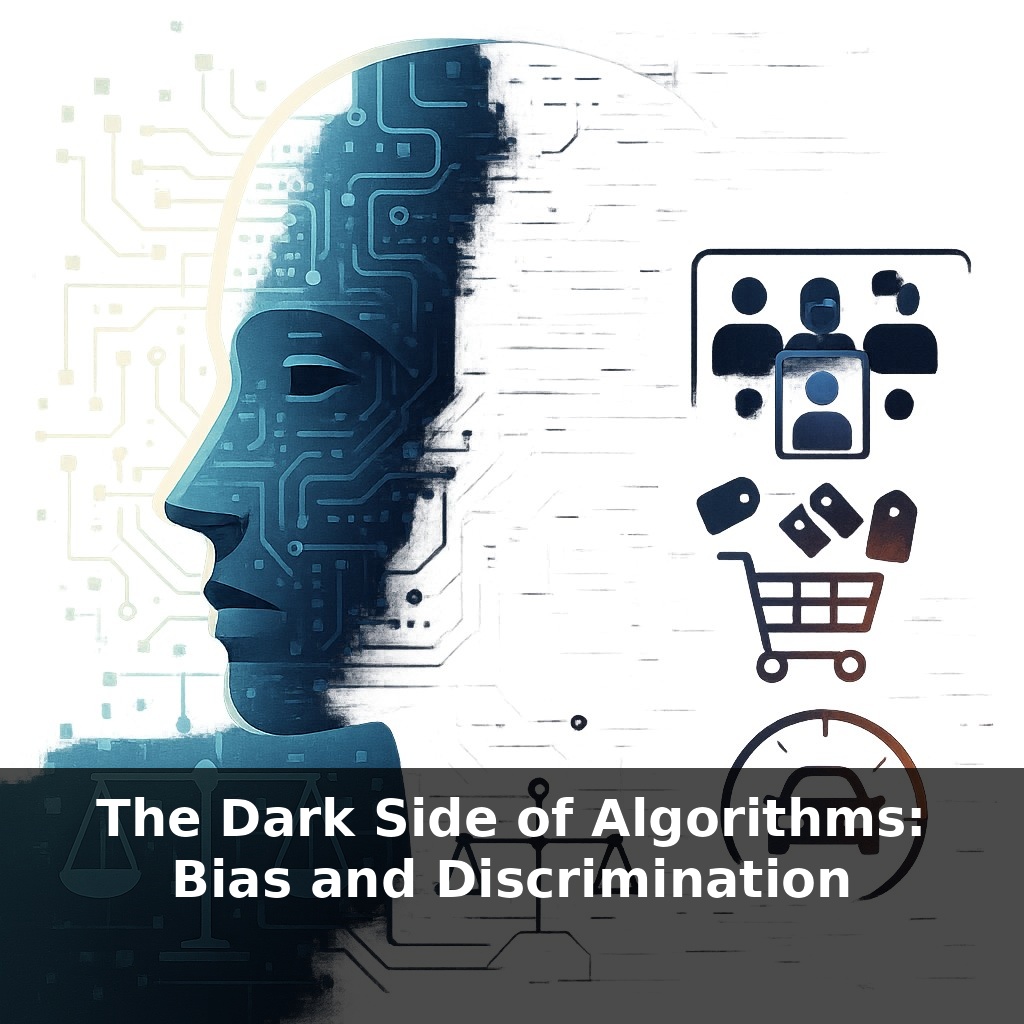
“Beyond mere reflection, algorithms craft the rules we live by.” A woman is denied a job she’s qualified for. A family pays more online for the same groceries. A driver is flagged as “high risk” by software. The twist: no human directly said “discriminate” in any of these cases.
“Beyond mere reflection, algorithms craft the rules we live by.” A woman is denied a job she’s qualified for. A family pays more online for the same groceries. A driver is flagged as “high risk” by software. The twist: no human directly said “discriminate” in any of these cases.
In earlier episodes, we saw how recommendation and scoring systems quietly steer attention, money, and opportunity. Now we zoom in on the uncomfortable part: when those invisible rules favor some groups and quietly punish others. A hiring tool might skim thousands of résumés in seconds, but still “prefer” applicants who look like yesterday’s workforce. A pricing system might nudge up costs in neighborhoods it predicts will “tolerate” more, turning convenience into a penalty. Bias doesn’t only live in slurs or explicit policies; it can hide in the math that decides who gets seen, trusted, and rewarded.
Sometimes the bias is obvious in the outcomes; other times it’s buried so deep that even the creators struggle to trace it. A facial recognition system stumbles far more on dark‑skinned women than on light‑skinned men. A “risk score” quietly nudges judges and lenders in harsher directions for some groups than others. A résumé filter learns to favor one kind of candidate because that’s who was hired before. These aren’t just technical glitches—they’re signals that the data, goals, and shortcuts we bake into systems can harden old inequalities into automated routine.
Look closely at the numbers and a pattern appears: the “errors” are not random. That 34.7% error rate for dark‑skinned women in facial recognition wasn’t just a bug; it was a mirror of whose faces were under‑represented and whose accuracy was prioritized. When COMPAS flags Black defendants as “high risk” almost twice as often, it’s not that the software discovered some hidden criminal gene. It’s that historical policing and charging patterns were treated as neutral truth and fed back into the system as if they were fate.
Three forces usually collide here.
First, the data itself. Historical records of arrests, loan approvals, or past hires don’t just describe the world; they encode past prejudice and unequal opportunity. When those records become training input, yesterday’s patterns are treated as tomorrow’s goals.
Second, the target the system is optimized for. If you tell a model to “maximize click‑through,” “reduce default rates,” or “cut recruitment time,” it will pursue those metrics ruthlessly, even if that means sidelining fairness. The objective function rarely includes “treat groups equitably,” so efficiency wins by default.
Third, the shortcuts the model learns. Even if you delete obvious variables like race or gender, the system hunts for substitutes. ZIP codes, first names, commuting distance, school history, device type, even browsing time of day can act as stand‑ins. Strip out “gender” and the model can still learn that candidates from certain colleges or with certain hobbies tend to be male in the training data, then replicate that pattern.
This is why “more data” on its own can make things worse. At scale, tiny imbalances harden into statistical certainties. A small preference for one group in loans or job callbacks, multiplied across millions of decisions, becomes a structural barrier that no single decision‑maker ever explicitly chose.
The consequences are unevenly felt. When a pricing system quietly charges lower‑income shoppers more, it’s effectively a regressive tax coded in software. When content moderation misclassifies dialects or activist speech as “toxic,” it muffles precisely the voices already struggling to be heard.
Think about a landlord using a slick “tenant screening” dashboard. The interface feels modern and neutral, but behind the scenes it might quietly penalize applicants who’ve moved often, lived in certain ZIP codes, or attended underfunded schools—signals that correlate with race or poverty. No one clicks a button labeled “reject poor tenants,” yet the pattern emerges all the same.
Or consider a hospital triage tool that predicts who is likely to “benefit” most from limited treatments. If its training records come from a system where some communities got less care to begin with, it can mistakenly rank them as lower priority again, reinforcing the gap it learned from.
Even creative fields aren’t immune. A platform promoting “high‑engagement” artists can end up pushing work that resembles what’s already popular, sidelining styles and communities that didn’t get a foothold early on. Diversity becomes a rounding error in a growth chart.
In all these cases, neutrality is part of the illusion. The harm arrives in small, plausible‑sounding steps that rarely trigger alarm on their own.
By the time smarter cars, power grids, and hospitals all lean on these systems, unfair patterns could spread like cracks through a windshield—starting tiny, then splintering everywhere under pressure. Yet the same tools can surface inequities we once hand‑waved away. Think less “fire and forget” and more “urban planning”: impact audits, public input, and fairness goals baked in early, so each new model is treated as civic infrastructure, not just clever code.
Your challenge this week: pick one service you rely on—loan app, ride‑share, medical portal—and read its policy pages like a detective. Hunt for clues about how decisions are made, what data is logged, and whether appeals are possible. Treat it like walking a new city with a map: note the bright avenues, but also where the dead ends seem to cluster.