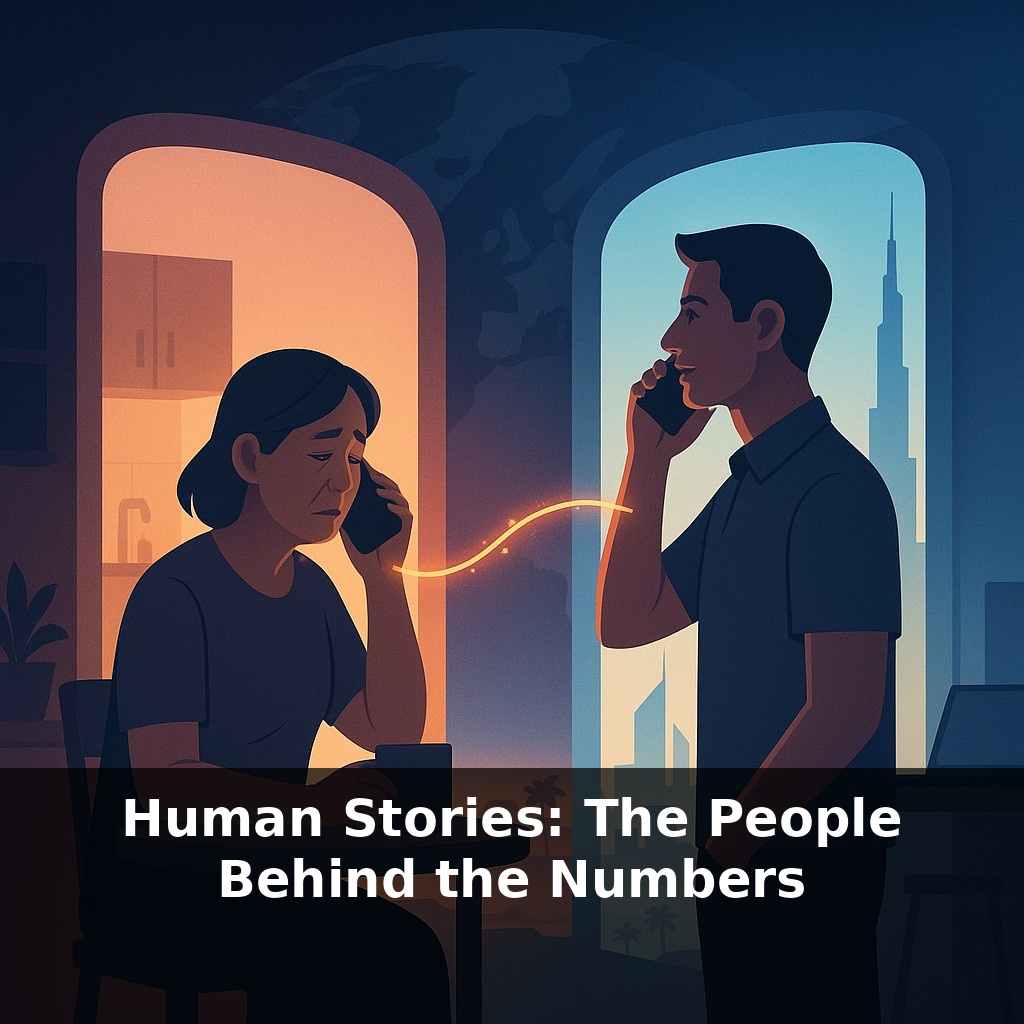
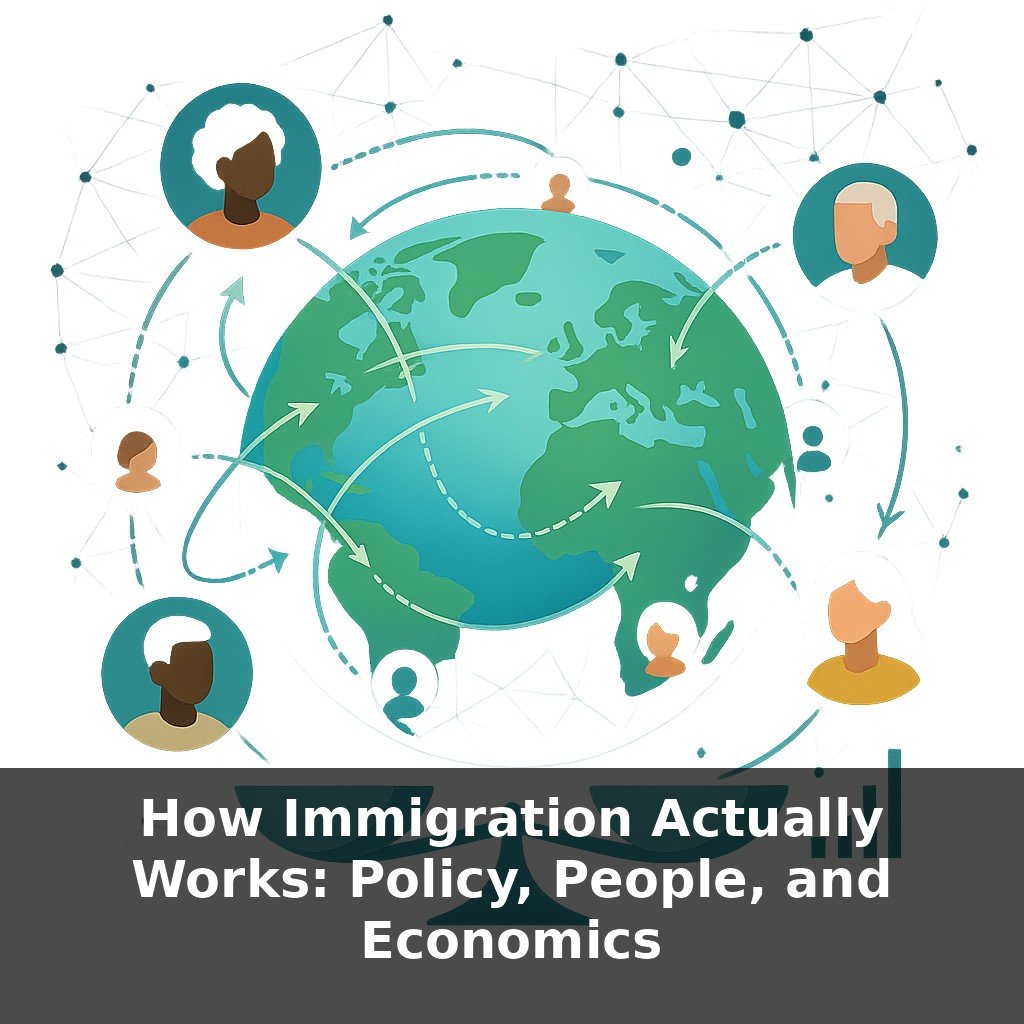
A woman in Manila wakes before dawn to call her son in Dubai. His paycheck keeps food on her table—just one thread in a vast, invisible safety net. Here’s the twist: migration isn’t mainly about borders and laws. It’s about millions of families quietly re‑writing their futures.
One in nine people on Earth relies on money sent from someone working far away. That’s not an abstract ratio; it’s the difference between staying in school or dropping out, fixing a leaky roof or losing the house. Behind every wire transfer receipt is a person who weighed risk and hope like items on a kitchen scale, then stepped onto a plane, a bus, or a boat.
In this episode, we zoom in from big numbers to the ground level—where decisions are messy, motives overlap, and chance encounters can change a life path. Laws, paperwork and visa quotas matter, but so do WhatsApp groups, cousins who “know a guy,” and the mood of a neighborhood when newcomers arrive.
Think of today as opening a photo album behind the statistics: individual faces, mixed motives, and long arcs of contribution that rarely fit into a headline.
A single statistic can hide a lifetime of detours. Two nurses may leave the same town for the same hospital abroad, yet one arrives on a skilled visa, the other as a spouse—starting at very different points on the same board game. Legal categories sort people into neat boxes, but real lives spill over the edges. A civil war, a drought, a sudden job offer, or a marriage can all redirect a path that once seemed fixed. And when they reach a new country, what happens next depends not just on policy, but on who meets them at the airport—and who won’t rent to them.
A statistic like “one in nine people depends on remittances” doesn’t tell you who set it in motion. The “who” is usually a mix of push and pull: a salary that won’t stretch, a cousin abroad with a spare couch, a country advertising student visas, a village where the rainy season has quietly stopped arriving on time. People rarely move for a single reason; it’s more like a stack of straws, and you only notice the last one that breaks.
Once someone moves, the path they walk is shaped by three big forces that don’t show up in headlines. First, the law: a work permit lets you change jobs; a tied visa doesn’t. A recognized diploma opens doors; an unrecognized one sends you back to square one. Two engineers with identical skills can diverge completely depending on whether the system sees them as “talent,” “family,” or “irregular.”
Second, social networks. A WhatsApp group sharing job leads can be as powerful as a government program. Newcomers who land where they already know someone usually find housing and work faster, but they may also get locked into certain sectors—“everyone from our town cleans offices” or “all of us drive taxis”—even when they trained for something else.
Third, attitudes in the host society. Research from the OECD shows crime rates among immigrants are generally the same or lower than among natives, yet fears about crime still shape where politicians build fences or cut integration budgets. That, in turn, affects whether newcomers meet mostly employers and neighbors—or mostly police and lawyers.
Zoom in further and you see patterns that disrupt stereotypes. Women now make up almost half of international migrants, not just following spouses but leading moves as nurses, domestic workers, tech specialists, students. Many become breadwinners for extended families, entrepreneurs in niche markets, or leaders in local schools and unions.
Over time, small acts compound: a language class attended after a night shift, a business license application, a neighbor who switches from suspicion to trust. Taken together, they help explain why immigrants’ overall fiscal impact in wealthy countries hovers around neutral in the short term but tends to turn positive as careers advance and children grow up.
A software engineer from Lagos arrives in Toronto with a job offer; a baker from El Salvador reaches Los Angeles with nothing but a cousin’s address. Ten years on, their stories may still end up in the same column of a report—“foreign‑born, working, paying taxes”—yet the routes there look nothing alike. The engineer might pivot into start‑ups, mentoring newcomers through a tech meetup. The baker might first work off the books, then slowly formalize a food truck, hire staff, and eventually sponsor relatives.
Think of each new arrival less as a “case” and more as an early‑stage investment portfolio: some moves flop, some tick along steadily, and a minority take off spectacularly—like immigrant‑founded firms that grow from side gigs to major employers. Alongside those headline successes are quieter returns: a grandmother interpreting at school meetings, a student translating medical forms for neighbors, a care worker freeing up local parents to work longer hours. None of that fits neatly into a spreadsheet, but it shapes the bottom line of daily life.
Policies written today will shape whose story gets to unfold tomorrow: the nurse who keeps a rural clinic open, the coder who seeds a new start‑up hub, the caregiver who holds three generations together. As climate shifts and populations age, more lives will hinge on how we draw these lines. Your challenge this week: when you encounter a “migration crisis” headline, look for the names, jobs, and dreams hidden beneath the numbers.
Each data point in a report began as someone packing a bag, knocking on a stranger’s door, or learning a new word on the bus ride home. The numbers will keep shifting, but the through‑line is curiosity: people testing new routes, new skills, new communities. Follow those trails closely enough, and statistics start to read like rough sketches of future neighborhoods.
Here’s your challenge this week: Have a 20‑minute conversation with one person whose “number” you usually only see in a report (for example, a client you survey, a student whose test scores you review, or a patient whose metrics you track). Ask them three concrete questions: what a “good day” actually looks like for them, one recent moment they felt unseen or misunderstood by “the system,” and one small change that would make their life measurably better. Before the end of the week, change ONE metric, form, or dashboard you use so it includes a note, quote, or data point that reflects what you heard from that person’s real story.