“More people have crossed a border this decade than live in many major countries—yet most voters still feel immigration is ‘out of control.’ In this episode, we’ll step inside that contradiction and follow what actually breaks when policy goals collide.”
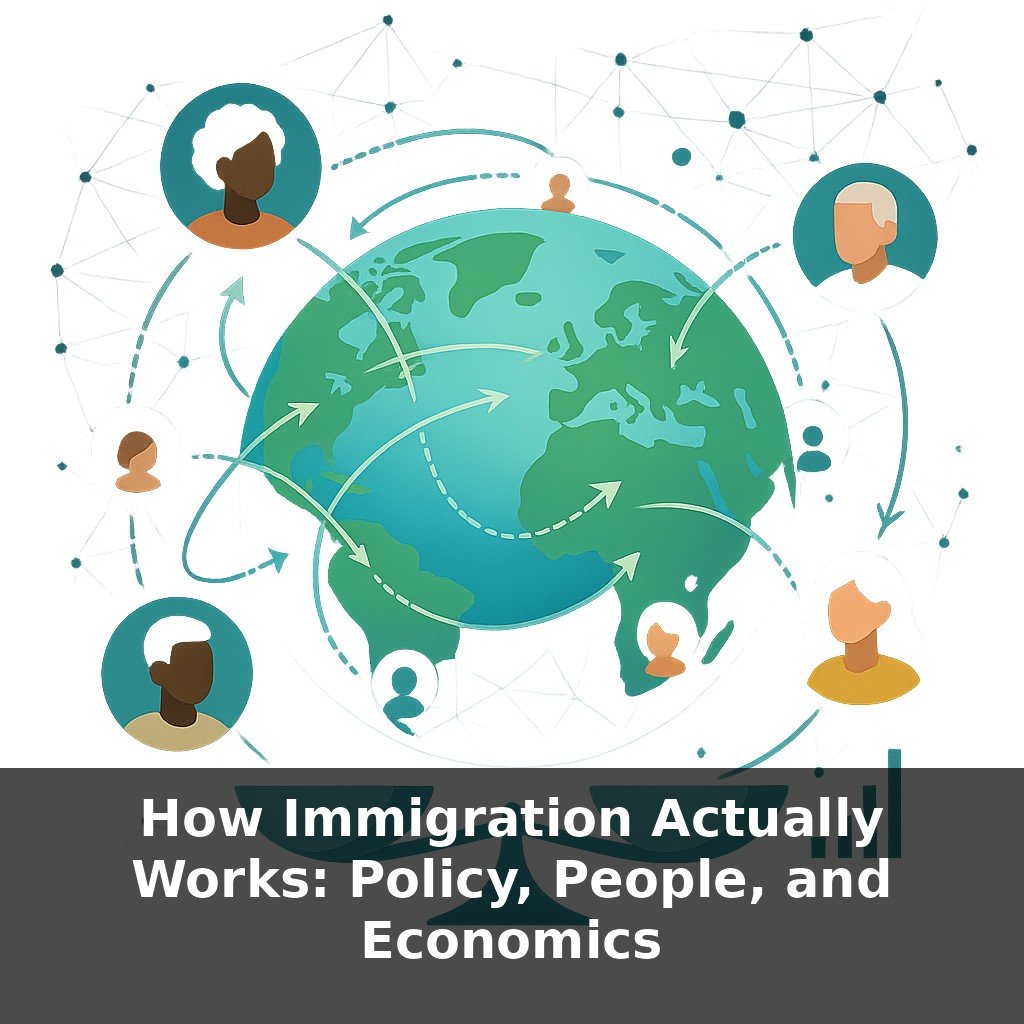
Roughly 3.6% of the world now lives outside their birth country—yet every part of the system that’s supposed to manage this looks overstretched. Border posts back up, courts drown in asylum files, employers complain about shortages, and families wait years for a decision that can fit on a single sheet of paper. In earlier episodes, we looked at the economics and the human stories. Today, we zoom out to the system itself: why it jams, even when everyone insists it should “just work.” You’ll hear how a tech worker in Bangalore, a refugee family in Sudan, and a mayor in a small German town are all pulled into the same policy tug-of-war. And we’ll ask: when governments try to maximize security, fairness, and compassion at once, what actually gives way first—and who pays the price?
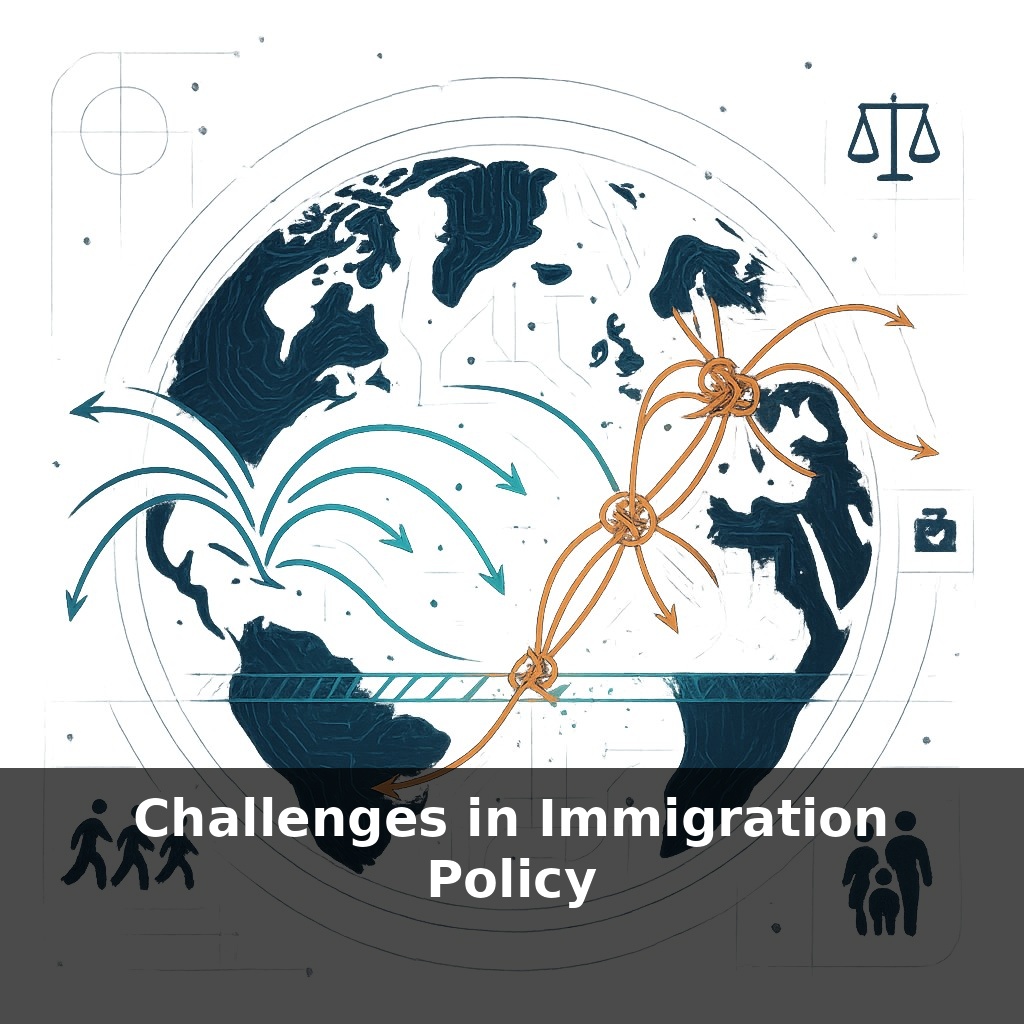
On paper, governments do have tools: quotas, point systems, refugee resettlement programs, employer sponsorships, border controls, integration budgets. But each tool pulls in a slightly different direction once it meets real people and real money. Election cycles are short; migration pressures can last decades. Courts weigh individual rights while finance ministries track costs line by line. Meanwhile, public opinion reacts not to spreadsheets but to headlines and neighborhood change. The result is a kind of policy Jenga: every new rule stabilizes one piece of the system while quietly loosening another.
The first crack in the system usually appears in time. Legal paths move on government calendars; people move on life calendars. When a worker from India files an employment-based green-card case that won’t be current for half a century, the message is clear: the “front door” is technically open but practically unusable. The same happens with family visas that leave spouses or parents in limbo for a decade. On the books, these are generous channels. In real life, they feel like a lottery whose prize might arrive after it’s no longer useful.
The second crack shows up in geography. Border guards stand at literal edges, but the key decisions are often taken far away: consular officers in embassies, interior ministries designing risk scores, parliaments tweaking budget lines. When these layers don’t align, frontline staff improvise. A country can announce tougher enforcement while quietly underfunding the courts that would make that possible. Files pile up, and “temporary” humanitarian exceptions morph into semi-permanent categories because there’s no capacity to resolve them.
Then there’s the labor market mismatch. Employers say they can’t find nurses, farmworkers, or coders; at the same time, voters say they don’t want more migration. Governments respond with half-measures—seasonal worker schemes, one-off regularizations, or “pilot” programs. These soothe an immediate shortage without building a stable architecture. When the pilot ends, workers and firms are left hanging, and irregular channels become tempting simply because they’re the only ones still operating.
Human rights law adds another layer of complexity. Courts in Europe and North America have repeatedly ruled that states can’t just push people back to danger, even if they crossed irregularly. That means deterrence-only strategies collide with legal obligations. Politicians promise quick removals; lawyers file appeals; years pass. To the public, this looks like incompetence. To insiders, it’s a predictable result of trying to meet incompatible demands.
One more tension runs through everything: visibility. Tight controls at airports push more people onto deserts and seas, where tragedies are harder to ignore. Looser controls reduce deaths but can trigger fears of “open borders.” Governments constantly adjust the optics—where cameras can see, where they can’t—without necessarily changing the underlying numbers very much.
Consider a small coastal city suddenly hosting a new factory that needs 2,000 workers. Local schools, clinics, and bus lines were built for yesterday’s population, not tomorrow’s. If the factory hires abroad under rigid caps, you might see classrooms packed, rents spiking, and a bus system that never quite adjusts. That’s how immigration policy often feels at ground level: the rules move slower than the demand shocks they help create.
Take Germany’s 2015–2016 experience. National leaders promised swift asylum decisions and integration, yet many municipalities learned about arriving buses only days in advance. Mayors scrambled for gymnasiums to convert into shelters while Berlin debated long-term funding. Similar frictions appear when a tech hub wins a global contract but can’t secure visas fast enough; companies route projects to Canada or Ireland instead, not because of better talent, but because their pathways are more predictable.
Your action this week: pick one policy goal—security, labor needs, or humanitarian protection—and trace how a single rule aimed at that goal might ripple unexpectedly through the other two.
Voters, meanwhile, will keep sending mixed signals: “protect our borders” and “keep the economy growing” and “uphold our values”—all at once. As aging societies court nurses and coders abroad, younger sending countries may start acting less like passive suppliers and more like investors, bargaining for training, co-development, even voting rights abroad, the way a careful lender watches how their capital is used and demands better terms when it becomes indispensable.
The next frontier is who gets a voice. As migrant workers, cities, and even diaspora investors grow more influential, some countries are testing shared decision-making—local councils, cross‑border labor deals, portable rights. Think of it as updating the “terms of service” for movement, before rising pressures rewrite them chaotically.
To go deeper, here are 3 next steps: (1) Read one country-comparison chapter from *The Age of Migration* (Castles, de Haas, Miller) and, while you listen to the news this week, note how current debates about border control, labor demand, and asylum reflect (or ignore) those structural factors. (2) Pull up the Migration Policy Institute’s “Data and Resources” page and use their country profiles plus the “US Immigration Policy Program” briefs to fact‑check at least two common claims you hear in the episode (for example, around border enforcement or backlogs in asylum processing). (3) Visit the American Immigration Council’s “Advocacy” section and choose one specific issue they track—like work visa caps or due process in detention—then email or call your member of Congress using the sample scripts there to push for a concrete reform that matches the challenges discussed in the podcast.