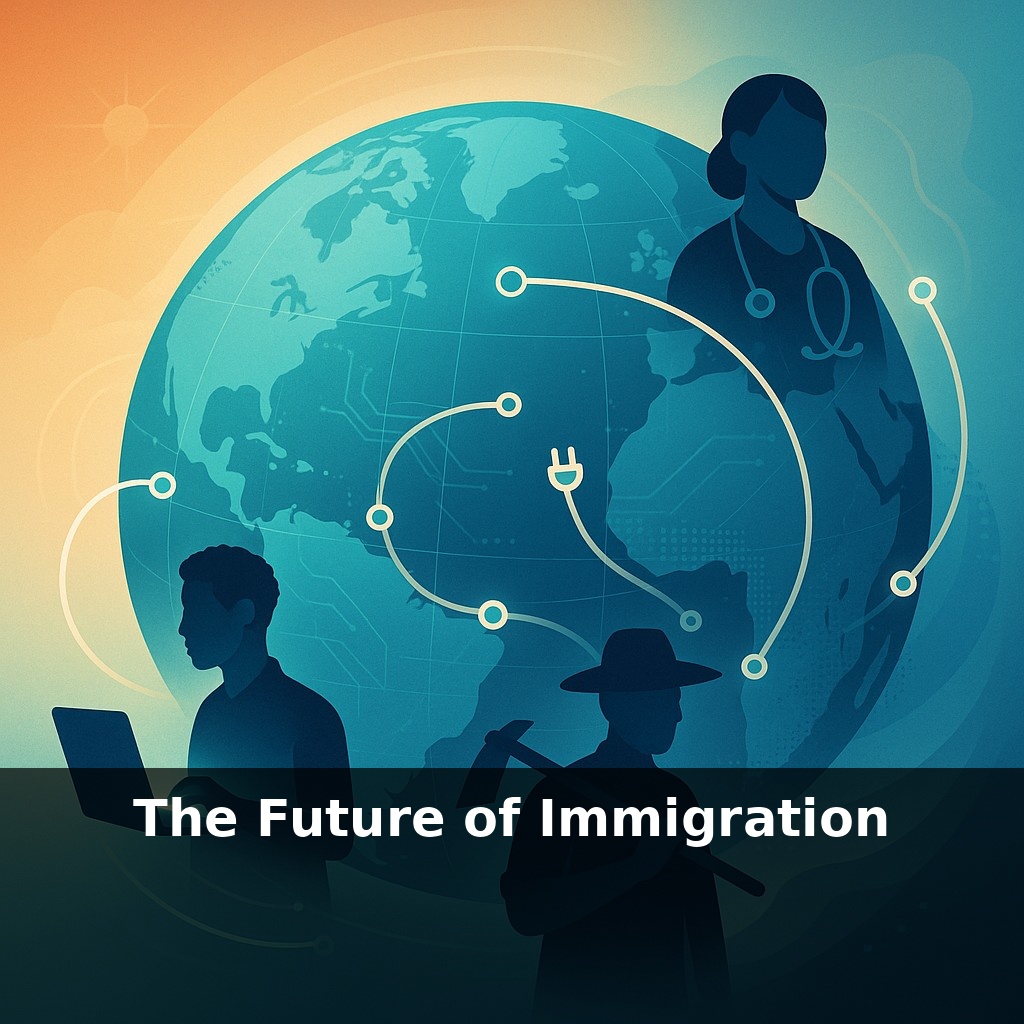
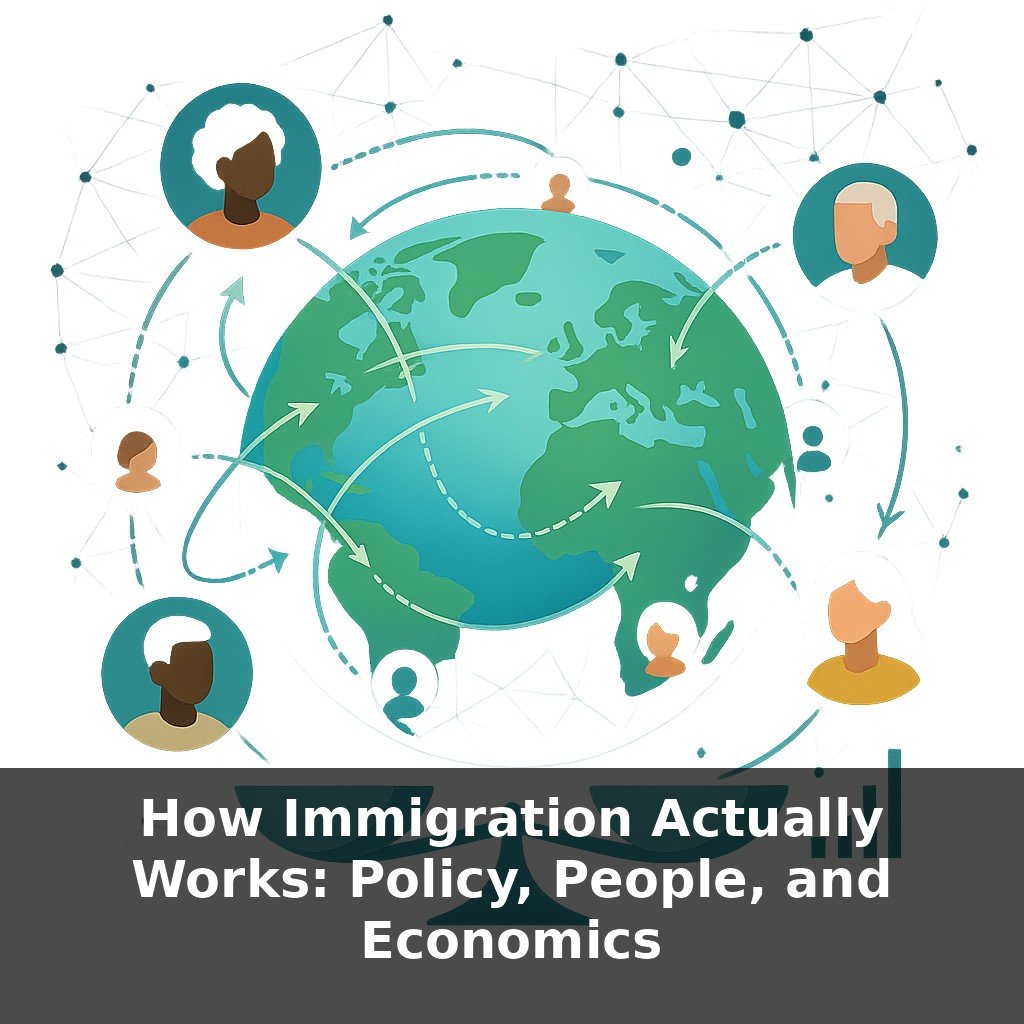
By mid-century, climate change could push more people to move within their own countries than now live in many major cities. A coder in Lagos, a farmer in Guatemala, a nurse in Manila—each may migrate not once for life, but again and again, following shifting maps of safety and demand.
By 2050, hundreds of millions of people won’t be asking, “Will I move?” but “Where should I plug in next—and for how long?” Borders, once thought of as hard lines, are quietly becoming more like adjustable filters. Countries with aging populations and labor shortages are experimenting with new categories: one-year talent visas, renewable caregiver permits, AI-matched seasonal work schemes. At the same time, digital tools are turning identity into something closer to a portable account than a set of paper files in a single office. Skills, language scores, and even online reputation can be scored, ranked, and fed into algorithmic gatekeepers. Yet behind all this data are very old questions: Who gets welcomed, who gets sorted into a slower queue, and who never even appears in the system?
In this emerging system, countries start to look less like fortress-states and more like competing platforms. Each one tweaks its “user settings”: points for degrees, bonuses for rare skills, fast lanes for investors, trial periods for remote workers. Meanwhile, people on the move juggle multiple profiles—one for work, another for study, another for refuge—switching between them as opportunities or crises appear. Some will patch together careers across three or four jurisdictions, while others get stuck at the login screen, blocked by missing documents, weak connectivity, or simply the wrong kind of passport.
Some of the biggest forces reshaping movement won’t look like “immigration policy” at all. They’ll show up as pension gaps, housing prices, and heat maps.
Start with demographics. Europe, East Asia, and parts of North America are aging faster than they can train replacements. Sub‑Saharan Africa and parts of South Asia are adding tens of millions of young workers with few local openings. That 20‑plus‑year median age gap between regions isn’t just a statistic; it’s a structural mismatch between where work is and where workers are. Governments can respond in three basic ways: automate, import labor, or shrink services. In practice, they’ll mix all three—using robots in factories, foreign nurses in hospitals, and higher retirement ages to stretch systems.
Layer on climate stress. Much of the projected displacement will be internal, within countries, but those shifts will ripple outward. When farmers move to cities and strain urban jobs, some will look abroad. Yet international law still doesn’t treat climate disruption as a ground for protection. That means new legal categories—“climate mobility corridors,” regional labor‑plus‑relocation deals, insurance‑backed visas—will likely emerge outside current refugee rules.
Technology then decides who can move how quickly. Canada’s Express Entry is an early glimpse: a points engine that quietly favors certain skills and ages while promising faster decisions. The same logic is spreading to short‑term and “digital nomad” routes. More than 50 countries now sell some version of: bring your laptop, your foreign salary, and maybe your tax residency. In practice, that’s a filter too—rewarding those with remote‑able jobs and stable internet, sidelining those whose work is tied to land or local services.
Money flows trace the consequences. Remittances now outpace foreign investment in many poorer states, turning emigrants into a kind of unofficial development strategy. But as movement becomes more selective and temporary, the map of who can send money home—and from where—will shift. The central question isn’t whether people will move; it’s whether the emerging rules turn mobility into a broadly shared safety net or a premium subscription reserved for those already near the top.
Your challenge this week: pick one country with an aging population and one with a very young one. For each, read a recent article about how they’re changing work or visa rules, and note one way those choices might shape who moves—and who stays—over the next decade.
Think of future migration choices the way investors think about diversifying a portfolio: not all‑in on one country, but spread across “assets” with different risks and returns. A young Kenyan software engineer might spend three years on a German apprenticeship visa, switch to a fully remote role under a Brazilian digital‑work scheme, then return home to launch a startup funded partly by remittances she saved abroad. Meanwhile, a Filipino nurse could rotate through two‑year contracts in Japan and the UK, accumulating credentials the way others collect loyalty points—each stint unlocking better pay, faster processing, or family accompaniment next time.
Cities will act like competing funds within that portfolio. A coastal hub that invests in flood defenses and heat‑resilient housing will attract climate‑conscious workers; a rival that ignores those upgrades may watch both locals and newcomers drift away. Over time, people won’t just compare salaries—they’ll weigh air quality, political stability, and even digital‑rights protections before deciding where to “allocate” their next five years.
AI could become less like a bouncer at the door and more like a GPS for mobility—suggesting routes, flagging bottlenecks, even predicting where new opportunities will open. But who trains that GPS, and whose risks it ignores, will matter. Expect alliances of “origin” and “destination” states to bargain over training costs, pension rights, and climate losses. Cities, not just countries, may start drafting their own “migration compacts” to secure talent, care workers, and tax bases in a warming, aging world.
We may end up treating movement less like a one‑time leap and more like updating an app: new “patches” to your skills, health, and digital records unlocking different routes over time. The open question is who writes those updates—and whether communities that rarely cross borders still get a say in how this constantly revised map of belonging is drawn.
Try this experiment: For the next 7 days, keep a simple “future of immigration” log by having one short, real conversation each day with someone whose immigration experience is different from yours (a coworker, neighbor, local shop owner, or classmate). Ask them just two concrete questions: “What’s one thing that makes the current system hard for you or people you know?” and “If you could change one rule or process, what would it be and why?” Each evening, compare what you heard to the narratives you see in the news or online and circle any surprising mismatches. At the end of the week, pick the single change you heard most often and email or call your local representative’s office to share that specific story and proposed fix, noting how it differs from the public debate you usually hear.