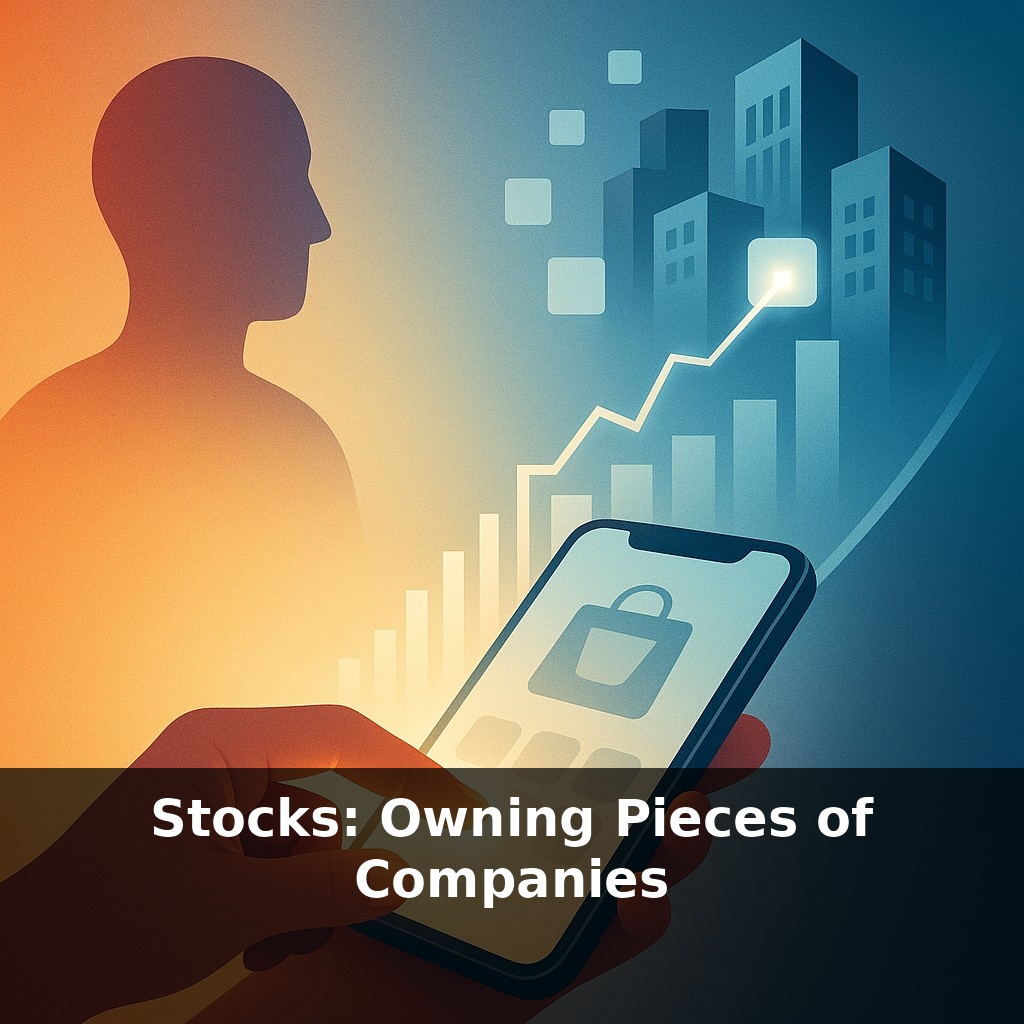
Roughly half of adults already own tiny slices of giant companies—often without realizing it. On your phone at a red light, you tap a shopping app. Somewhere, an investor just got a little richer from that tap. The twist? You could be that investor—or you could be funding them.
Every tap, scroll, and subscription you make quietly lights up someone’s stock dashboard. But before those green numbers appear, something important happened long ago: a company decided to split its value into shares and sell pieces of itself to the public. That decision changes everything about how the business grows, who gets rewarded, and how wealth moves through the economy.
Stocks are where everyday spending and global finance intersect. The brands in your kitchen, on your laptop, and in your closet may all trade on an exchange, with prices shifting like weather as expectations about their future change. Some pay out cash regularly, others reinvest everything to chase faster growth. Learning how those choices show up in a stock’s price is what turns random tickers into a map of where your money could be working.
When people talk about “the market,” they’re really talking about millions of these pieces changing hands every second on exchanges around the world. Some pieces represent giant, slow‑moving firms that have been around longer than your grandparents; others belong to scrappy newcomers trying to prove they deserve a higher price. Behind every ticker symbol is a real business with factories, code, patents, customers, and competitors. Prices jump not just on profits, but on expectations: a product launch, a lawsuit, a new regulation, or a CEO change can all tilt the odds of future success.
When you strip away the ticker symbols and headlines, what you really own with a stock is a claim on a stream of uncertain future cash flows. The entire game is: how much are those future dollars worth today?
Public companies raise money by issuing shares in two broad ways. First is the big, splashy one‑time event: an IPO or direct listing, where they sell pieces to outside buyers in exchange for cash to fund factories, engineers, or acquisitions. After that, the action mostly shifts to the secondary market, where investors trade pieces with each other while the business keeps operating in the background.
Crucially, the number of pieces isn’t always fixed. Firms can issue more, diluting each slice, or retire them through buybacks, concentrating the remaining ownership. In the U.S. alone, nearly a trillion dollars of stock was retired this way in 2022. That doesn’t show up as a line item on your brokerage statement, but over years it can quietly increase how much of the firm’s earnings each share represents.
So why do prices move so much, so often? Because every share is a live poll of expectations. Analysts project sales, margins, and risks; portfolio managers compare opportunities across thousands of listed firms; algorithms react to news in milliseconds. A blockbuster product can shift estimates for the next decade; a disappointing earnings call can reset the story overnight.
Different kinds of companies plug into this expectations machine in different ways. Mature giants often return a steady stream of cash and occasionally buy back their own stock. A small subset, the Dividend Aristocrats, have managed to raise those payouts year after year for decades—and markets have historically rewarded that reliability. Fast‑growing firms might pay nothing out for years, betting that reinvesting every dollar today leads to a much larger pie later.
Meanwhile, the entire market is just the aggregation of all these individual stories. Globally, listed firms add up to well over a hundred trillion dollars of value, but that value is constantly being re‑negotiated trade by trade, as new information collides with old assumptions and the odds of future success are quietly recalculated.
A single share of a grocery chain might seem abstract, until earnings day. Say the company reports that a new private‑label line is boosting margins faster than expected. Analysts revise their models, long‑term profit estimates nudge higher, and the stock gaps up at the open. Nothing changed in your pantry overnight—but markets are now assigning a richer price to all those future receipts.
Different firms turn that evolving story into shareholder rewards in their own ways. Apple has spent years combining a growing services business with aggressive buybacks, shrinking its share count and amplifying earnings per share. A utility, by contrast, might prioritize a regulated, slow‑growing business and send out predictable dividends instead of retiring stock.
Owning an index fund is like following the whole weather system instead of one storm cell: you don’t need to guess which cloud will burst, you just ride the long‑term climate trend of global corporate profits, accepting local squalls for the bigger pattern.
Markets may soon feel less like scheduled broadcasts and more like a 24/7 live stream. As assets get tokenized, access could widen from local brokers to anyone with a phone and a data connection, blurring national boundaries. AI tools might scan thousands of firms for you the way navigation apps scan traffic, surfacing detours and hidden gems. At the same time, carbon scores and labor data could stand beside earnings, reshaping which business “stories” the crowd rewards.
Your first step isn’t memorizing ratios; it’s noticing how often listed companies already shape your day. Every brand you tap is a clue about where profits might flow next. Your challenge this week: pick three products you actually use, find the parent companies, and check whether they’re public. You’re mapping the menu before choosing what to order.