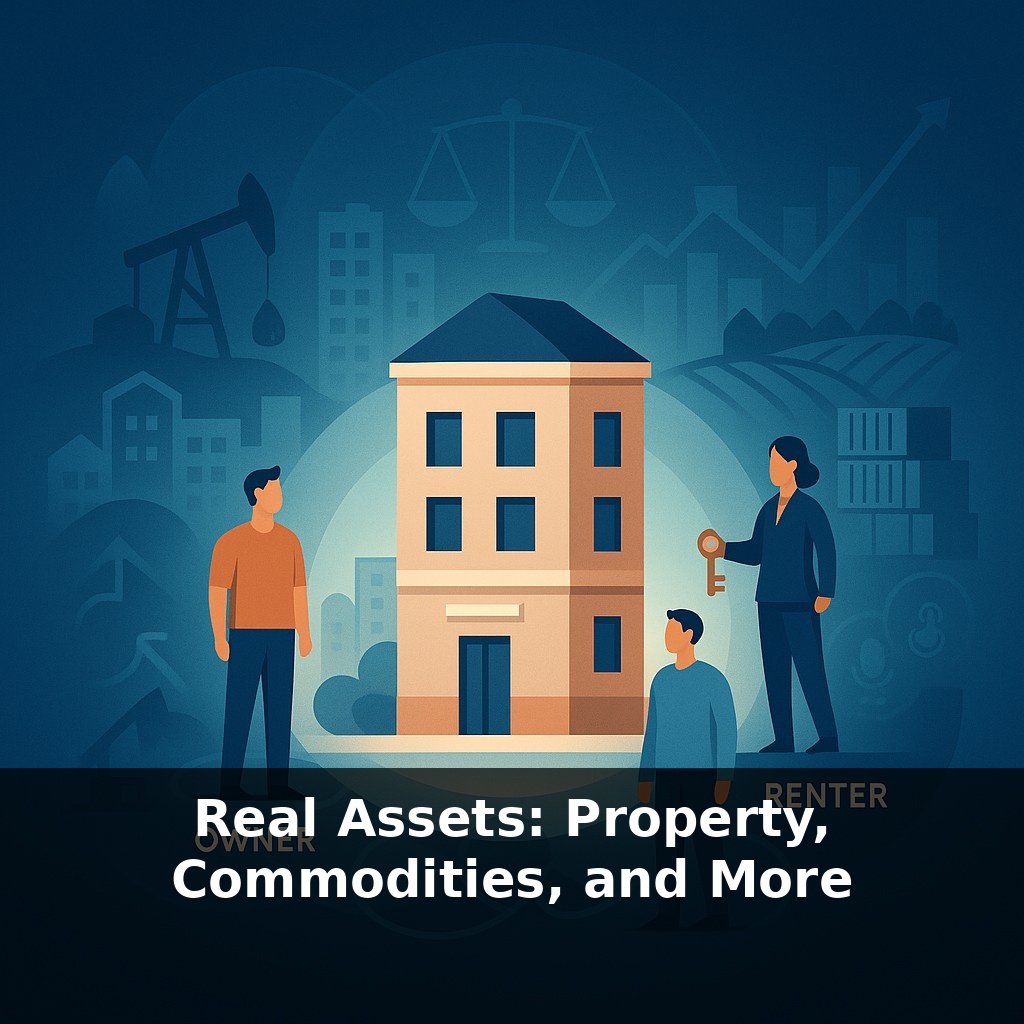
A quiet fact most investors miss: property now makes up the majority of the world’s wealth, yet many portfolios treat it as an afterthought. Today we’ll step inside three lives—an owner, a renter, and a landlord—and ask: who actually holds the real power when prices jump?
Here’s the twist: those three roles you just met are only one corner of the real‑asset universe. Beyond homes and leases sits a whole cast of “quiet workers” in your portfolio—things you can touch, dig up, or drive over—that respond very differently when money loses value. Think of grocery shelves, power lines, and shipping docks: they don’t care what the stock market did today, but they matter enormously when fuel, food, or rent get more expensive. That’s where real assets step in. They’re tied to basic needs—shelter, energy, materials, food—so their cash flows and prices often shift when inflation or supply shocks hit. In this episode, we’ll open up that toolbox: land, infrastructure, commodities, and more, and see how a modest slice of these can steady a portfolio that’s otherwise riding the moods of global markets.
Beyond homes and rent checks, there’s an entire map of real‑world cash generators most people never see directly: toll roads charging every car that passes, pipelines quietly billing for every barrel, farmland selling harvest after harvest, storage tanks leasing out space month by month. Institutions already slice their money across these assets, not because they’re glamorous, but because people keep driving, heating, eating and building through booms and recessions. In this episode, we’ll zoom out from “housing market talk” and trace how these other hard assets behave when the financial world feels shaky.
Start with the scale. Savills estimates global real estate at over US$326 trillion—about 60% of all investable assets. Yet, according to CAIA’s latest institutional survey, even the pros only commit around 9% of their portfolios to it, plus another 5% to things like infrastructure, commodities, and farmland. In other words, most investors are heavily exposed to financial claims on the real world (stocks and bonds), but only lightly exposed to the bricks, fields, and pipes underneath.
Inside that “other” bucket are several distinct characters.
Listed real-estate vehicles (like REITs) turn buildings into tradable shares. They can be volatile day to day, but they let someone with $50 behave, in a tiny way, like a commercial landlord: collecting rent streams, absorbing maintenance costs, riding development booms and busts.
Infrastructure funds buy into roads, airports, transmission lines, data centers, cell towers. Their revenues often come from long contracts or regulated tariffs. Traffic might dip in a recession, but people still flip light switches, stream video, and move goods around. That’s why many pensions see infrastructure as a middle ground between bonds and equities: steadier than typical businesses, yet tied to long-term economic growth.
Farmland is another quiet worker. It links directly to food demand and agricultural productivity. Returns come from lease payments or crop profits plus land-value changes. Weather, technology, and policy matter more than quarterly earnings cycles.
Then there are commodities themselves. Physical barrels or bars mostly just sit there, but futures contracts on oil, copper, or wheat respond quickly when shortages or geopolitical jolts appear. Historically, broad commodity baskets (like the Bloomberg Commodity Index) have tended to shine in the very periods when traditional portfolios are most uncomfortable: the 1970s, the 2000–08 resource boom, and the 2022 spike in energy and input costs.
Owning real-asset producers—energy, mining, agricultural, and infrastructure operators—is another route. These firms still behave like equities, but their revenues are anchored in volumes moved, extracted, stored, or transported, rather than pure consumer sentiment.
Your challenge this week: list every bill you pay that ultimately relies on a physical network—power, water, internet, transit, groceries, fuel. For each, ask: who owns the underlying asset, and how—if at all—does my current investing touch that cash stream?
Think about three ordinary situations. First, you’re stuck in traffic on a toll bridge. Every honk around you is a tiny cash register for whoever financed that bridge. Second, a storm knocks out power in one neighborhood but the utility still collects from thousands of others, because regulators let it recoup costs over years. Third, a supermarket quietly raises prices on basics after a bad harvest; the farmer’s rent or crop-share agreement may capture some of that shift.
These aren’t abstract stories; they’re clues to how different real assets react at different speeds. Tolls can adjust via scheduled increases, regulated utilities via rate cases, farmland via renegotiated leases, commodity producers via daily price moves. It’s a bit like weather fronts moving across a landscape: some places feel the change in minutes, others only days later, but the same storm is passing through. When you trace who earns, who pays, and how quickly terms reset, you start to see which parts of the real world might steady your financial life when conditions turn.
Future implications: As data, demographics, and climate reshape the landscape, the “real” side of finance will get wired up and sliced thinner. Tokenized stakes in a single tower, wind farm, or orchard could trade as easily as a stock, while sensor-driven yield forecasts turn fields into something closer to recurring software revenue. Your role may shift from choosing one big bet to curating dozens of tiny, transparent slices of the physical world.
You don’t have to become a builder, farmer, or miner to tap into this side of the economy. Even a tiny holding in a fund tied to infrastructure, farmland, or resources links your savings to the same systems your daily life runs on. Like seasoning in a dish, a small amount can subtly change the whole flavor of how your money behaves over time.
To go deeper, here are 3 next steps: (1) Open a free account at a platform like Fundrise or RealtyMogul and actually click through 2–3 live real estate deals, reading the “Risk Factors” and “Target Returns” sections to see how they match what the episode said about income vs. appreciation. (2) Go to a futures or commodities education hub like CME Group’s “Education” section and complete one beginner module on either gold, oil, or agricultural futures, then pull up that commodity’s real-time chart on TradingView to see how volatile it really is. (3) Reserve Paul Samuelson’s “Real Estate Investment and Finance” or another real-assets-focused book from your library or Audible, and skim the table of contents to pick one chapter (e.g., REITs, infrastructure, or timberland) that you’ll focus on as your “first real asset niche” over the next week.