Most startup stories you hear skip the weird middle part—the flop that secretly saves the company. One founder kills their “big idea,” launches a hastily built side feature, and suddenly that’s the real business. Why does the wrong idea often open the right door?
Nine out of ten startups will shut down—but the uncomfortable truth is that most of those deaths were optional. The difference between “we ran out of money” and “we found something that finally worked” is rarely a genius idea; it’s usually how the team handles the first serious signs that reality doesn’t match the plan.
In earlier episodes, we talked about ecosystems, teams, and getting attention. Here, the focus shifts to what happens when all of that still doesn’t add up to traction. The landing page gets visits but no signups. The demo calls end with “interesting, but not now.” The metrics stubbornly refuse to budge.
This is where many founders double down on the original plan—and where a smaller, more flexible group starts treating every disappointing number as a clue. Not a verdict, a clue. That’s the mindset that turns “failure” into a debugging session on your entire business.
Founders who survive that first wave of ugly numbers do something subtle but powerful: they separate *emotion* from *evidence*. Instead of treating a bad month as an indictment of their ability, they treat it like a lab result they didn’t expect. That shift opens the door to real experimentation: A/B tests on pricing, radically different positioning, or even flipping which customer segment you serve first. Think of it less as protecting the original plan and more as managing a portfolio of hypotheses, pruning weak bets and doubling down on the ones that stubbornly refuse to die.
Most of the breakthrough stories you know—Slack, Netflix, countless unnamed B2B tools—share an unglamorous middle chapter: a long stretch where the original plan “kind of worked” but never pulled its own weight. The key move in that chapter isn’t blind persistence; it’s structured curiosity.
This is where treating your startup like a series of experiments actually matters. Not inspirational “we’ll learn from this” experiments, but ones with a clear hypothesis and a stop condition. For example: “If we reposition this product as an internal tooling platform instead of a consumer app, we should see demo-to-paid conversion double within 60 days.” If that doesn’t happen, you don’t just feel bad—you retire that bet and promote a new one.
Founders who get good at this keep a simple hierarchy in their heads:
- **Vision** – the problem you believe must be solved and the world you’re trying to create. - **Strategy** – the specific customers, business model, and channel choices you’re betting on. - **Tactics** – features, pricing tiers, ad creatives, onboarding flows.
A pivot rarely touches the vision; it mostly rewires strategy, and sometimes tactics in bulk. Slack didn’t give up on better team communication; they abandoned “multiplayer game studio” as the way to get there. Netflix didn’t quit on convenient entertainment; they changed how bits got from them to you.
This is where many founders get stuck: they treat strategy like vision. “We *are* an SMB SaaS company” becomes an identity, not a bet. The result is months of “micro-iterations” on tactics that can’t possibly fix a deeper mismatch. Weekly iteration only pays off if what you’re iterating on is allowed to be wrong at every layer.
So how do you know whether you need tweaks or a true pivot? Three patterns show up again and again:
1. **Love, but no money** – users adore the product, but budgets never appear. You may have the right problem, wrong buyer. 2. **Money, but no love** – contracts close, usage is shallow, churn is creeping up. You might be solving a compliance checkbox, not a painful need. 3. **Interest, no urgency** – plenty of “come back later.” Usually a signal your problem isn’t in their top three priorities.
In each case, the move isn’t “work harder.” It’s to ask: *What’s the smallest, boldest change that could flip this pattern?* New customer segment, different pricing logic, unbundling one feature as its own product—these are strategic shifts, not cosmetic tweaks.
A startup pivot is like rebalancing an investment portfolio: you keep your core thesis about the future, but you shift where you’re exposed so reality can prove you right—or wrong—faster.
Think of failure patterns the way a doctor thinks about recurring symptoms: they’re rarely the disease, but they reliably point toward it. When a pricing experiment flops, or a new feature quietly collects dust, that’s not random bad luck—it’s a directional hint about who actually cares and why. One founder I worked with noticed every rejected proposal included the same line: “We’d use this if it helped *multiple* teams, not just support.” That wasn’t a no; it was a product brief hiding in plain sight.
Another founder treated every “not now” response as a sortable tag—industry, team size, main tool stack. After 50 conversations, a strange cluster emerged: mid-market companies using the same CRM kept leaning in further than anyone else. That pattern justified a sharper, almost uncomfortable repositioning around that ecosystem, which finally pushed deals over the line.
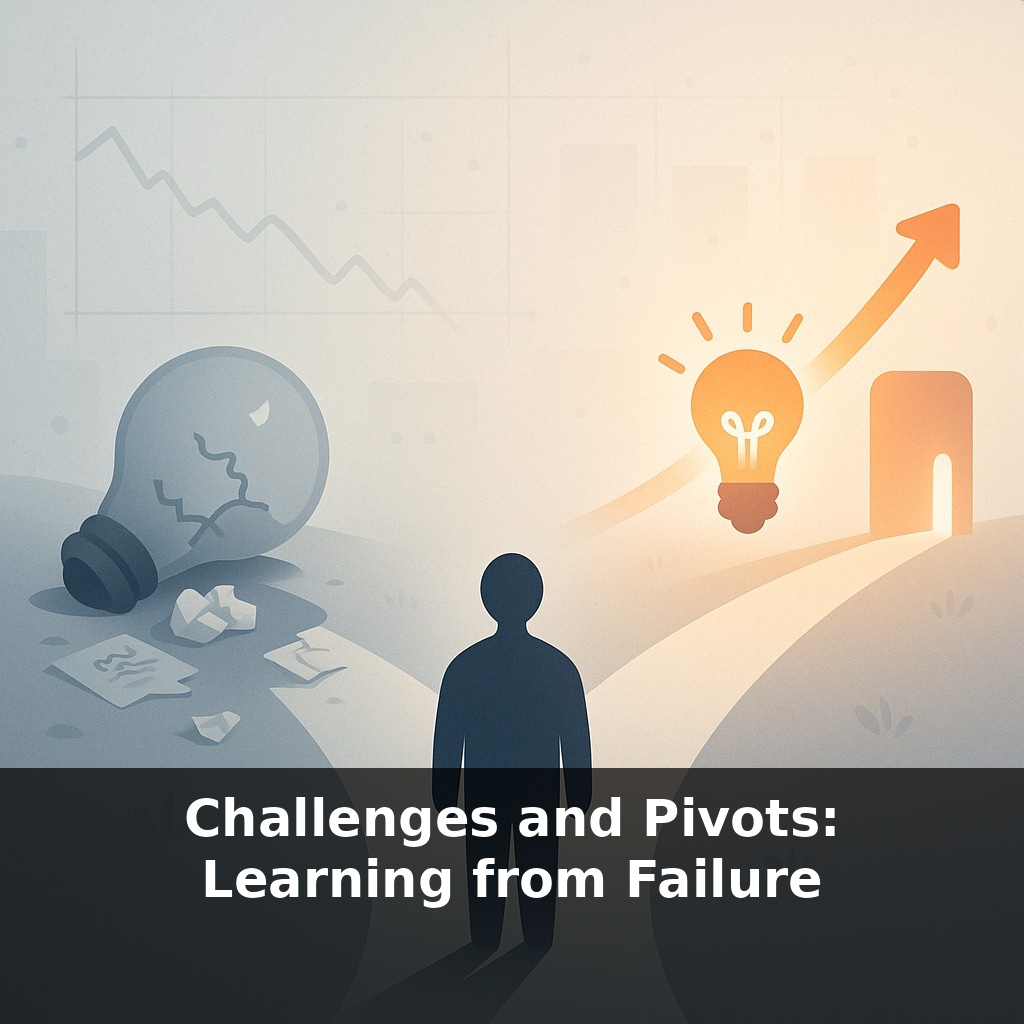
Your job isn’t to avoid the weird, messy middle—it’s to mine it. Each failed bet is a tiny map fragment; stack enough of them and suddenly the route stops looking random.
Failure’s quiet superpower is that it shrinks uncertainty. Each stumble rules out whole branches of the decision tree you no longer have to explore. As experiments get cheaper—thanks to AI tooling, low-code, and global talent—you can treat setbacks less like verdicts and more like recurring deposits into a “learning account.” Founders who surface these learnings in investor updates and team rituals turn apparent detours into proof they can navigate fog, not just cruise in sunshine.
Treat each setback like a lab note, not a scar. Over time, those scribbles become a kind of internal compass, steering you toward sharper bets and braver questions. The founders who last aren’t the ones who avoid wrong turns; they’re the ones who return to the map after every dead end and redraw the route before the next storm rolls in.
Start with this tiny habit: When you catch yourself replaying a past failure in your head (like that botched product launch or awkward client pitch they talked about), whisper to yourself, “What was the pivot?” and name **one** thing you’d do differently next time in 10 words or less. Do it right where you are—no notebook, no app, just a quick sentence in your head or out loud. This trains your brain to move from shame and rumination to pattern-spotting and future experiments, exactly like the founders in the episode did.