What Is an Economy? The Basic Concept
📝 Transcript
Right now, as you’re listening to this, millions of people are working, buying, selling, and clicking “checkout” online—most of them without any idea they’re shaping something huge. In this episode, we’ll zoom out and explore the invisible system they’re all building together.
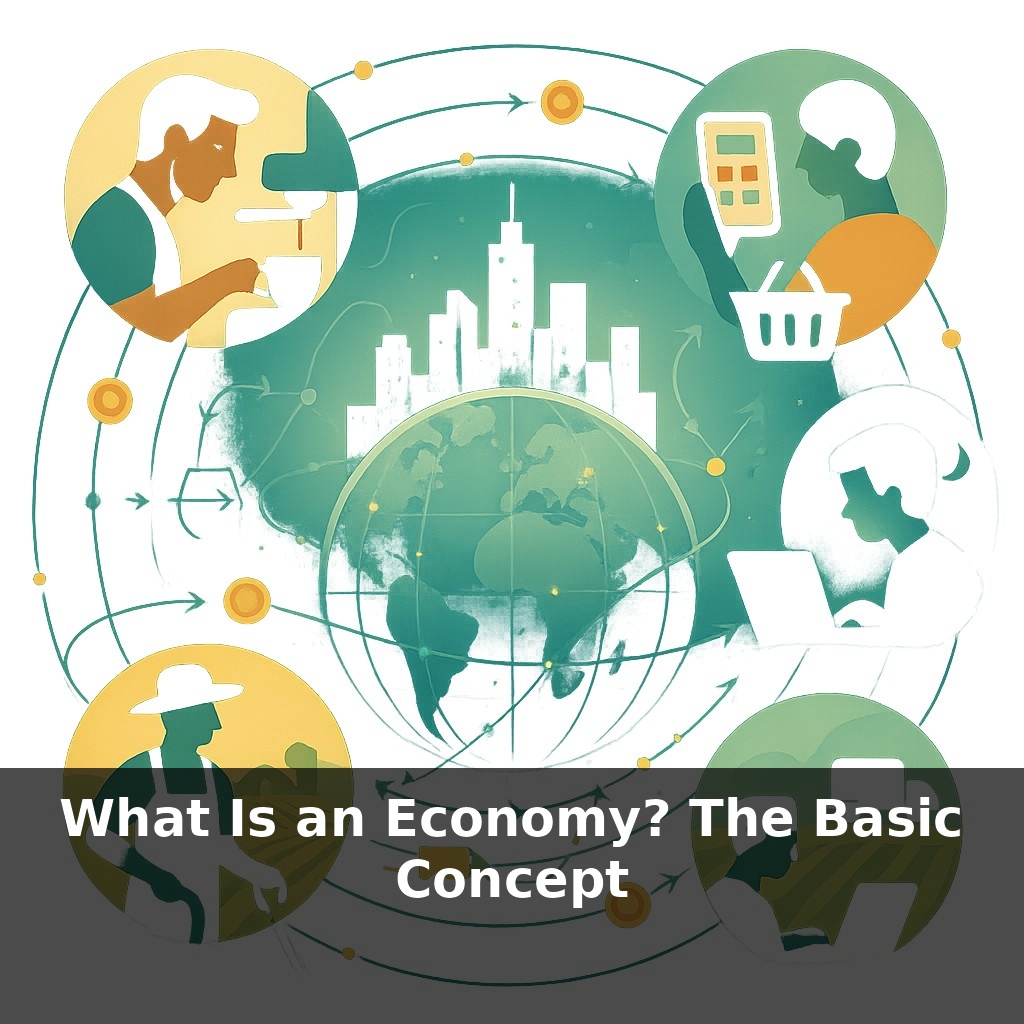
If you zoom in on that system, it doesn’t look like “the economy” at all. It looks like a barista timing espresso shots, a parent comparing prices in a supermarket app, a coder fixing a bug at midnight, a farmer checking next week’s weather. Each of these tiny choices is really a vote about what should be produced, how, and for whom. Add billions of those votes together and you get something we call an economy: a constantly shifting pattern of work, trade, and expectations. Some parts are carefully mapped—like official jobs and taxes—while others live in the shadows, from cash-only street vendors to under‑the‑table gigs. And above it all, governments, companies, and households keep trying to steer this restless tide in their favor, even though no one fully controls where it’s going next.
But underneath all that activity, something more basic is happening: people trying to solve the same old problem of scarcity. There’s never enough time, money, or resources to do everything we want, so we constantly choose. Those choices show up as prices, paychecks, rents, and profits. Some people specialize in writing code or growing food; others in caring, repairing, or planning. Their efforts get linked through supply chains that can stretch from a neighborhood workshop to ports and data centers on the other side of the world. When those links snap or shift, everyday life changes—sometimes overnight.
When economists talk about “an economy,” they’re not just watching activity; they’re watching how we organize that activity. At the core is a quiet question every society has to answer, whether it’s a village, a startup hub, or a modern country: given what we’ve got, who decides what gets used for what?
Different systems answer that in different ways.
In a market-heavy system, prices do a lot of the coordinating. Nobody tells a bakery how many loaves to make; the baker reads signals from yesterday’s sales, today’s flour costs, and what customers seem willing to pay. If flour gets expensive, maybe the recipe changes or the price tag does. Information is compressed into price changes, and people react.
In a state-heavy or “command” system, official plans carry more weight than price signals. A ministry might set targets for how much steel or wheat to produce, assign inputs, and fix prices. That can mobilize resources quickly, but it also risks blind spots if planners misjudge what people actually want or how local conditions differ.
Most real-world economies sit in between. Governments tax and spend, set rules, and sometimes step in directly—as when they bail out banks, build highways, or cap energy prices. Private decisions still dominate a lot of day‑to‑day life, but they’re happening inside a rulebook shaped by law, politics, and history.
To keep track of all this, we build rough “maps” of economic activity. Measures like GDP, unemployment, and inflation are simplified scoreboards: they miss a lot, but they show broad direction. When world GDP hits around US$105 trillion, it tells you how much paid production is being counted, not how fairly it’s shared or how sustainable it is.
Look closer at that headline number and you see patterns. Services—from streaming platforms to nurses to logistics software—now generate roughly two‑thirds of global output. Yet in many low‑ and middle‑income countries, most workers earn their living in the informal economy that rarely appears in official data: street vendors, day laborers, home‑based producers, unregistered transport.
Layered on top of this is power. The top 10% of households control more than half of global wealth, which shapes which ideas get funded, which risks get taken, and whose preferences show up in policy. An “economy” is never just a neutral machine; it’s also a snapshot of whose choices matter most.
Think of a normal weekday in one city. A nurse finishes a night shift at a public hospital, grabs a ride from an app-based driver, and buys breakfast from a small café that accepts both cards and mobile wallets. In that short trip, she’s moved through tax‑funded services, digital platforms, and a small business responding to neighborhood tastes. Later, a construction worker paid partly in cash eats at the same café. His pay may not be fully reported, but his spending still shapes which dishes stay on the menu and how many staff the owner can afford.
Zoom out, and these tiny chains of decisions help determine how much of a country’s effort goes into health, housing, or entertainment. When many people suddenly start ordering food delivery instead of dining in, kitchens reorganize, delivery jobs expand, and commercial rents feel different pressure. A heatwave can push demand for air conditioners and electricity so high that governments rush to secure fuel, while households quietly adjust by changing routines or buying fans on credit.
Policies, technology, and culture constantly tug this system in new directions. A single rule change—say, a carbon tax—can ripple from power plants to supermarket prices, nudging millions of tiny choices. New tools like AI shift whose skills are rewarded, much like a rule tweak in a sport suddenly favoring different players. As aging populations, climate risks, and digital money spread, the basic question quietly evolves: not just “who gets what?” but “on what terms, and for how long?”
Now that we understand how everyday actions shape the economy, as you scroll, commute, or cook dinner, you’re already inside this vast experiment. Trade wars, interest-rate decisions, viral apps, even a sudden storm—all tweak the rules of the game you’re playing. Your challenge this week: Analyze a local business change, like a rise in café prices or a new shop opening, and map its ripple effects. Identify at least two sectors that shift resources or strategies in response.
From this course
How the Economy Actually Works: A Curious Guide
7 episodesUnlock all episodes
Full access to 7 episodes and everything on OwlUp.
Subscribe — $1.99/monthLess than a coffee ☕ · Cancel anytime