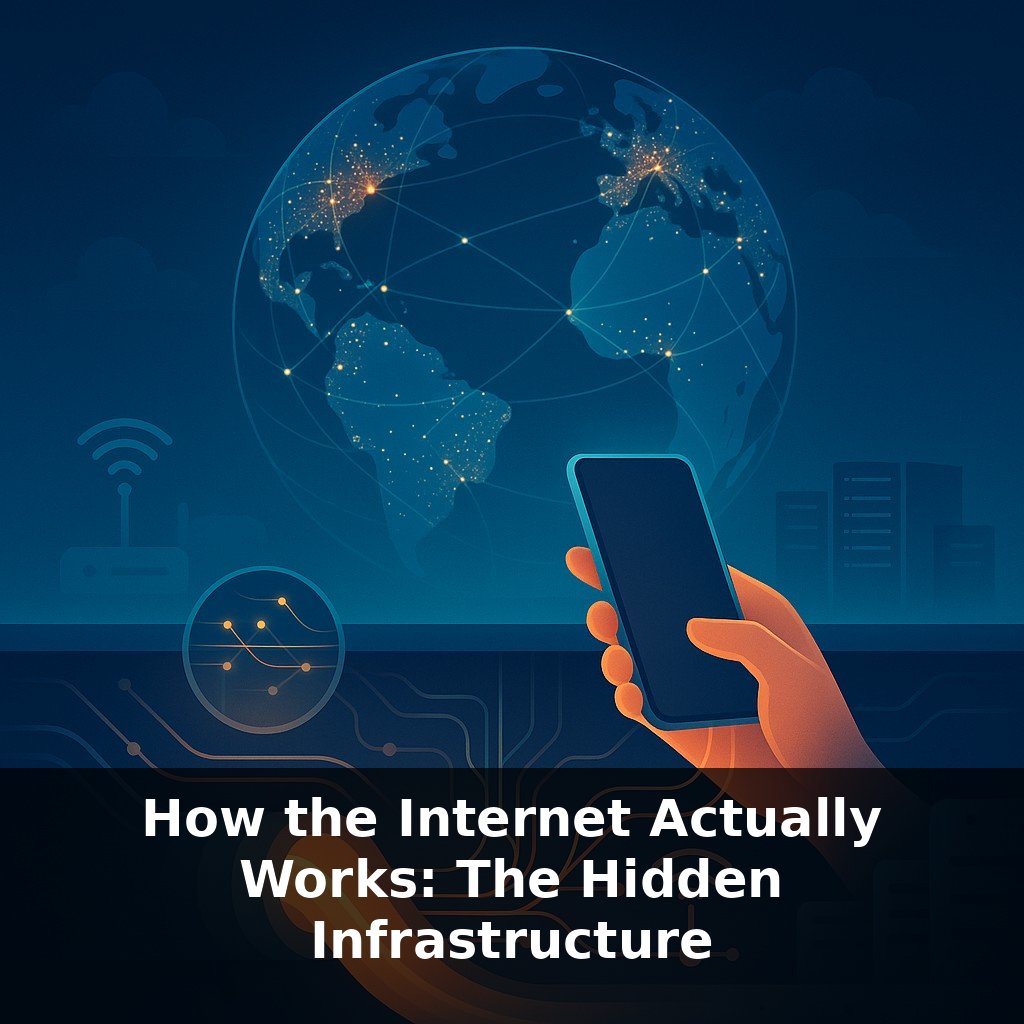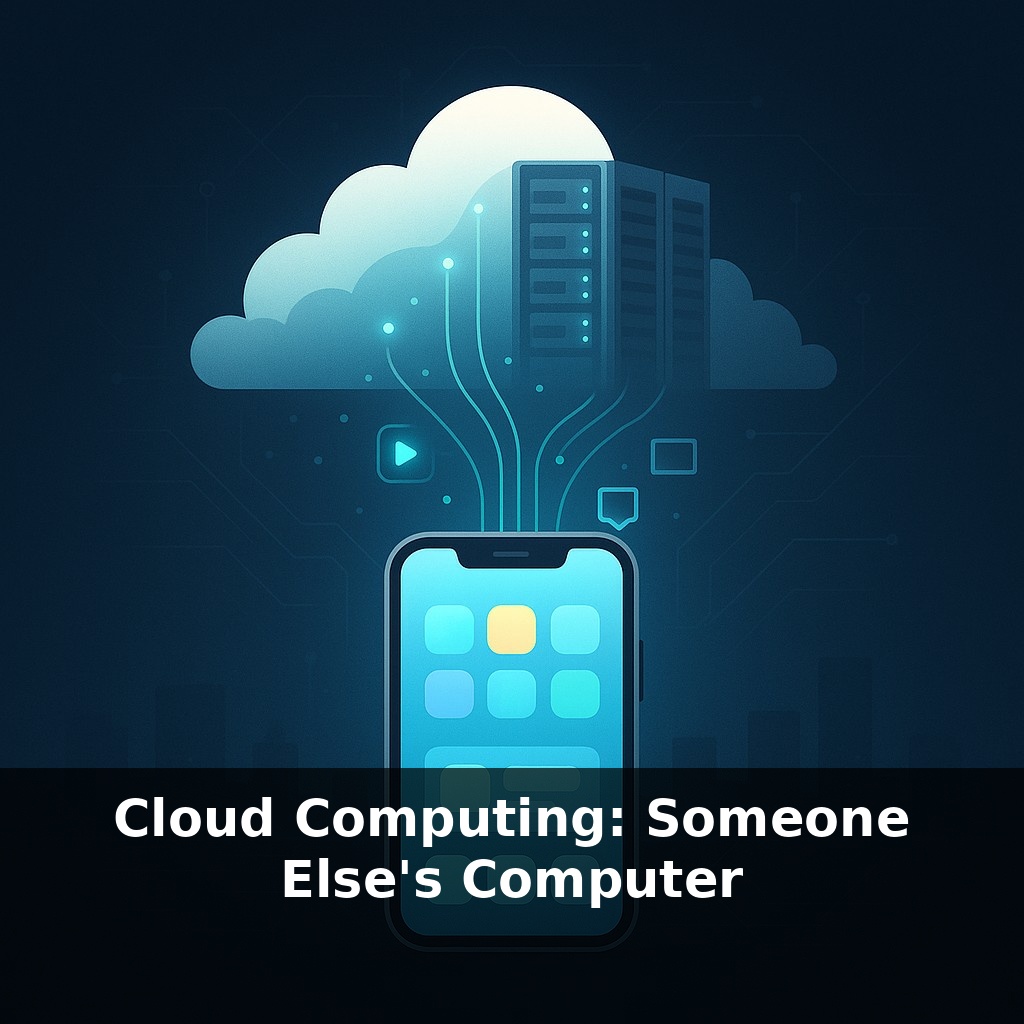
Right now, most of the apps on your phone are secretly running on computers you will never see, in buildings you’ll never visit. You don’t own them, you just rent tiny slices of their power—every time you hit play, send a message, or back up a photo.
The wild part is how invisible this has all become. You swipe open Gmail, and somewhere a distant data center juggles a tiny piece of storage with billions of others—yet it feels no more dramatic than opening a notebook. You hit play on Netflix, and a carefully orchestrated chain of cloud services wakes up, hands you video, then goes back to sleep when you’re done. Your photos app quietly ships new pictures to a remote backup while you’re scrolling social feeds, like a friend tidying your room in the background.
Most days, you never think about who owns those machines, who patches their software at 3 a.m., or who pays the power bill. But those choices shape what’s possible: how fast a startup can launch, how safely your data is stored, and how reliable “always online” really is. In this episode, we’ll follow your everyday apps up into the cloud, and see what actually happens on the other side of the screen.
Some of the biggest names you know barely own any of the machines their products run on. Netflix’s movies, Airbnb’s bookings, parts of TikTok’s feed—they all hitch a ride on the same few global clouds run by Amazon, Microsoft, and Google. That means most online experiences share a common backbone, even if the apps feel totally different. It also means one quiet outage in a single region can ripple into “everything is down” chaos. In this episode, we’ll zoom out from your phone to that shared infrastructure, and ask who really holds the keys.
Here’s the part that feels slightly illegal: massive companies now build global products without ever buying a single server. They swipe a credit card, open an AWS or Azure account, and in minutes can rent more computing power than most governments had a few decades ago. That’s how a tiny team can launch an app on Monday, go viral on Wednesday, and still be online by Friday—just turning the cloud dial up as new users flood in.
Underneath that flexibility are different “flavors” of renting. One level up from raw machines is “platform as a service”: you hand the provider your code, and they deal with the boring plumbing—runtime versions, scaling, patching. Higher still is “software as a service”: you don’t see code or machines at all, just a finished product in your browser. That’s how an average company ends up with over a hundred separate SaaS tools—HR, CRM, support, analytics—all quietly living on other people’s infrastructure.
Those layers change who worries about what. In a raw-compute setup, your team still has to lock down the OS, close ports, manage keys. In SaaS, your biggest risk is usually human: reused passwords, phishing emails, mis-set sharing links. That’s why “the cloud is insecure” is only half a thought—the cloud concentrates both world-class defenses and very human mistakes.
Billions of people ride on this tradeoff every day. Gmail means you never patch a mail server; it also means your inbox depends on Google’s policies, retention rules, and business model. Netflix doesn’t own the pipes it streams through, so its reliability is tangled with AWS’s. A single misstep—wrongly configured storage, leaked access key—can expose a trove of data, not because the cloud failed, but because someone left a door open.
And yet the alternative—every company running its own little server bunker—would be wildly brittle and expensive. Cloud shifts the question from “Can we keep this box running?” to “What should we actually build?” The hard part now isn’t getting machines; it’s deciding which pieces of your digital life you’re comfortable outsourcing to someone else’s.
Think about how this plays out inside a real company. A tiny game studio launching a new multiplayer title might start with a handful of rented machines in one region. If a Twitch streamer suddenly makes the game blow up in Brazil, they can light up more capacity in São Paulo within hours, instead of begging their ops team to ship hardware across continents. A biotech startup running gene-sequencing pipelines can spin up thousands of CPUs for a single intense week of analysis, then shut almost all of it down and pay a fraction of what owning that muscle would cost.
Cloud billing turns into a kind of weather report for the business itself. A spike in usage might mean a successful feature release, or it might just mean someone misconfigured a test environment and left it running all weekend. Security teams, meanwhile, stop thinking only about firewalls and start obsessing over which internal tool can read which dataset, in which region, under which legal regime. HR’s onboarding checklist now includes not just a laptop and badge, but a small galaxy of SaaS logins whose data may wind up spread across continents.
As more life moves into “someone else’s computer,” the boundary of what even counts as “your” system blurs. Logs, models, and clickstreams live side by side, and providers quietly train smarter services on the patterns they see. Regulations will chase this, carving rules about where data may sleep and which algorithms can touch it. Your future “IT choice” may feel less like buying tools and more like choosing which cloud ecosystem you’re willing to let rearrange how your business thinks.
The next twist is personal: your choices quietly steer this landscape. Picking a privacy‑focused photo app, choosing end‑to‑end encrypted chat, or paying for a tool instead of trading your data is like adjusting the seasoning in a shared kitchen—subtle, but it changes the whole meal. Your challenge this week: notice every login that depends on “the cloud,” and ask what you’re trading for that convenience.