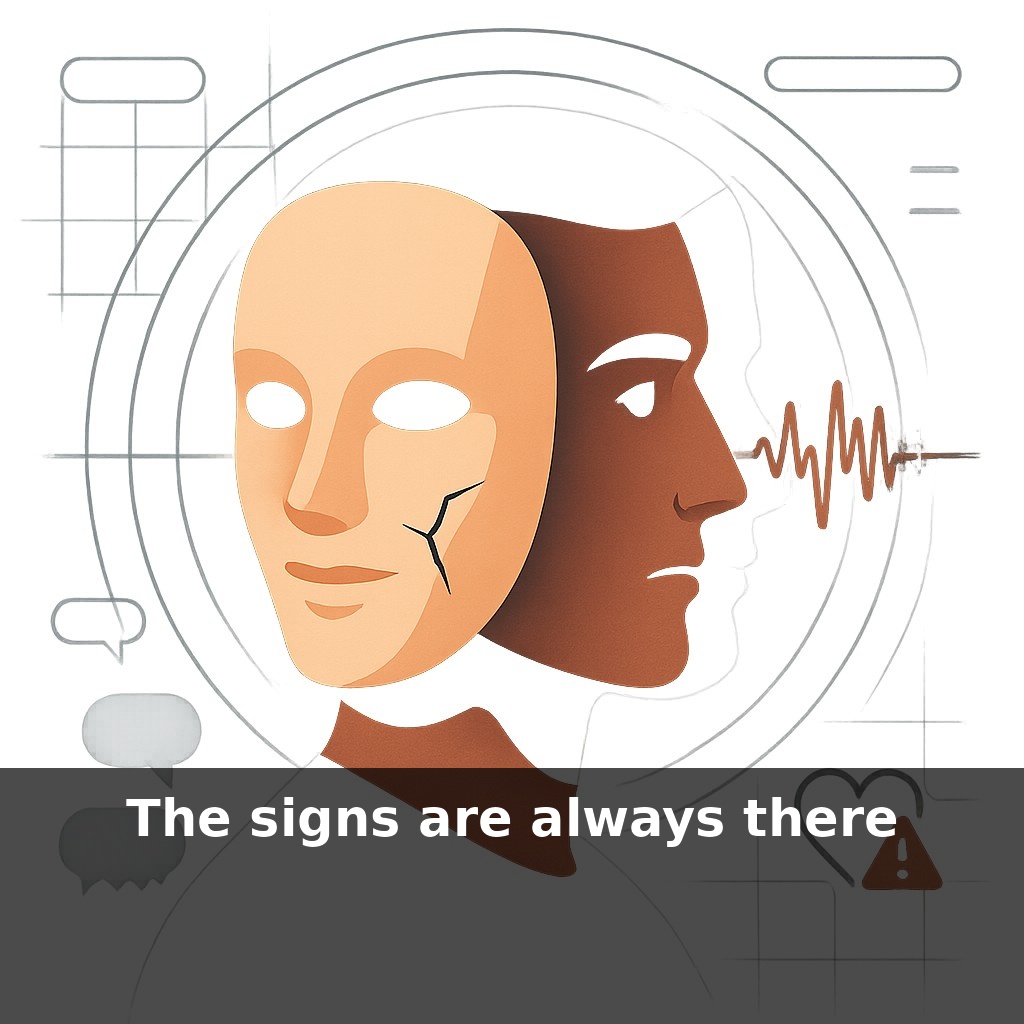
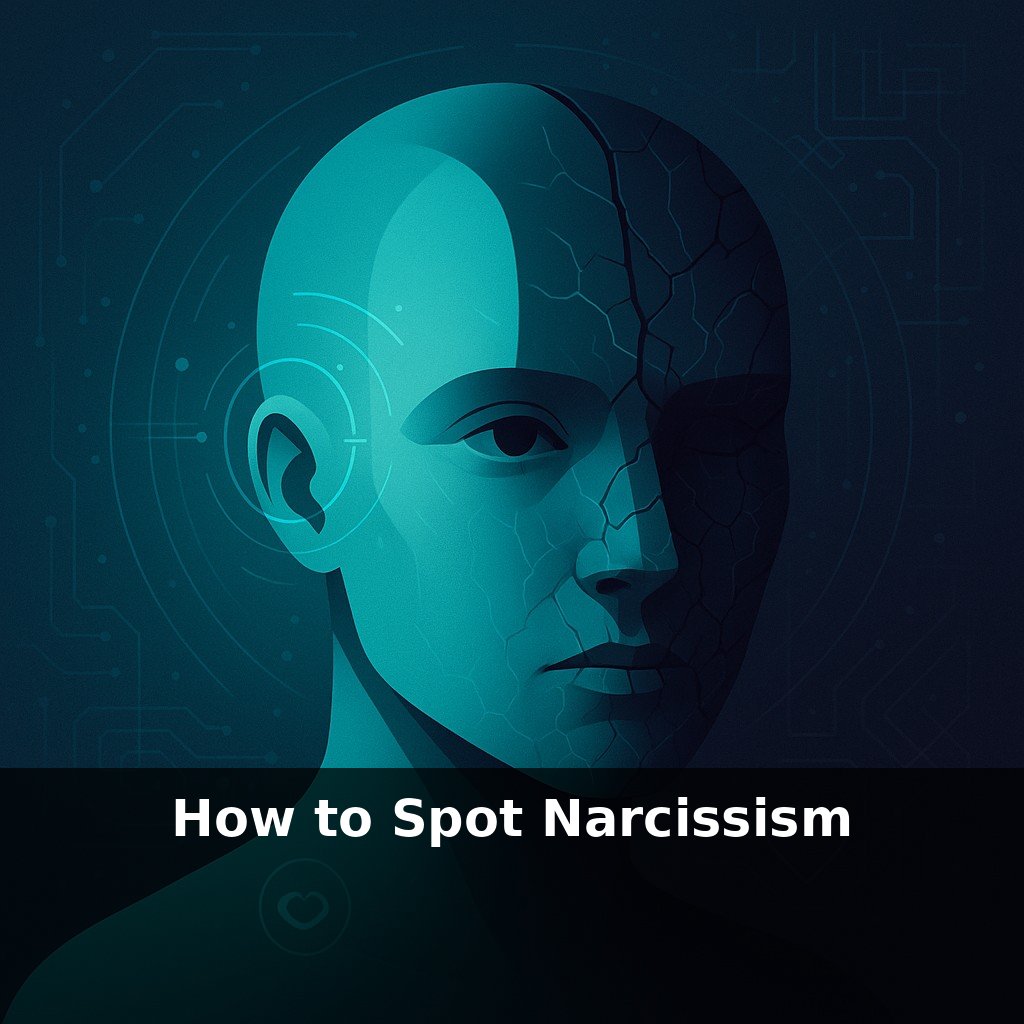
“Most people meet a narcissist long before they realize it—often within the first few weeks of dating or working together. The signs are quiet at first: a joke that stings, a compliment with an edge. Today, we’ll linger in those tiny moments you usually brush past.”
You know that moment when a song sounds “off,” but you can’t yet tell if it’s the singer, the mic, or the room? Early in a connection, that’s how discomfort often feels: vague, easy to dismiss, and strangely easy to rationalize.
You notice they dodge personal responsibility with a joke. Your “no” turns into a negotiation instead of a full stop. They recall your stories mainly to redirect the spotlight back to themselves. None of this feels dramatic enough to call out—so you tell yourself they’re just “intense,” “teasing,” or “misunderstood.”
But those small mismatches—between what they say and what you feel in your body—are data. The goal isn’t to diagnose anyone. It’s to get brutally honest about your own micro-reactions: the tiny flinch, the sudden self-doubt, the urge to over-explain. Today, we’ll slow those moments down and listen closer.
Think of this phase like learning a new app’s interface: at first you just tap around, not sure what everything does, but patterns quickly emerge—what’s intuitive, what keeps glitching, what drains your battery. Early relationship patterns work the same way. Some people repair quickly after a misstep, others double down or flip it back on you. Some are curious about your inner world, others use it as material. Technology has a concept called “signal versus noise”; in human dynamics, your job is not to mute everything, but to notice which signals repeat, and how they subtly recalibrate your behavior over time.
Here’s what usually happens next: the person in front of you starts running tiny “tests” on your reality. Not dramatic, movie-level manipulation—small nudges that see how much of yourself you’re willing to hand over.
One common pattern is *boundary-testing disguised as charm*. They “joke” about something you already said was sensitive. They show up late after you emphasized time matters to you. When you react, they respond with: “Relax, I was just playing.” “You’re so sensitive.” “I didn’t think it was a big deal.”
Notice the double move: they cross a line, then subtly suggest the problem is your reaction, not their choice. Healthy people might misstep, but they usually lean in: “Oh, I’m sorry—tell me what I missed.” The consistent minimizer doesn’t get curious; they get defensive, superior, or amused.
Another pattern: *validation as a scarce resource they control*. At first, praise flows freely—your ideas are “brilliant,” your presence is “different from anyone else.” Then, unpredictably, it cools. Now you feel oddly compelled to “earn” the warmth back: you over-share, over-perform, or over-accommodate, hoping to get back to the version of them from week one.
Watch how they handle your *separate-ness*. When you express a differing opinion, do they genuinely engage, or do they reframe your view as naïve, negative, or “crazy”? When you talk about your day, do they stay with your story, or turn it into a springboard for their own? Over time, you may catch yourself editing out needs, softening truths, or padding bad news to manage their reactions.
Also pay attention to *how they talk about other people*. Exes are “psycho,” colleagues are “idiots,” friends are “jealous” or “ungrateful.” There’s a trail of villains, and they’re the lone misunderstood hero. It’s not just venting; it’s a worldview where accountability rarely lands on them.
In these early weeks, your body often notices before your brain does: tension in your shoulders when you see their name, a slight dread before meeting, a crash after hanging out. That emotional whiplash—high highs, subtle lows—is feedback. You don’t need proof of malice to respect that signal. You only need enough self-trust to say: “Something here is off—and I’m allowed to move slower until I understand why.”
You’re at a small dinner with this new person. They dominate the story flow, but every now and then they drop in a perfectly timed, self-deprecating line—just enough modesty to keep everyone charmed. When the server brings the wrong side dish, they flip: an icy tone, a cutting remark, then a quick laugh to smooth it over. Everyone shrugs it off. Your nervous system doesn’t.
Later, you mention a win you’re proud of—a project, a promotion, a risk you took. Their eyes light up, but the focus shifts almost instantly: they did it younger, faster, better. You’re left holding a compliment that somehow feels like a comparison.
Think of it like a playlist where one track doesn’t quite fit: the songs are labeled “supportive,” “romantic,” “funny,” yet there’s a harsh note that keeps sneaking into the mix. It’s not loud enough to skip the whole album—but it’s there.
Over time, track when they’re kind: only in public? Only when they’re winning? Only when you’re smaller? That pattern is the real story.
Within a few years, we may treat early red flags the way athletes treat minor knee pain: not proof of disaster, but a cue to adjust form before real damage. Browser plug‑ins could highlight patterns in texts—subtle digs, constant “you’re too sensitive” refrains—like spellcheck for self‑respect. In schools, teens might learn how power, attention, and accountability should move in healthy relationships, making it less likely they’ll dismiss that first “off” moment as nothing.
Your challenge this week: when someone leaves you feeling smaller, pause before excusing it. Treat that moment like a pop‑up window: don’t just click “OK.” Ask, “What exactly was said? Did their follow‑up repair or deflect?” Jot a two‑line note on your phone. By week’s end, you’ll have a pattern—like seeing a bruise form instead of blaming each ache.