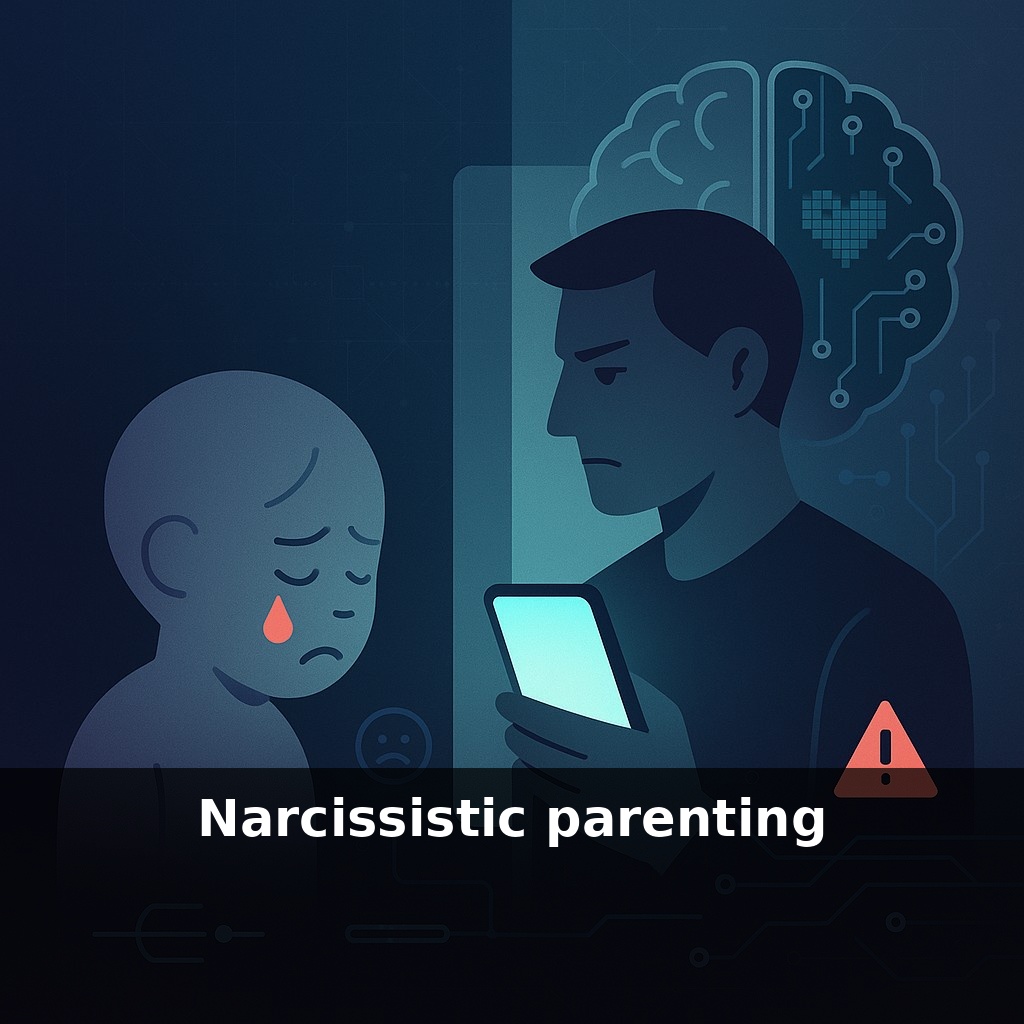
A parent stares into a crying child’s face and, in brain scans, the empathy center barely flickers. In one home, the child gets comfort. In another, they get told they’re “too sensitive.” Same tears, same age—completely different lesson about whose feelings matter.
Sometimes the first thing a narcissistic parent notices isn’t that you’re upset, but how your upset makes *them* look: *You’re embarrassing me*, *Why are you doing this to me right now?* Over time, kids learn a quiet survival rule: it’s safer to manage the parent’s mood than to express their own.
This doesn’t always look dramatic. It can be the “golden child” performing straight‑A perfection, or the “fixer” kid who becomes the family therapist at age nine. Needs don’t disappear; they just go underground—into chronic overachievement, people‑pleasing, or shutting down.
Like a musician who learns to play every note for the audience and none for themselves, these kids grow up fluent in reading others, but strangely disconnected from what *they* actually want or feel.
In these families, attention often flows only one way: upward. The adult’s moods, ambitions, and grudges set the weather, while the child learns to forecast storms and adjust. Birthdays become performances, not celebrations. Achievements are either claimed—“you got that from me”—or ignored if they threaten the parent’s spotlight. Criticism can land out of nowhere: a look, a sigh, a comment about your weight, clothes, or “attitude.” Love feels inconsistent, less like a steady light and more like a switch that flips depending on how well you’re serving the parent’s script.
One of the most confusing parts of growing up like this is that nothing “bad enough” ever seems to have happened—and yet something feels fundamentally off. There may be no bruises, no screaming matches neighbors overhear, and report cards might look spectacular. On paper, everything passes. Inside, it doesn’t.
What’s actually getting shaped is your *internal* map of relationships. If love is tied to performance, you may start to equate being needed with being valued. If you were punished, mocked, or frozen out for having limits—being tired, wanting privacy, saying no—your nervous system quietly tags boundaries as dangerous. Later, even simple things like asking a partner to text when they get home can stir disproportionate anxiety or guilt.
Research on attachment helps explain why. Kids in these environments often oscillate: clinging for approval, then distancing to avoid criticism or humiliation. Over years, this push‑pull becomes a template. As an adult, you might find yourself intensely drawn to confident, charismatic people who feel oddly “familiar,” only to realize they also demand praise, minimize your needs, or sulk when you’re not available on demand. One small study even found adult children of narcissists were several times more likely to pair up with narcissistic partners.
Identity can get warped too. Instead of asking “Who am I?” the hidden question becomes “Who do you need me to be?” Talents and preferences are filtered through how they affect the parent: a hobby is encouraged if it reflects well on them, discouraged if it competes. Many adult children describe feeling like they lived a role more than a life—switching characters depending on the room, but never quite knowing the actor underneath.
Biology doesn’t escape either. High Adverse Childhood Experiences scores, common in these homes, are linked to dramatically higher risks of depression, anxiety, and even chronic health problems. The body keeps a tally of years spent bracing for emotional whiplash.
Recovery starts when that quiet sense of “something’s off” is taken seriously, instead of explained away as oversensitivity or ingratitude. Psycho‑education puts names to patterns; trauma‑informed therapy offers a place where your reactions finally make sense. Boundaries then move from feeling like betrayals to feeling like basic hygiene—less a wall against family, more a filter that lets connection in without sacrificing yourself.
Think of three siblings in the same house. One becomes the household “project manager,” tracking everyone’s schedules, diffusing tensions before dinner. Another retreats into online worlds, where avatars and game stats feel safer than real-life reactions. A third turns into the class clown, using jokes to redirect any tension away from themselves. Different strategies, same goal: reduce the emotional cost of proximity.
At work, these patterns often resurface. The employee who never takes credit but absorbs every extra task. The high performer who panics at neutral feedback and stays late to “fix” it. The new manager who apologizes before making routine decisions, bracing for backlash no one else expects.
In adult relationships, it might look like always picking partners who “need help,” or feeling oddly restless with someone who treats you steadily well. Calm can feel unfamiliar, even suspicious, next to the adrenaline of trying to prevent the next emotional landmine.
Screening these patterns earlier could quietly reshape adulthood. When pediatricians, teachers, and coaches learn to notice kids who act like tiny diplomats or unpaid therapists at home, interventions can start sooner. Therapy might focus less on “fixing” symptoms and more on helping nervous systems learn what safe, mutual connection feels like. Over time, this can shift family trees: fewer holidays spent walking on eggshells, more where everyone gets a real seat at the table.
Healing here isn’t about blaming a parent forever; it’s about updating the script you were handed. Tiny experiments—saying “I need a break,” noticing who respects it, letting your pace set the tempo—start to re‑tune your relationships. Like learning a new instrument as an adult, it’s awkward at first, but every honest note belongs to you.
Before next week, ask yourself: “In what specific moments do I still hear my narcissistic parent’s voice in my head (for example, when I make a mistake, set a boundary, or say no), and what would *my* own, kinder voice say instead in those same moments?” “Thinking about a recent interaction with my parent, where did I feel that familiar mix of guilt, shame, or obligation, and if I had treated myself as someone worthy of protection in that moment, what would I have done differently?” “If I gave myself permission to disappoint my parent this week, what is one tiny, concrete boundary (like not answering a late-night call or not explaining a decision) I would experiment with, and how will I support myself emotionally before and after I do it?”