You can now become a stock market investor in about five minutes—without talking to a human being. One tap, one ticker, and you own a slice of thousands of companies. But here’s the twist: that same five minutes is where most beginners make their biggest mistakes.
ETF assets just passed $10 trillion worldwide, yet most first-time investors still hesitate at the exact moment that actually matters: placing that first order. Your account is open, your index choice is picked, but the trade ticket screen feels like a cockpit—“market,” “limit,” “bid,” “ask,” “time in force.” Tap the wrong thing and it can feel like you’ve broken something.
This is the moment where speed and simplicity collide with details that quietly affect your results for decades: the cost you pay to enter, the tiny annual fee embedded in your fund, and how your order behaves once you send it. You don’t need to become a trader, but you do need to speak the basic “language” of an ETF order well enough to avoid rookie mistakes. In this episode, you’ll walk through a live-style example so that when you finally hit “submit,” you’ll know exactly what’s happening and why.
You’ve already seen how fast today’s apps let you move from curiosity to ownership, but speed isn’t the goal—intentional action is. Now we’ll slow that five‑minute window down and zoom in on the decisions hidden behind each tap. Think of this as putting the trade ticket under a microscope: you’ll notice details like the tiny gap between what buyers offer and sellers want, or how different order choices can nudge your execution price a few cents either way. Those cents compound over years. By the end, the trade screen will feel less like a cockpit and more like a simple checklist you control.
Now let’s walk through that five‑minute window as if you’re actually placing a trade.
You’re on your app’s home screen. Instead of wandering around exploring every button, you go straight to search and type the index you want exposure to, like “total U.S. stock market” or “S&P 500.” The app returns a list of funds. This is where two quiet details start to matter: the fund’s size and its trading activity.
A large, well‑established ETF will usually show: - billions (or more) in assets - heavy daily volume - a tight difference between current buyer and seller prices
Those three together make it easier to enter and exit without much “friction.” Next, you tap into the fund’s info page. Buried alongside performance charts and marketing language is a short list of specs that actually deserve your attention: the index it tracks, its fee, and how closely it has historically matched that index. You’re not chasing the one with the flashiest return chart; you’re checking whether it’s a boring, reliable workhorse.
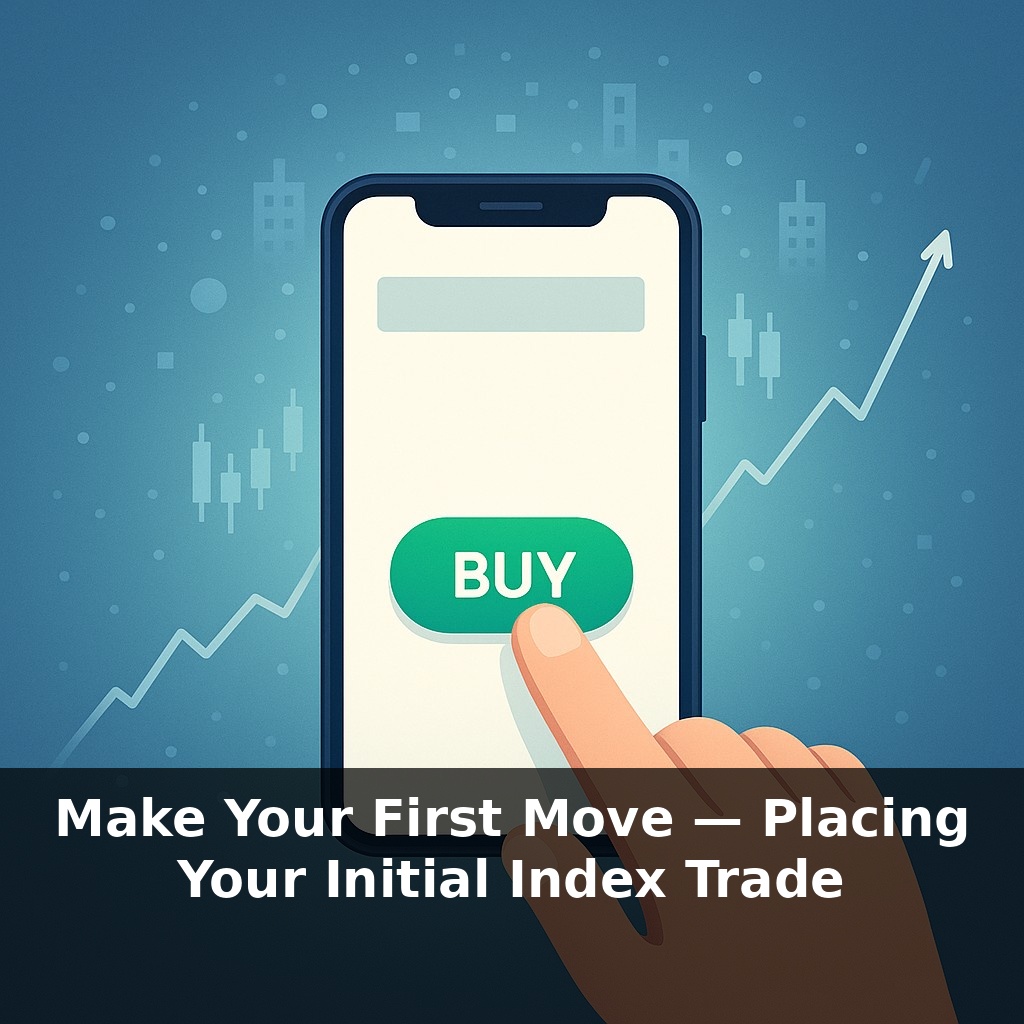
Now you hit “Trade” or “Buy,” and the more technical menu appears. This is where many people freeze and default to whatever’s pre‑selected. Instead, pause and decide how specific you want to be about price and timing. The app might offer features like: - choosing a dollar amount instead of share count - scheduling the trade for a future date - marking the order good for the day only or for an extended period
Dollar‑based investing is especially powerful when you’re starting with small sums. Whether shares cost $50 or $500, you can still deploy the same $25 or $100 and let fractional shares handle the math.
Before you send anything, glance at two numbers: the current trading price and today’s range. If the price is jumping around rapidly, recognize that your fill could land anywhere inside that motion. On calm days, that movement is often tiny; on news‑heavy days, it can be dramatic, and you may prefer a more precise instruction.
Think of this step like a quick pre‑procedure checklist in medicine: simple, fast, but designed to catch preventable mistakes before anything irreversible happens. Once you submit, you’ll see either an instant confirmation or a pending status. That’s not the end of your decision‑making—it’s the beginning of your life as a repeat investor, where this once‑intimidating screen becomes just another familiar tool you use on your terms.
Think of this first order as sketching the outline of a painting, not carving something into stone. You’re deciding *how* you want to interact with markets from now on. For example, you might choose to always place your trades during the first two hours after the open or the last hour before the close, when trading activity tends to be higher and prices often move more smoothly than in the sleepy midday stretch. Or you might prefer to place orders the day *after* big headlines, giving prices a chance to cool down.
You can also run tiny “test trades” with $20–$50 before moving larger amounts, just to watch how the confirmation, fills, and portfolio updates look inside your app. Notice how quickly your order updates from “working” to “filled,” and how the position now appears alongside cash. This practice round makes your later, larger contributions feel routine instead of risky, and it trains you to see each order not as a bet, but as one more brushstroke in a long, evolving canvas.
As tools evolve, that first manual trade may become the *only* one you place yourself. Direct indexing could let you nudge individual positions for taxes or values, while AI‑driven helpers quietly route orders, rebalance, and harvest losses in the background—like a skilled gardener pruning so the whole landscape thrives. The habit that still matters most is yours: checking in periodically, learning from each order, and updating your plan as your life and the tech both change.
Your first index trade is less a finish line and more a doorway. Once you walk through, you can refine *when* you place orders, how you spread them over time, and how they align with paydays or big life goals. Like adjusting a thermostat, tiny tweaks—automating buys, raising contributions—quietly shape your long‑term comfort without daily fuss.
Before next week, ask yourself: 1) “If I had to place a tiny ‘practice’ index trade today, which specific index (e.g., S&P 500, Nasdaq 100) and which strategy from the episode (straight call/put, credit spread, etc.) would I choose, and why does it fit my current risk comfort?” 2) “Looking at today’s option chain for that index, what exact strike, expiration, and position size would keep my maximum loss at a dollar amount I can genuinely sleep with?” 3) “After mentally ‘placing’ that trade using the checklist from the episode (entry criteria, profit target, exit plan), what concrete rule would I follow to get out—both if it’s working (profit target) and if it’s not (stop-loss)?”