Most new investors don’t lose money because markets crash—they lose it on quiet Tuesdays, clicking “buy” and “sell” too often. One famous study found that the busiest traders underperformed badly. In this episode, we’ll explore why doing *less* can actually leave you with *more*.
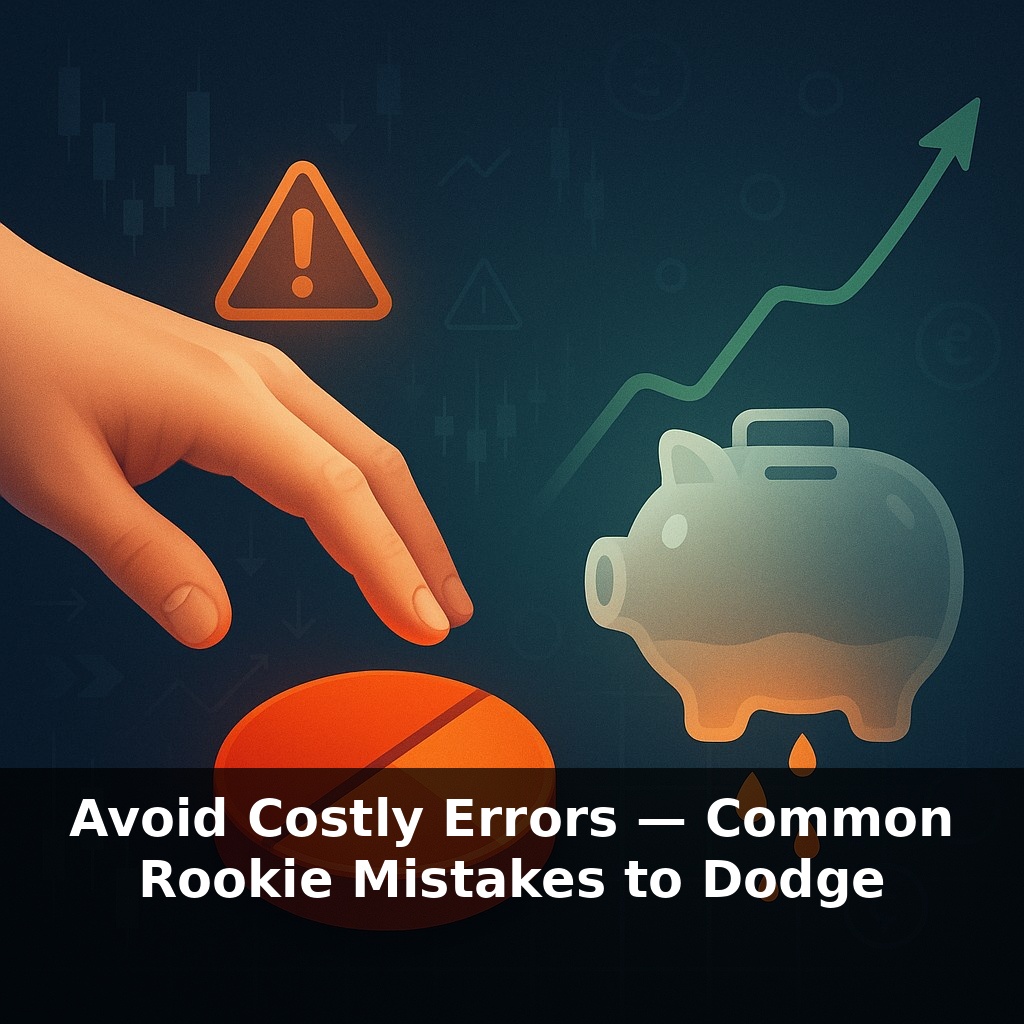
Most beginners don’t blow up their finances with one dramatic mistake. It’s usually a slow drip of small, repeatable errors: a rushed trade here, a shiny new fund there, an “I’ll worry about taxes later” decision in April. Each one feels harmless; together, they quietly siphon years of growth from your future.
By now, you’ve opened an account, placed your first trade, and maybe even set up automatic contributions. That’s the fun part. This episode is about protecting all that work from the sneaky stuff that happens after the excitement fades.
We’ll zoom in on a short list of expensive missteps: concentrating too much in a few names, paying more in fees than you realize, reacting to headlines, misunderstanding how much risk you’re truly taking, ignoring taxes, and assuming any index fund is automatically “safe.” Then we’ll show you simple guardrails to avoid them.
You’ve already built the basic engine of your investing plan: an account, an index fund, automatic contributions. Now we’re checking the dashboard for warning lights that don’t flash until years later. Some mistakes are obvious, like a wild gamble on a meme stock. Others are subtle: a slightly pricier fund, a tax surprise, a “small” tweak you make every few months. On their own, they seem harmless, even responsible. But add them up over a decade and they can quietly cancel out years of contributions. This episode is about spotting those slow leaks early and tightening the bolts before real money slips away.
Most costly “rookie” mistakes aren’t dramatic blow‑ups; they’re quiet decisions that look reasonable in the moment. So instead of more theory, let’s walk through how these errors actually show up in a real account and what to do instead.
Start with concentration. You might think you’re being sensible: “I’ll keep most of my money in my broad fund, but I’ll put just 10–15% into the companies I ‘really believe in.’” Fast‑forward a couple of years and those winners have tripled. Now they’re 35–40% of your portfolio. Nothing “wrong” happened day to day, but you’ve drifted into a bet you never meant to make. Quiet drift is often more dangerous than loud speculation. The fix isn’t never owning individual names; it’s setting hard guardrails in advance—like a maximum percentage for any one stock or sector—and checking once or twice a year whether you’ve crossed your own line.
Fees work the same sneaky way. You rarely feel them in a single quarter. But that 0.80% expense ratio sitting next to a 0.05% alternative is a built‑in performance handicap, every year, forever. A 1% difference sounds tiny, but over a multi‑decade horizon it behaves more like gravity than a minor annoyance. When you choose between similar options, think of every extra 0.10% as rent you’ll pay annually for as long as you hold it. Sometimes it’s worth it; often the cheaper, boring option quietly wins.
Timing mistakes usually don’t feel like “market timing” when you make them. They feel like “being cautious” after a scary headline or “taking advantage” after a big rally. The problem isn’t making a change once in a while; it’s developing a habit of reacting. The data showing investors earning far less than the market is basically a record of millions of people repeatedly flinching in and out at the wrong moments. You don’t need perfect timing to win—you just need to avoid turning temporary swings into permanent decisions.
Risk misunderstandings show up as surprise and regret. If you’re shocked by a 20–30% drop in a stock fund, that’s a sign your expectations, not the market, were off. A practical way to check yourself: periodically ask, “If this fell by a third tomorrow and took five years to recover, would I stick with it?” If the honest answer is no, your mix is too aggressive for your real behavior, even if it looks fine on paper.
Taxes are similar: they only hurt once or twice a year, but the damage accumulates. Selling something with a big gain just to “do something” or constantly rotating between funds can create unnecessary tax bills that act like an invisible fee. Often, the smarter move is simply to hold—or, if you must change, to do it in a tax‑advantaged account when possible.
Finally, “set it and forget it” isn’t quite enough. You don’t need constant tinkering, but you do need occasional, boring maintenance: checking for drift, cost creep, and unintended bets inside your funds. Like a routine checkup at the doctor, the goal isn’t excitement; it’s catching small issues early, before they turn into real problems.
Think about where these “rookie” moves tend to sneak in. It’s rarely during some grand decision; it’s when you’re half‑distracted, tapping through your app at the bus stop, or reading a spicy market take over lunch. You notice one position has “only” made 6% while another doubled, and suddenly you’re itching to reshuffle things. That itch is often the earliest warning sign.
Here’s a more concrete way to spot trouble: scroll your account history for the past year and count how many times you’ve changed direction—switching funds, tweaking allocations, or chasing something new. If the list looks more like a text thread than a logbook, your behavior, not your picks, may be the problem.
One practical guardrail: pre‑decide where “experiments” live. For example, cap any side bets at 5–10% of your total. That gives you room to explore without quietly rewriting your whole approach. Over time, you’ll notice that the calm, boring part of your account is usually the one doing the real heavy lifting.
A future twist: some of the worst “rookie” moves may get harder to make—and easier to make at scale. Robo‑advisors might quietly fix drift or harvest losses for you the way a thermostat keeps your home at a steady temperature. But if millions use similar algorithms, their collective shifts could amplify swings instead of smoothing them. Direct indexing will hand you more control over slices of the market, like mixing your own paint colors—powerful, but easier to muddy if you don’t test small before going all in.
Think of this as learning to read a weather radar instead of guessing from the clouds: you’ll still get caught in rain sometimes, but you won’t be shocked by every storm. As you keep investing, notice which situations most tempt you to tinker. That pattern is your personal “danger zone”—and mapping it is as valuable as any hot new stock tip.
To go deeper, here are 3 next steps: 1) Block 30 minutes today to run your current project or offer through the free “Lean Canvas” tool at leanstack.com so you can spot the exact assumptions that are most likely to become expensive mistakes. 2) Open a free account in Notion or Google Sheets and build a simple “Rookie Mistake Tracker” with three columns: decision made, cost (time/money), and what you’ll do differently next time—then update it after each key decision this week. 3) Queue up *The Personal MBA* by Josh Kaufman or *The Lean Startup* by Eric Ries (audiobook or Kindle) and commit to one chapter tonight, focusing specifically on their sections about validating ideas before spending money, then applying one validation method (like a quick landing page test using Carrd.co) to your next idea.