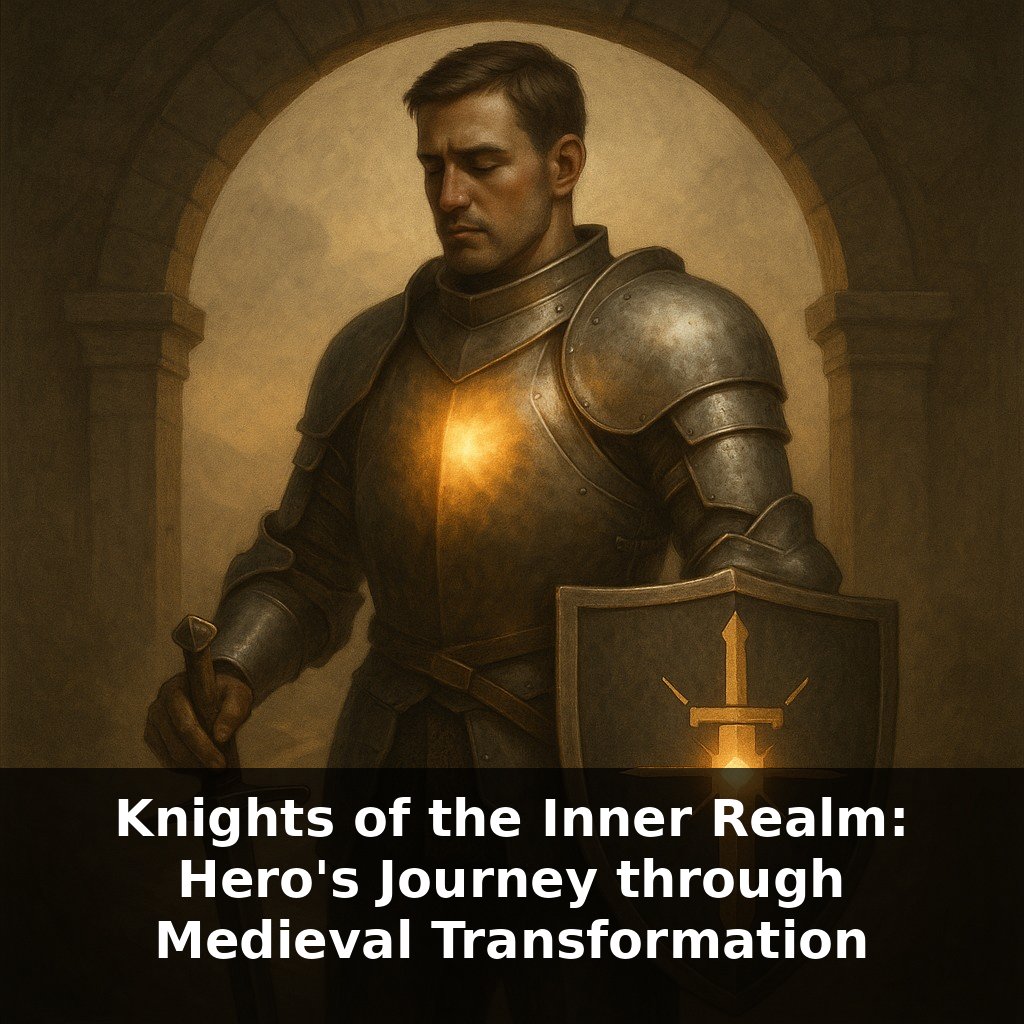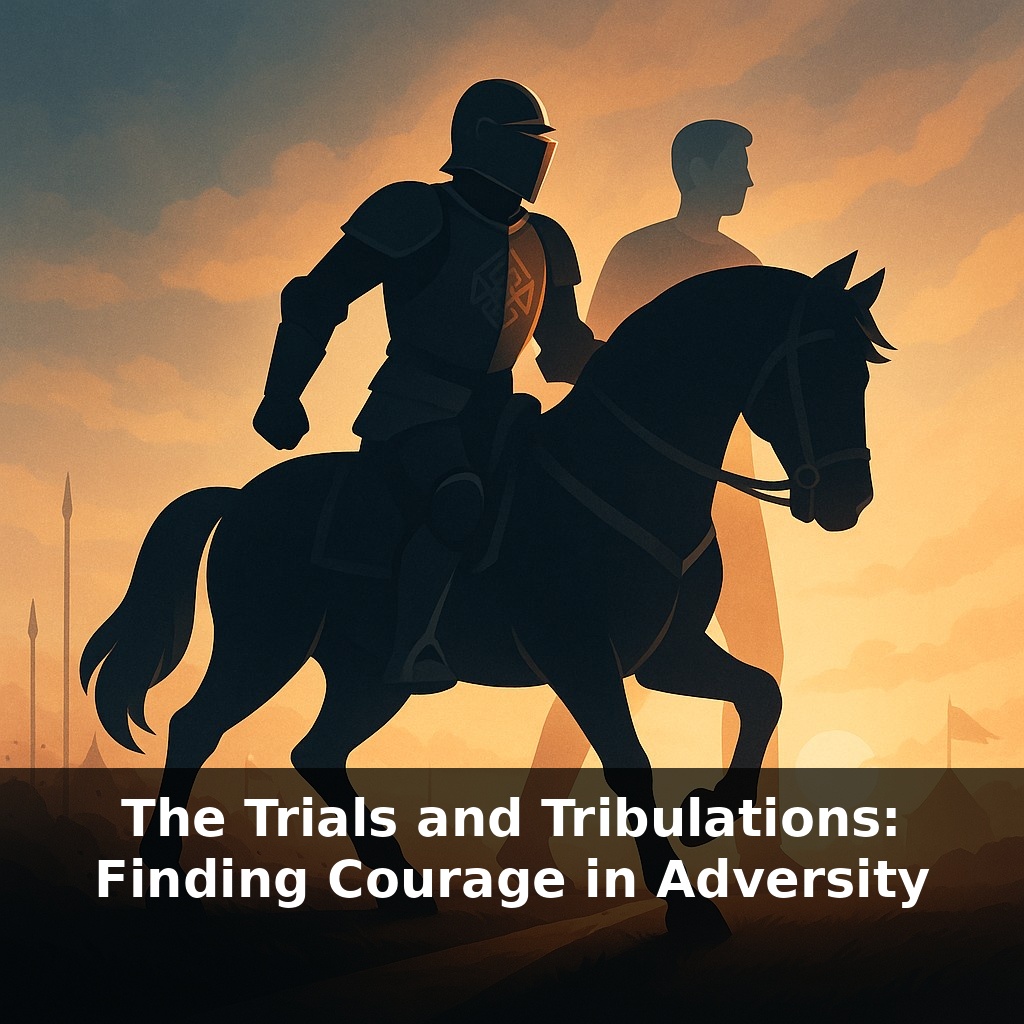
A knight’s warhorse could cost as much as a small estate—yet that knight was more likely to die young than grow old. Now jump to you, standing before a hard decision. Why do some people move forward anyway, while others freeze, even when everything they love is on the line?
Courage, it turns out, isn’t a lightning bolt; it’s closer to a skill with a brutal learning curve. Medieval knights didn’t wait for bravery to “show up” on the battlefield. They trained for it the way a musician trains for a concert: drills until muscle and mind stopped arguing, rituals before danger to steady the inner noise, and endless repetitions of controlled risk that slowly stretched their capacity. We still feel fear in crucial moments not because we’re broken, but because our nervous system is doing its job a little too enthusiastically. The difference is what we’ve rehearsed ourselves to do next. Modern research quietly echoes those old practices: people who anchor to a clear set of values, lean on trusted allies, and process what they’ve lived through don’t become fearless—they become functional in the storm. This episode is about how you can do the same, without armor or a banner.
Knights lived with high odds of violent death, yet many kept riding back into chaos. That wasn’t just stubborn honor; it was a response to real stakes. A destrier could cost as much as a modest estate, meaning a fall in battle could bankrupt a family as well as end a life. Today, our “battles” look different—career changes, hard conversations, health scares—but the stakes can feel just as total. Modern data offers a quiet clue: people who clarify personal codes before stress have lower hormonal fallout after. Courage grows where cost, commitment, and clarity intersect: when you know what you’re protecting, why it matters, and how you’ll carry the fear with you.
Courage for a knight began long before the charge. It started in the quiet, structured boredom of the training yard. Pages and squires were thrown—not into battle—but into systems: waking before dawn, cleaning gear, caring for horses, learning to fall without breaking bones. Fear was expected; chaos was not. The point was to make as many parts of the dangerous world as predictable as possible, so that only the truly unknown demanded full panic.
One overlooked element was *role clarity*. A young knight knew exactly where to stand in formation, who watched his shield side, who carried messages, who held reserve. Clarity narrows the mind’s field of terror. You may not control the outcome, but you know your job. Modern teams under pressure show the same pattern: when people know their specific task in a crisis, they report less helplessness and recover faster afterward.
Another was *micro-rituals*. Beyond big religious observances, knights had tiny, personal anchors: the way they buckled a gauntlet, a phrase before mounting, a touch to a token from home. These acts didn’t remove danger; they shrank it to a moment they could inhabit. Today, similar “pre-performance routines” show up with surgeons scrubbing in or firefighters checking gear. The body learns: “When I do this, I can move through fear.”
Then there was *deliberate exposure to uncertainty*. Tournaments were chaotic by design—changing opponents, unstable alliances, shifting rules. Knights learned to make decisions with partial information and to stay in motion after surprises. They didn’t wait to feel sure; they learned to act while still confused, and to update quickly when reality contradicted their expectations.
Notice what’s missing: no one promised them inner peace. Chronic fear was managed, not erased, by three quiet commitments:
– Don’t face chaos alone if you can help it. – Don’t go in value-less; know what you’re serving. – Don’t let experiences pass unexamined; debrief, even briefly.
One way to picture it from a modern domain: a good software system isn’t fearless; it just has backups, error logs, and graceful failure modes. Courage, at human scale, looks much the same—scaffolding your life so that fear can flare without destroying the whole structure.
A modern paramedic hunched over a patient in the back of a moving ambulance isn’t thinking “be brave.” They’re counting compressions, listening for breath, tracking the next turn. Their courage hides inside tiny, practiced attentions. When the doors finally swing open, they step down shaking—but they stepped down having done the next right thing.
You can see the same pattern in a friend who quietly starts chemotherapy alone at dawn because their ride fell through. They send one text—“Going in”—slip on noise-canceling headphones, and focus on a single song for the first drip. Their “armor” is a playlist and one human connection, but it’s enough to cross the threshold.
Or think of the colleague who speaks up against a biased joke in a meeting. They don’t deliver a perfect speech. They clear their throat, say, “That’s not okay,” and accept the awkward silence. Later, they replay it, cringe—and still decide they’d do it again. Courage often looks less like a roar and more like a small, shaky line you refuse to uncross.
Future tools for courage may look less like armor and more like custom interfaces. VR rigs can already “rehearse” burning buildings or protest lines the way sparring once rehearsed battle. Genetic and biomarker data might tune these drills to your specific stress profile, like adjusting keyboard shortcuts to your hands. And shared, explicit “courage compacts” in workplaces or neighborhoods could turn isolated bravery into something closer to a network protocol for hard times.
Courage often starts smaller than we like to admit: answering a hard message, booking the scan, asking for help before you “really need it.” It grows each time you treat dread as a weather report, not a verdict. Like an architect refining a blueprint after each storm, you’re allowed to keep redesigning how you’ll stand when the next wind hits.
Here’s your challenge this week: Choose one current “trial” you’re facing and, inspired by the guest’s story about owning their layoff instead of hiding it, tell the unfiltered version to one trusted person today—no spin, no minimizing, no heroic bow on top. Before that conversation, set a 5‑minute timer and list exactly three things this hardship is forcing you to learn (like they did with courage, patience, or asking for help), then share those out loud too. Finally, commit to one concrete courage move that mirrors the episode—such as making the scary phone call, sending the vulnerable email, or applying for the opportunity you feel underqualified for—and do it before you go to bed tonight.