Psychologists say some people come out of trauma not just okay, but stronger and more alive than before. Now hold that in your mind as we drop, mid‑scene, into a sleepless night: the job’s gone, the relationship cracked, the plan shattered—yet something in you quietly refuses to break.
Neuroscientists can now watch your brain reshaping itself in real time, like a city quietly rewriting its own street map at night. Under the scanner, areas linked to attention, emotional regulation, and self-control literally change with training. That matters on the nights when life feels unlivable, because it means this: your reactions are not a verdict, they’re a draft. Resilience isn’t a heroic personality trait you either have or don’t; it’s closer to a set of micro‑skills—how you breathe when panic spikes, which thoughts you feed at 3 a.m., whose voice you reach for when shame says “stay silent.” History wrapped these trials in armor and scripture, called them ordeals or dark nights. Today, we can see the wiring behind them—and, crucially, how to rewire it on purpose, one small, stubborn choice at a time.
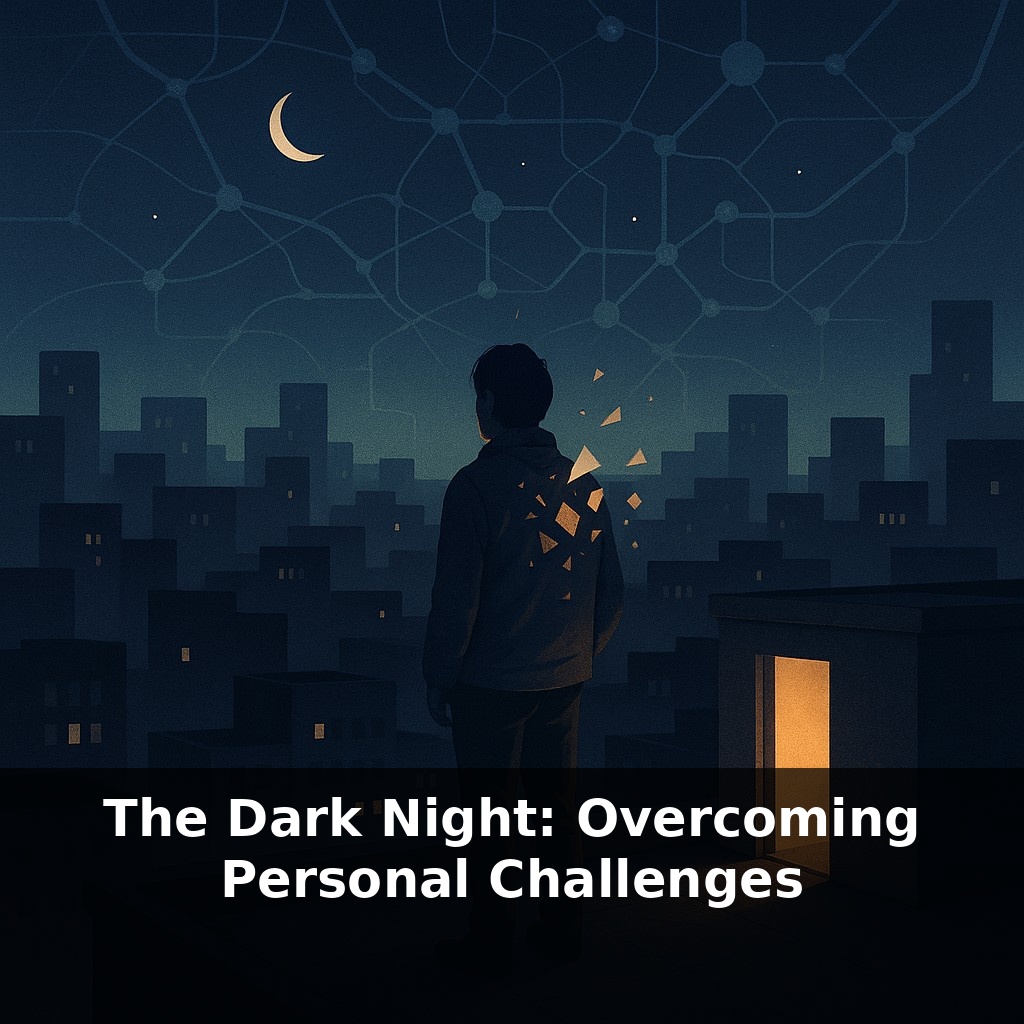
So where does the “dark night” fit into all this? Historically, it wasn’t just a bad season; it was the stretch where every old map stopped working. The knight loses favor at court, the mystic feels abandoned by the very presence they’ve devoted their life to. In modern terms, it’s that phase when your usual coping tools feel dull and every belief you leaned on sounds hollow. Oddly, research suggests this disorientation can be a turning point: people often revise their priorities, deepen their values, and seek more honest connections precisely because the old storyline has collapsed.
Neuroscientist Richard Davidson says, “Well-being is a skill.” That line lands differently when you’re in the kind of night where “well-being” sounds like science fiction. Yet the data back him up: people don’t just survive hard seasons; they often come out with upgraded capacities they didn’t know they could train.
Three of those capacities matter especially when everything feels stripped bare: how you relate to your thoughts, how you relate to your body, and how you relate to other people.
First, thoughts. Under pressure, the mind tends to run worst‑case simulations on loop. The trap isn’t that these show up; it’s believing they’re accurate maps rather than weather reports. Cognitive research shows that simply labeling a thought—“catastrophizing,” “self‑attack,” “all‑or‑nothing”—reduces its emotional grip. You’re not trying to “think positive”; you’re stepping into the role of editor instead of character. A small shift, but at 2 a.m. it’s the difference between drowning in the narrative and noticing, “Ah, the doom channel is loud tonight.”
Second, the body. Stress isn’t just in your head; it’s in your pulse, gut, jaw. Under chronic strain, the nervous system can get stuck in fight, flight, or shutdown. Practices that lengthen the exhale, relax key muscle groups, or synchronize breath with slow movement send a physical “stand down” signal upward to the brain. Over time, this builds what researchers call greater stress tolerance: your system still reacts, but it returns to baseline faster. You don’t have to like what’s happening to you; you’re teaching your physiology not to treat every email or silence as a tiger.
Third, other people. One of the most robust findings in the adversity literature is that we suffer most in isolation. The medieval knight had a code and a company; modern equivalents are more subtle: the one friend you text honestly, the support group where your story doesn’t sound bizarre, the mentor who can hold a longer view when yours collapses. Social support isn’t “being rescued”; it’s sharing bandwidth so your overloaded system doesn’t have to process everything alone.
Like a software system pushed to failure so engineers can see where it breaks, a dark season exposes the brittle parts of your life architecture: where you over‑rely on achievement, under‑invest in rest, avoid asking for help. Painful, yes, but also precise feedback. The question quietly shifts from “Why is this happening to me?” to “Given that it is, what experiment can I run with what’s still in my control?”
A practical way to see this is to watch how different people move through a crisis. One person loses a job and, after the initial shock, treats the next three months as a structured “training block”: weekday mornings are for upskilling, afternoons for applications, evenings for recovery and connection. Another goes through a breakup and quietly designs a “social scaffold”: two standing weekly check-ins with friends, one therapy session, one solo activity that reliably brings a flicker of interest, even when joy feels out of reach. Neither path is dramatic, but both are deliberate.
Research on “implementation intentions” shows that when people pre‑decide small if‑then steps—“If I wake at 3 a.m. spiraling, then I text X or press play on Y podcast”—follow‑through rises sharply. You’re lowering the cognitive load when your system is already taxed. Over weeks, these pre‑planned responses form a kind of inner playbook: not a way to avoid hard nights, but a way to move through them with a little less guesswork and a little more quiet agency.
Neural training, social scaffolding, and meaning-making will likely become as routine as fitness plans. Schools may teach “mental load management” alongside math, while workplaces offer dashboards tracking recovery like step counts. Your future “inner gear” could include a calm‑practice streak, a support roster, and a purpose statement, updated like a CV. The more public these tools become, the less shame clings to struggle—and the more shared our night‑vision gets.
You don’t have to “earn” your way out of struggle; there’s no moral exam at dawn. What you can do is notice what quietly stayed with you: a question, a name, a half‑formed wish. Treat those as trail markers. The next time the night feels heavy, you’re not starting from zero—you’re carrying a rough, hand‑drawn map you sketched last time.
Try this experiment: Tonight, pick one current “dark night” you’re in and set a 15‑minute timer to deliberately *stay with it* instead of distracting yourself—no phone, no TV, just you and that situation. During those 15 minutes, gently ask yourself out loud the two questions from the episode: “What is this trying to teach me?” and “Who am I becoming because of this?” and notice what emotions and body sensations show up. When the timer ends, choose one tiny “light” practice the guest mentioned (like taking a slow walk, doing 10 deep breaths, or texting one safe person for support) and do it immediately, then pay attention for the rest of the evening to whether your inner narrative about the challenge feels even slightly different.