Understanding Cultural Contexts
📝 Transcript
A quiet nod, a tiny pause, a word left unsaid—these can carry more meaning than an entire paragraph. In some cultures, most of the message lives between the lines. In others, it’s all in the words. Today, we’re stepping into that hidden layer of communication.
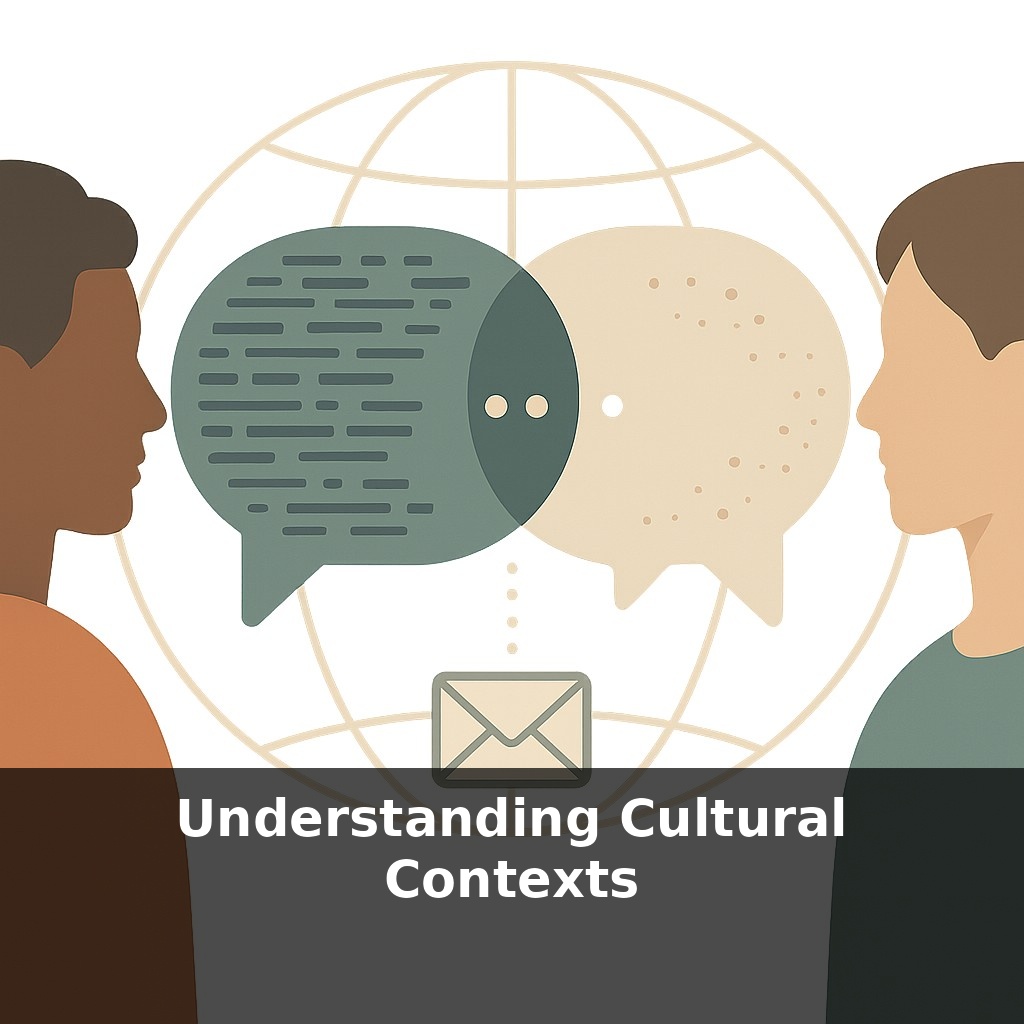
A senior manager sends a sharply worded email, thinking it’s “efficient.” A colleague across the world reads it as hostile and shuts down. No raised voices, no dramatic scenes—just a few sentences crossing a cultural line neither of them can see. That invisible line is where we’ll spend our time in this series: not in the dramatic clashes, but in the subtle misfires that quietly erode trust, deals, and teamwork.
Beyond basic politeness or “being open-minded,” cultural adaptation is a concrete skill set: learning to read what others prioritize, how they signal respect or disagreement, and when silence means consent—or the opposite. Think of it as upgrading from a basic text-only interface to a richer system that processes tone, timing, hierarchy, and context. As we go, we’ll connect these patterns to real decisions: how you negotiate, lead, collaborate, and even deliver bad news across borders.
Numbers reveal how high the stakes really are. Researchers estimate that cultural misunderstandings drain over $60 billion from global companies each year—not through spectacular blowups, but through slow leaks: delays, lost deals, demotivated teams. As more than 5 billion people connect daily through digital platforms, you’re now more likely than ever to collaborate with someone whose “normal” is invisible to you. Think of each interaction as stepping into a new operating system: the buttons may look familiar, but shortcuts, error messages, and updates follow different rules you’re expected to navigate, often without instructions.
When people say “culture,” most still picture flags, festivals, and food. To work effectively across cultures, you need to zoom in much closer and slice it into three practical layers you can actually observe and adjust to.
Layer one: surface signals. This is where most of us stop—greetings, dress codes, meeting etiquette, small talk. Useful, but limited. Two people can both wear suits, shake hands, and speak fluent English, yet operate from completely different playbooks underneath. If you only read this layer, you’ll assume alignment where there is none.
Layer two: interaction rules. These are the unwritten “game mechanics” that govern how people coordinate. For example: - Who speaks first and who wraps up - How directly you can say “no” - Whether you challenge ideas in the room or after the meeting - How much initiative you’re expected to show without being asked You rarely see these rules written anywhere, but you feel them as soon as someone “breaks” them. That colleague who always “talks over” the boss may, in their own context, just be showing enthusiasm and ownership.
Layer three: deep assumptions. These sit behind the rules: - Is time a precise resource or a flexible guideline? - Is harmony more important than blunt accuracy? - Is the ideal decision fast and bold, or slow and consensus-based? - Is hierarchy protective, or something to push against? You won’t hear people explain these in meetings, yet they steer decisions about risk, responsibility, and trust. When two sets of assumptions collide, both sides can feel the other is irrational, when in fact they’re being highly consistent with their own logic.
Here’s where it becomes practical: instead of asking “What’s Japanese culture like?” or “How do Germans communicate?”, train yourself to scan for these three layers in every interaction—national, corporate, or even within a project team. A startup engineer in Berlin and a bank manager in Berlin do not share the same culture, even if they share a passport.
One helpful move is to treat any unfamiliar behavior not as a problem to fix, but as code to decode. “What rule would make this behavior make sense?” shifts you from judging to mapping. Over time, you’ll start to recognize recurring “settings”: high or low power distance, fast or slow tempo, direct or indirect challenge. Those settings become your internal dashboard for adaptation.
A Brazilian product lead jumps into a video call, cameras on, warm greetings, a few personal questions before business. Her Swedish counterpart joins with a brief hello and screen-share of the agenda. Neither is rude; they’re following different interaction rules about how trust is built and time is honored. The tension they feel—“too informal” vs. “too cold”—is your cue that deeper assumptions are clashing.
Or think of a U.S. engineer giving a blunt code review to a colleague from Thailand: “This logic is wrong; rewrite it.” Technically correct, socially costly. In one setting, precision is respect; in the other, preserving face is. The same sentence lands as either helpful clarity or public embarrassment.
Your most practical move in moments like these is to pause and mentally tag what you’re seeing: “This is about how they start meetings,” or “This is about how they handle critique.” Then ask yourself: “If this were completely reasonable in their system, what would that system value?” That question pulls you beneath the surface without forcing you to agree—only to understand.
Future implications stretch beyond smoother meetings. As more life happens through screens, cultural “patch updates” will arrive as often as software ones. A teen in Lagos may share more rhythm with a gamer guild than with neighbors; a remote team might feel like a jazz band, improvising norms on the fly. The skill won’t just be “fitting in” to one setting, but noticing which culture is active right now—and switching lenses without losing your own.
You won’t decode every pattern instantly, and that’s the point. Treat each cross-border email or meeting like exploring a new city: street signs you half-understand, shortcuts you only learn by walking. Over time, your “map” expands. Your challenge this week: spot one moment that feels odd, and ask a local, “How would you usually do this?”
From this course

Mastering Cultural Adaptation: A Practical Guide
6 episodesUnlock all episodes
Full access to 6 episodes and everything on OwlUp.
Subscribe — $1.99/monthLess than a coffee ☕ · Cancel anytime