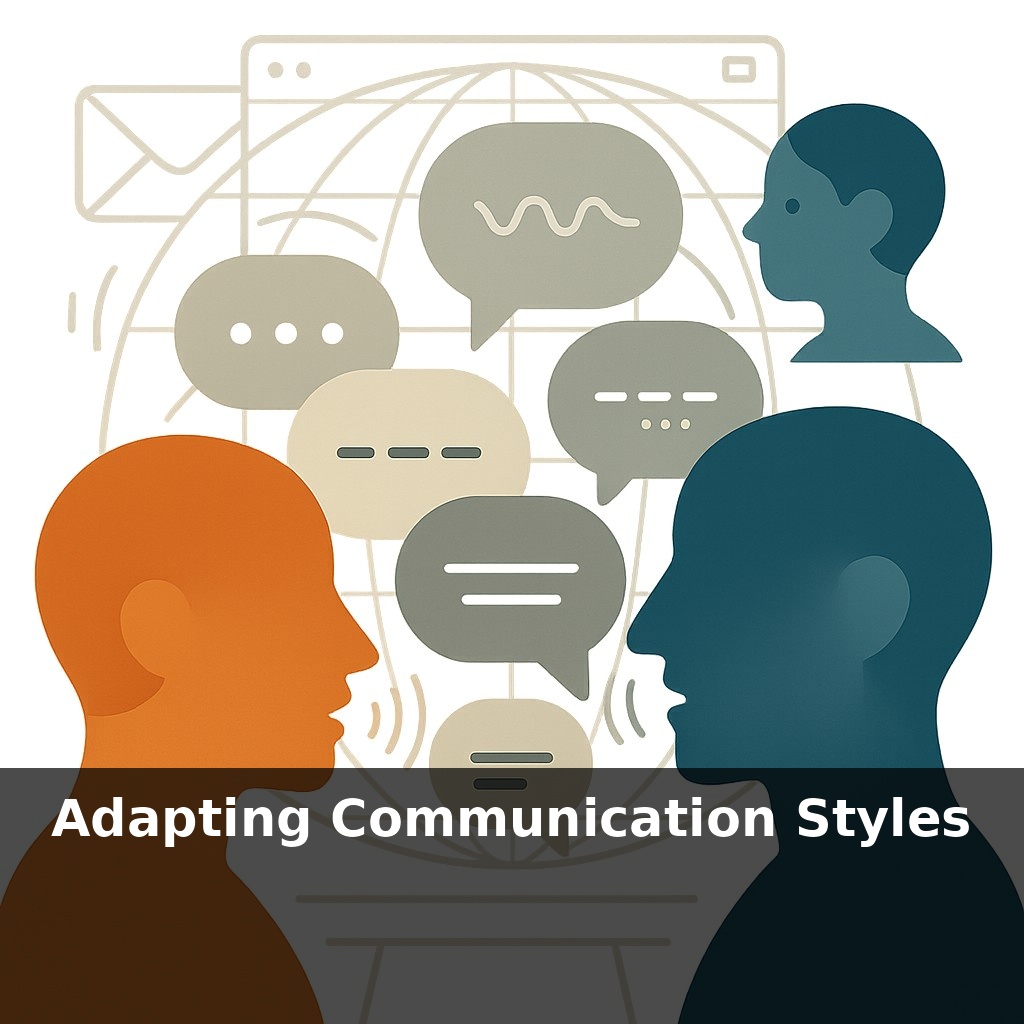
Global companies lose roughly four hundred billion dollars a year to one simple problem: people talking past each other. In today’s episode, we’ll drop you into three tense moments—a video call, a silent meeting, and a “rude” email—and rethink what’s really being said.
The tricky part is that, across cultures, people aren’t just choosing different *words*—they’re often playing by different rules for how meaning gets packaged in tone, timing, and body language. In some teams, a quick “Sure” with no questions means full agreement; in others, it signals, “I heard you, but I still have concerns I won’t voice here.” One manager reads that as commitment, another as polite distance. Add email, accents, and time pressure, and those small mismatches quietly snowball into lost trust, delayed projects, and “unexplained” resistance.
Researchers like Hall, Hofstede, and Meyer have mapped these hidden rules, showing that what sounds decisive in one culture can feel aggressive in another, and what feels respectful in one can seem evasive in another. We’ll use simple real-world moments—like who speaks first, who stays silent, and who follows up—to uncover what’s actually being said beneath the surface.
Think of today’s episode as fieldwork, not theory. We’ll step into real interactions—a terse “Noted.” in chat, a long pause after your proposal, a colleague who never looks you in the eye—and treat them like data points. Instead of labeling people as “unclear” or “too direct,” we’ll ask: what *pattern* might this belong to? We’ll draw lightly on Hall’s context theory, Hofstede’s dimensions and Meyer’s Culture Map, but only as lenses, not labels. The goal is practical: notice, decode, and then deliberately tweak your own style—without feeling fake or abandoning who you are.
Start with three levers you can actually move: **how explicit you are, how you use silence, and how you check understanding out loud.** These are the most practical places to adapt without needing a PhD in cultural frameworks.
**1. Dial up or down your explicitness.** In some cultures, “That will be difficult” already means “No.” In others, it literally just means “hard, but we’ll try.” Rather than trying to guess, experiment with making *your* intent more visible:
- When you’re agreeing, add a consequence: “Yes, I will send the draft by Thursday.” - When you’re disagreeing, separate respect from content: “I respect the idea; I see one big risk…” - When you’re unsure, label it: “I’m not rejecting this; I’m flagging a concern.”
Listen for how others package these same moves. Over time, you’ll notice that some colleagues rarely say “no,” but they say “it may be challenging” a lot—treat that as a calibrated signal, not vagueness.
**2. Treat silence as data, not a void.** If you come from a fast-response culture, a long pause can feel like a problem to fill. Instead, *time it*. Does your counterpart regularly wait a few beats before speaking? If so, that silence might mean “I’m thinking,” not “I’m uncomfortable.”
Concrete moves:
- After asking a question, silently count to five before jumping back in. - If the silence stretches, *name* it gently: “I notice we’re quiet—I’m happy to give a minute to think, or I can clarify.”
You’re training yourself to see gaps not as awkward failures, but as part of the conversation’s rhythm.
**3. Use meta-communication as a normal tool, not a rescue rope.** Rather than waiting until there’s a big misunderstanding, build small “signal checks” into routine moments:
- After giving instructions: “Let me check I said that clearly—how are you understanding the next step?” - After hearing a hesitant answer: “I’m hearing some reservations—is that right, or am I misreading?” - After a meeting: “To be sure we’re aligned, what will you tell your team we decided?”
This isn’t about interrogating people; it’s about co-authoring the meaning of what was just said.
One helpful way to think about it: like adjusting a software interface to different screen sizes, you’re not changing the *core program* of who you are—you’re changing how your message *renders* on different devices so it’s actually usable.
Watch how small tweaks play out in real situations. In a project kickoff, an Indian engineer responds to your plan with, “We will try.” In many Indian corporate contexts, this can hint at risk or lack of full buy‑in. Instead of pushing harder, you might say, “If this timeline feels tight, what version *would* feel realistic?” You’re inviting a clearer signal without forcing confrontation.
Or consider a German manager emailing, “This report is not acceptable.” To some ears that sounds harsh; inside many German workplaces it simply marks a firm problem statement, not a personal attack. A useful move is to mirror the clarity while softening edges: “Thanks for the direct feedback. To reach an acceptable level, which two changes matter most?”
Think of yourself as an architect walking through different buildings: in some, doors are glass and every room is visible; in others, important spaces are tucked behind unmarked corridors. Your job isn’t to knock down walls; it’s to learn where the doors actually are—and then show others how to find them when they’re with you.
As tools strip away language barriers, the “how” of your message becomes more career‑critical than the “what.” Misaligned channels won’t just cause awkward calls; they’ll quietly reroute promotions, partnerships and leadership opportunities toward those who can flex. Cultural adaptation is becoming less about memorising etiquette and more about rapid, on‑the‑spot calibration—like a smart thermostat learning from micro‑signals in the room and adjusting before anyone feels too hot or too cold.
So instead of hunting for the “right” universal style, you’re building a small toolkit: extra clarity when stakes rise, intentional pauses when rooms go quiet, and explicit check‑ins when channels feel fuzzy. Over time, this turns you into the teammate others rely on to “translate” across offices, like a good editor helping diverse authors sound sharp in one shared book.
Start with this tiny habit: When you’re about to speak in your next conversation (Zoom, meeting, or 1:1), quietly ask yourself, “Are they more big-picture or detail-focused?” and then add just one sentence tailored to that style. For example, if they’re big-picture, add one line that starts with, “The main outcome is…”; if they’re detail-focused, add one line that starts with, “Here’s one specific example…”. Do this for just one interaction today, not all of them.