“Most freelancers overpay taxes by thousands, not because they cheat, but because they play by rules written for employees. You send an invoice, money lands, and—quietly—the IRS becomes your biggest expense. This episode asks: how much of that bill is actually optional?”
Fewer than 30% of freelancers use any formal tax strategy beyond “save a bit and hope it’s enough.” That’s like running a profitable studio and never upgrading past the starter tools—you get by, but you leave a lot of quality (and cash) on the table. In this episode, we’re going past basic “track your receipts” advice and into the advanced levers normally used by higher-earning solo professionals: entity choice, income shifting inside your family, and retirement plans that let you shelter more than most salaried employees ever can. We’re not talking about loopholes or gray zones, but about using the code the way it was actually written for business owners. The twist: many of the best breaks only work if you set them up now, before the year is over. So we’ll focus on moves you can still make this year to cut the bill and grow long-term wealth at the same time.
Some of the most powerful moves only appear once you see your freelance work as two roles at once: the person doing the craft and the person running the firm. Employees mainly tweak a W‑2 and maybe an IRA; you can redesign the whole money flow. In this episode we’ll zoom in on where that flexibility really matters: how self‑employment tax hits your first dollars harder than later ones, how shifting *when* income shows up can change *how* it’s taxed, and how layering deductions can turn a single project into three separate wins—cash now, lower tax, and future investment.
Think of this section as zooming from map view down to street level: we’re going to trace the actual money paths where advanced strategies live.
Start with the decision that quietly reshapes everything else: staying a sole proprietor vs. electing S‑Corp taxation once your net profit justifies the added admin. The key lever isn’t some exotic loophole; it’s how much of your profit shows up as “salary” (hit by payroll taxes) versus “distribution” (not). The art is choosing a salary that’s high enough to be “reasonable compensation” for your role, but not so high that you’re donating extra to Social Security and Medicare. That number depends on what similar professionals earn, your duties, and how many hats you actually wear. Two designers could make the same profit yet land on very different reasonable salaries if one’s mostly doing client work and the other is managing a small team.
Layer on retirement plans and this salary choice starts to shape how much you can shelter. With a Solo 401(k), you’re wearing two hats: employee and employer. The “employee” side is tied to your salary, but the “employer” side is tied to your business profit. That means you can sometimes deliberately tweak your salary within the reasonable range to open up more room for contributions while still keeping payroll taxes in check. High earners can even pair that with a one‑person defined benefit plan, essentially promising Future‑You a pension and getting large current‑year deductions in return.
Next, look at timing. Because you control when invoices go out and when big expenses are paid, you also influence which tax year they land in. Bunching equipment, education, or marketing spend into a single year can create a “valley” year where your taxable income drops enough to unlock extra benefits: more of the 20% qualified business income deduction, eligibility for certain credits, or room to convert some pre‑tax money to Roth at a lower rate.
Finally, don’t ignore the “edges” of your life that can legitimately become business‑connected: part of your home, your health insurance, even travel that’s primarily for work but pads in personal days. The code often allows the business‑use slice to be deducted while the personal slice stays personal; your job is to document the split so you can confidently claim what’s allowed without drifting into wishful thinking.
Your challenge this week: run three quick “what‑if” experiments on paper. One, model your year as a sole proprietor versus as an S‑Corp with a plausible salary and see how payroll taxes and retirement room change. Two, sketch a version of this year where you delay your last two invoices into January and pull a planned big expense into December—how does your taxable income shift, and does it affect your bracket or credits? Three, list every major payment you personally make that might have a business angle (internet, phone, part of rent or mortgage, health insurance, some travel). For each, mark a rough percentage that’s genuinely business‑related today. You’re not filing anything yet; you’re mapping territory. Notice where a small change in structure or timing would create the biggest dollar difference, then flag those spots as the ones worth deeper planning—or a targeted conversation with a tax pro who understands freelancers.
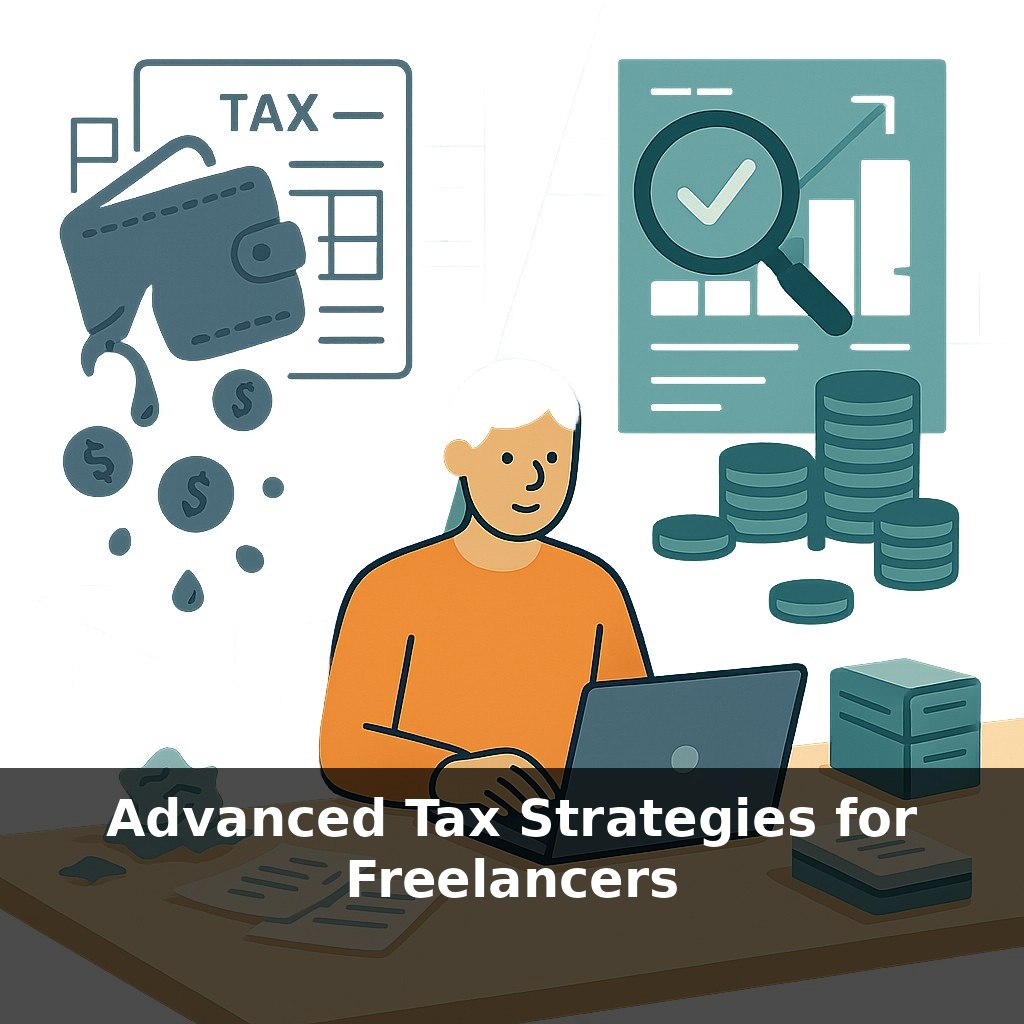
Think of advanced tax strategy more like editing a complex illustration than filling in a pre-made template. You’re adjusting layers, not just picking a filter. For instance, say you have an unusually high-profit year from a few big contracts. Instead of just bracing for the tax hit, you might deliberately stack moves: accelerate paying for gear you *know* you’ll need early next year, fund a larger Solo 401(k) contribution, and split part of your work into a separate stream (like licensing or digital products) that might justify a different compensation mix if you’re using an S‑Corp.
A concrete example: a copywriter earning $180k net might pay herself a salary aligned with market rates for senior writers, then use the remaining profit to both reduce exposure to certain taxes and support bigger retirement contributions. Meanwhile, selectively scheduling a live workshop trip in the same year—documented as primarily business-focused—could turn a necessary professional move into another deductible layer rather than an afterthought cost.
Audit risk will likely hinge less on “red flag” deductions and more on how consistent your story looks across forms and years. As the IRS connects more data, your return becomes a mosaic: 1099s, bank feeds, state filings, even PTET elections. Think of future planning like adjusting your route mid‑road trip when traffic patterns change—same destination (after‑tax wealth), but different on‑ramps: Roth timing, state strategies, and when you recognize spikes in income.
Treat this as an ongoing sketch, not a finished masterpiece. Rules and limits shift, and so will your ideal setup. As your income, location, or family situation changes, new doors open: state credits, Roth windows, even when to scale back certain deductions. Revisit your plan each year like a portfolio review, pruning what no longer fits and doubling down on what clearly moves the needle.
Before next week, ask yourself: Where in my last three months of income (clients, platforms, and projects) could I clearly separate “core business revenue” from “one-off or experimental work” to make my tax planning more strategic? Looking at my biggest recurring expenses (software, home office, equipment, subcontractors), which two could I confidently start tracking in a dedicated business account or card today so they’re fully deductible and easy to document? If I imagined an IRS audit happening six months from now, what single system could I set up today—a simple spreadsheet, a weekly “money hour,” or a folder for receipts—to make that scenario feel organized instead of terrifying?