About a quarter of adults have no emergency savings—yet most of us still plan our month as if nothing unexpected will happen. Your tire blows, your tooth cracks, your laptop dies mid-project… and suddenly your “normal” budget doesn’t look so normal anymore.
You don’t need a crystal ball to handle surprise expenses—you need a budget that *expects* to be wrong and can bend without breaking. The goal isn’t to predict when the car will need repairs or the vet will call; it’s to accept that something will pop up and bake that into how you plan every month. That’s where flexible categories, monthly check-ins, and small pre-commitments come in. Instead of treating “miscellaneous” as a junk drawer, you use it as a deliberate buffer that can swell or shrink depending on what actually happens. Think of it like arranging dishes in a dishwasher: you don’t cram everything into one fixed slot; you shift racks, angle plates, and move cups to make the load fit. In this episode, we’ll zoom in on practical ways to add that kind of give to your budget—so when life shifts, your plan can shift with it.
Most budgets break down not because of one big disaster, but because of a steady drip of “small” surprises: a school fee you forgot, a subscription that renews, a last‑minute train ticket. One by one, they don’t feel catastrophic—until they stack up and push you toward overdrafts or credit cards. This is where we shift from *planning* to *engineering* your month. Instead of only asking, “Can I afford this?” you start asking, “Where will this come from, and what will I trade off?” It’s less about being strict and more about routing cash flow intentionally, like a smart app that auto‑updates when something changes.
Think of this step as upgrading your budget’s “operating system” so it can patch itself when life throws bugs into your month.
Start with a clear line between *essential* and *optional* spending. List what truly keeps your life running: housing, utilities, basic food, transport, minimum debt payments, childcare, insurance, essential medical costs. That’s your non‑negotiable core. Everything else—streaming, eating out, new clothes, gifts, hobbies—becomes your *adjustable layer*. When something unexpected hits, the goal isn’t panic; it’s to slide money *within* that adjustable layer before you ever touch debt.
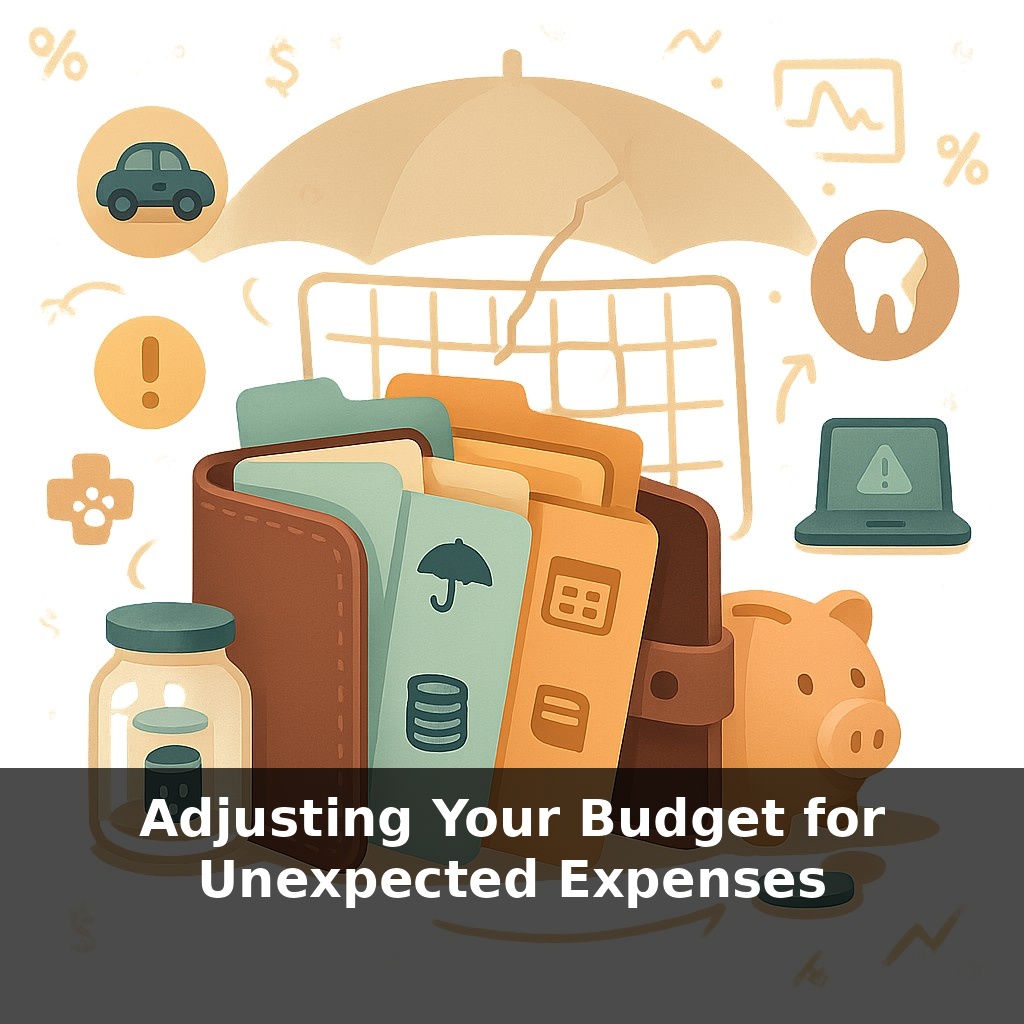
Next, set up two specific “shock zones” inside that layer: 1. **Irregular-but-likely costs** (car service, co-pays, annual fees, travel to see family). 2. **True surprises** (the $400‑type things that the Fed report keeps highlighting).
Instead of one vague pot, give each zone its own line. Behavioural research shows we protect labelled money better than nameless cash; you’re less likely to raid “Car & Repairs – Future” for a random takeout.
Now add a simple decision rule for the month something breaks: - Cover from “True surprises” first. - If that’s not enough, steal from *future you* before *outside lenders*: pause extra debt payments, skip sinking funds, trim nice‑to‑haves. - Only after that sequence consider credit, and if you do, pair it with a plan: “This balance gets cleared in three months by cutting X, Y, Z.”
Zero‑based and percentage methods shine here. With zero‑based, you rewrite next month’s jobs for every dollar: “Groceries down $40, Fun down $30, Buffer up $70 until surprise is cleared.” With percentages, you temporarily reweight: maybe savings drops from 15% to 8% of income for two paychecks while essentials and the buffer climb.
One practical safeguard: a “minimum safe balance” in checking. Decide the lowest number you want to see (say, $300). Each week, if you’re above it, sweep the extra into your buffer or emergency stash. If you’re below it, that’s your red alert to pause non‑essentials *before* overdraft fees or frantic borrowing show up.
Think of your “adjustable layer” like a set of sliders on a music‑mixing app. You’re not deleting instruments; you’re turning some down so another can come up. A $350 vet bill hits? This month, you might slide “restaurants” and “impulse shopping” down, plus skim a bit off “travel” to bring “pet costs” up just for this cycle. Next month, you push those sliders back toward normal.
Concrete example: Lena earns $4,000 after tax. She sets rough targets: 60% essentials, 20% goals, 20% flexible wants. Mid‑month, her car needs a $450 repair. Instead of panicking, she temporarily shifts to 60% essentials, 12% goals, 28% flex. For one month, she cuts goals by $320 and trims $130 from flex to fully cover the repair in cash. No card, no fees—just a different mix for 30 days.
Another angle: treat “True surprises” like a project category. When one hits, it becomes its own mini‑project line you feed until it’s back to zero, then you retire it and restore your usual mix.
Soon, your money plan may react faster than you do. Payroll-on-demand, bank APIs, and AI could watch your accounts like a weather radar, spotting “storm clouds” and quietly shifting funds before a bill hits. Think of apps auto-tuning your settings—dialing down non-essentials, topping up buffers, even triggering tiny insurance payouts. On a larger scale, governments may nudge people into default “rainy-day” contributions, so resilience becomes the norm, not a personal finance hobby.
As you experiment, notice how your reactions change. At first, adjusting for a sudden bill might feel like rearranging furniture in the dark. Over time, your responses become more like using a dimmer switch—small shifts, fewer stumbles. You’re not chasing a “perfect” month; you’re training a system that can keep working even when the script changes.
Here’s your challenge this week: Open your last 30 days of transactions and highlight every unexpected expense over $20 (car repair, copay, last‑minute gift, delivery fee, etc.), then total that amount. Today, create a new “Unexpected Stuff” line in your budget for next month that matches at least 50–75% of that total. To fund it, lower just two flexible categories (like dining out and entertainment) by a specific dollar amount each and move that money into your new line. Finally, set up an automatic transfer on your next payday to send that exact amount into a separate “Unexpected” savings bucket so it happens without you thinking about it.