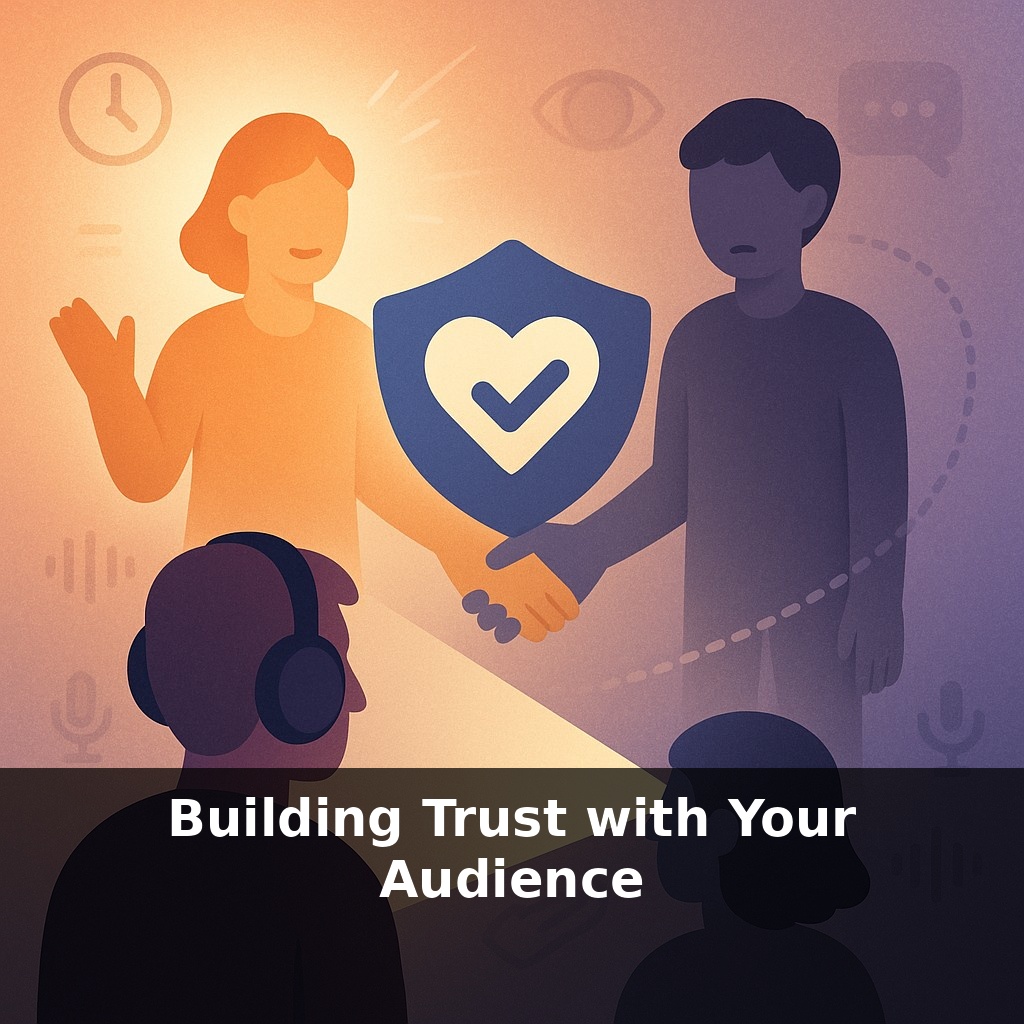
A stranger can hear you for under a minute and quietly decide: “Yes, I’ll trust you with my money”… or “Nope.” Now, think of two creators: one you’d instantly buy from, and one you enjoy but hesitate to pay. Today, we’re digging into why your audience makes that split-second call.
Here’s the twist most creators miss: your audience doesn’t just trust *you*; they trust what they can **see, verify, and predict** about you. So after that first 30–90 seconds, they start scanning for proof. Do your claims line up with outcomes? Do other people vouch for you? Do you show up when it’s inconvenient, not just when it benefits you? That’s where trust compounds—or quietly dies.
This is why a product with 7 reviews can outsell a “better” product with zero. It’s why creators who reply to DMs within an hour often notice the same people buying higher-ticket offers later. And it’s why brands like Zappos can turn a “risky” 365-day return policy into higher order values instead of abuse.
In this episode, we’ll turn trust from a vague feeling into a **deliberate system** you design into your content, offers, and daily interactions.
Most people try to “be more trustworthy” by polishing their tone or tightening their script. That helps, but your audience is actually tracking patterns: *Do your actions match your promises over time?* One broken promise in 10 might be forgiven. Three in 10 quietly caps your growth, even if your content is brilliant.
So we’ll zoom in on three levers you can control this week:
1) **Competence signals**: specific wins, data, and demonstrated skills 2) **Reliability signals**: things you do on a fixed schedule or rule 3) **Care signals**: small, visible actions that cost you time, not just words
Let’s turn those three levers into things your audience can actually *see* and measure.
First, sharpen your **competence signals** with numbers and constraints, not hype. “I help people grow on LinkedIn” is invisible. “I helped 14 creators go from under 1,000 to over 10,000 followers in 90 days, posting 5x/week” is trackable. When you share wins, add at least one concrete number (timeframe, frequency, percentage, or volume). A creator who backs claims with specifics in even 30% of posts stands out immediately from the vague majority.
Second, operationalize **reliability** so it’s obvious from the outside. Pick rules you can obey 95% of the time, then _state_ them. “I post new tutorials every Tuesday and answer comments for 30 minutes” or “I reply to DMs about my paid products within 24 hours on weekdays.” Now each fulfilled instance becomes proof. Missed once? Address it with a short, time-stamped explanation and your next concrete step. That visible recovery often lands stronger than quiet perfection.
Third, make **care** expensive in time, but cheap in money. The bar is low: most creators never follow up. Choose one micro-behavior and apply it consistently to a narrow group. For example:
- Personally welcome the first 5 new followers each day with a 15–20 second voice or video note. - Send a short Loom breakdown to 3 people per week who tag you in their attempt at your method. - After every launch, DM 10 buyers asking, “What almost stopped you from purchasing?” then refer to their answers in future content.
Notice how these actions are visible, bounded (e.g., “first 5,” “3 per week,” “10 buyers”), and repeatable. You’re not trying to impress *everyone*; you’re creating a small, consistent trail of evidence that you show up when there’s no immediate payout.
Think of these as a simple architecture plan: every post, reply, and policy either adds one more “beam” to your structure or leaves a gap your audience eventually feels. Your job isn’t to look perfect—it’s to make your proof so concrete that your audience could explain, in numbers, why you’re worth trusting.
Posting “I care about my customers” does nothing; showing it in ways people can screenshot does. For example, a fitness coach publicly tracks client milestones: “This month, 11 clients hit their first unassisted pull-up and 3 ran sub-25-minute 5Ks after 8 weeks.” That single post quietly proves consistency, outcomes, and attention to detail.
Or look at a SaaS founder who adds a live “Status” page and commits to posting an update within 15 minutes of any outage over 5 minutes. After sticking to it through 4 separate incidents in 6 months, churn from those events drops by 18%, even though total downtime hasn’t changed. People stay because they can *see* the pattern.
You can do the same in small ways:
- Once per month, publish 3 specific changes you made based on audience feedback. - After each launch, share 1 outcome metric (completion rate, average time-to-win, or renewal rate). - For consulting or coaching, ask 5 past clients for a “before/after” number and build one post around each.
Audit how “provable” you are. In 12–24 months, audiences will expect receipts: live delivery stats, public policy logs, and outcome dashboards. Start small: pick 1 metric for each key promise you make (e.g., average reply time, % of students finishing a course, bug fix time). Then, once per month, publish a simple snapshot: 3 numbers, 3 sentences of context, 1 next improvement. When industry-wide trust dips, those receipts become your moat.
End by setting one simple “proof target” for the next 30 days: one public metric, one policy, one behavior others can observe. For example, “Reply to paid-student messages within 12 hours, 90% of the time,” or “Publish 4 outcome snapshots this month.” Measurable promises like these turn quiet trust into visible, defensible assets.
Try this experiment: for the next 5 days, post one “trust-builder” story that shows a real moment behind your work—share a specific mistake you made with a client, what you learned, and exactly how you changed your process because of it. At the end of each post, ask one clear, low-friction question (like “Would you have handled it this way?” or “Have you ever been in this spot?”) and give people a simple way to respond (comment with a word, vote in a poll, or hit reply). Track how many replies, DMs, or comments you get on these posts versus your usual content, and screenshot or jot down any messages that mention words like “relatable,” “honest,” or “trust.” After 5 days, compare: did these vulnerability-plus-learning posts get deeper responses than your regular tips or promotions?