About half of salespeople stop after the first “no,” even though most “no’s” are really “not yet.” A client says, “Your price feels high.” Another says, “I need to think.” Same words, totally different fears underneath. This episode is about uncovering what those fears really are.
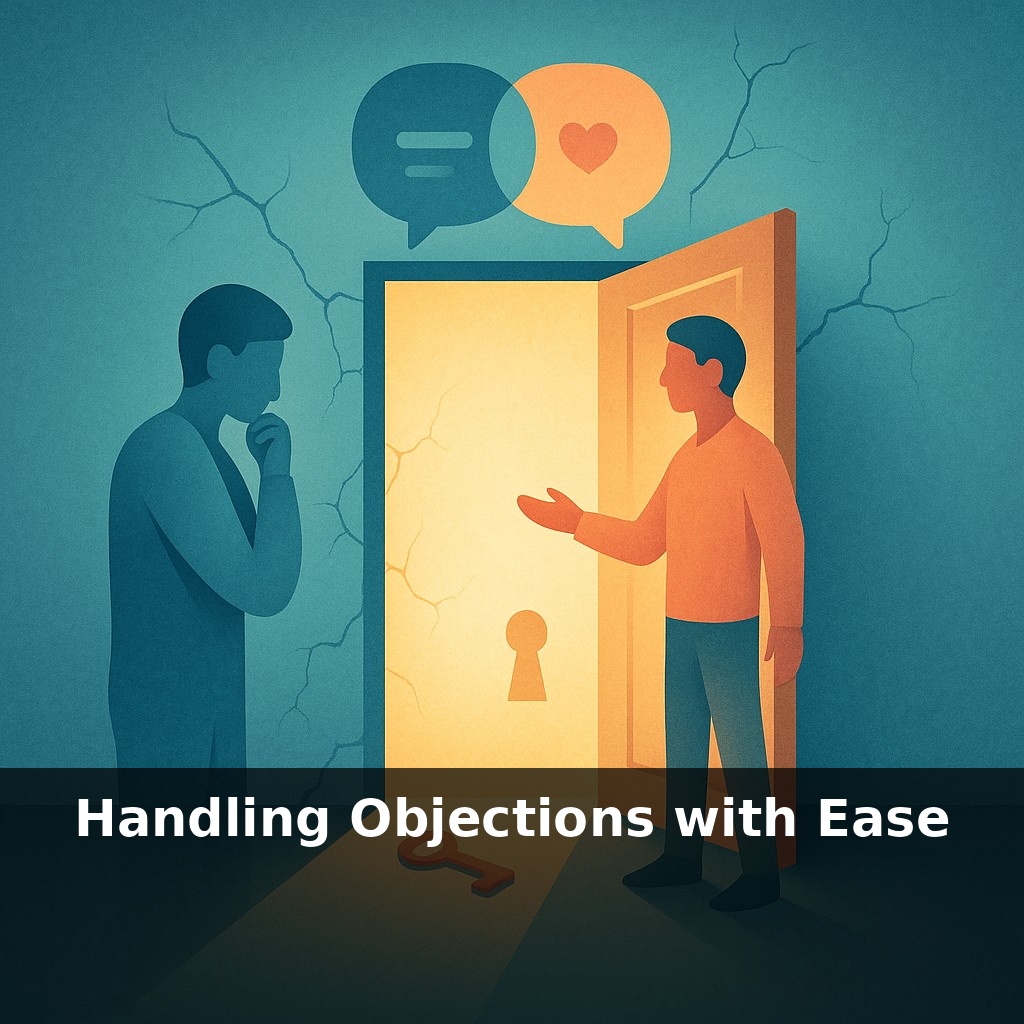
“44% of salespeople give up after one rejection.” Not because they’re lazy—because the objection feels like a wall. Yet in top deals, that “wall” is usually a door that isn’t fully open…yet.
In this episode, we’re going to treat every objection as a data point, not a defeat. When someone says, “Your price is too high,” or “I’m not sure this will work here,” they’re handing you a map with missing pieces. Your job isn’t to push harder; it’s to redraw the map together.
We’ll look at how high performers listen very differently in these moments, why the *second* question you ask after an objection often matters more than your first answer, and how transparent honesty about limitations can actually increase trust and close rates. By the end, you’ll have a simple, repeatable way to turn tense pushback into the part of the conversation where relationships actually deepen.
Most people react to pushback like they’ve been hit: tense body, faster voice, defensive answers. But under that stress, your brain literally narrows its focus—you hear the words, not the meaning. That’s why the first skill in handling resistance isn’t a clever script; it’s learning to keep your cognitive “camera lens” wide when the pressure spikes. In practice, that means noticing your own micro-reactions: the urge to interrupt, justify, or discount what they’ve said. Once you can spot those in real time, you can choose curiosity instead of combat—and your questions naturally get better.
Start with the simplest move: *don’t answer the objection*. Stay with it.
When someone says, “The timing’s not right,” most people jump to solutions: “What if we start smaller?” or “We can extend the trial.” That sounds proactive, but it skips the most profitable part—the few seconds where you turn a vague objection into something you can actually work with.
Think of this as moving from **label** → **layer** → **leverage**:
1. **Label** – Show you heard the category of concern. - “Sounds like timing is the big question.” - “It seems like budget is the main constraint.”
You’re not agreeing or disagreeing; you’re simply putting a clear tag on what they’ve said so both of you know which drawer you’re opening.
2. **Layer** – Gently drill down on what *specifically* sits under that label. This is where most people either interrogate or retreat. Instead, use soft, open prompts: - “Talk me through what ‘bad timing’ means in your world right now.” - “When you say the price feels high, what are you comparing it to?” - “What would need to be true for this to feel like the right priority?”
These questions do two things: they slow the moment down, and they shift the conversation from *position* (“It’s too expensive”) to *picture* (“Here’s how our budget cycle actually works.”)
3. **Leverage** – Only after you understand the layers do you decide what to do with them: clarify, re-scope, or consciously walk away. - Clarify: “It sounds like the concern isn’t the total cost, it’s committing before you see impact. Let’s design a 60‑day milestone that would make this feel safer.” - Re-scope: “Given your current hiring freeze, we might strip out the onboarding package now and revisit in Q4.” - Walk away (and strengthen trust): “Based on what you’ve shared, I don’t think accelerating this makes sense. Want to set a check‑in after your product launch?”
Notice how this shifts your internal goal from “convince” to “diagnose.” You’re not chasing the “yes”; you’re trying to get to the *truth* of their situation as quickly and respectfully as possible.
One practical guardrail: during these segments, watch your talk ratio. Aim to be under 50%. If you catch yourself piling on benefits or explanations, that’s your cue to pause and add another layering question instead.
You’re in a demo. The VP crosses her arms: “We’ve been burned before by tools like this.” Old you would rush to say, “We’re different because…” Instead, try: “Walk me through what ‘burned’ looked like last time.” Now you’re not fighting a sentence; you’re exploring a story.
Here’s a simple pattern you can steal: **event → emotion → effect**. - Event: “What actually happened with that rollout?” - Emotion: “What was most frustrating about that for you personally?” - Effect: “How is that experience shaping how you’re evaluating tools now?”
This does two things. First, it shows you’re listening at the level they actually feel the risk. Second, it gives you concrete design constraints for your solution: “Given what you shared, we should probably structure this so your team can trial it with zero impact on your current workflow.”
Handling resistance can work like refactoring messy code: you don’t argue with the bug report—you trace it, isolate it, and rewrite the part that no longer fits the system they’re running today.
Handled well, resistance becomes useful data for your future self. As AI starts coaching in real time—surfacing moments you interrupt, or flagging phrases that spike defensiveness—you’ll get a kind of “conversation HUD” that makes your blind spots visible. Expect objection‑handling skills to matter far beyond sales: in performance reviews, medical consults, even policy debates, the people who can stay with the concern, name its shape, and co‑design paths forward will quietly steer the toughest rooms.
Treat these moments like redesigning a cluttered room: each concern shows you what no longer fits. Over time, you’ll start hearing patterns—certain phrases that signal budget tension, political risk, or simple overload. Your challenge is not to silence those signals, but to follow them, until saying “no” or “yes” feels equally safe for both of you.