Your brain is far more likely to remember a short story than a striking fact—some research says over twenty times more. Now, picture three moments: a job interview, a first date, a sales pitch. Same person, same facts… but three completely different stories. Why do some land—and others vanish?
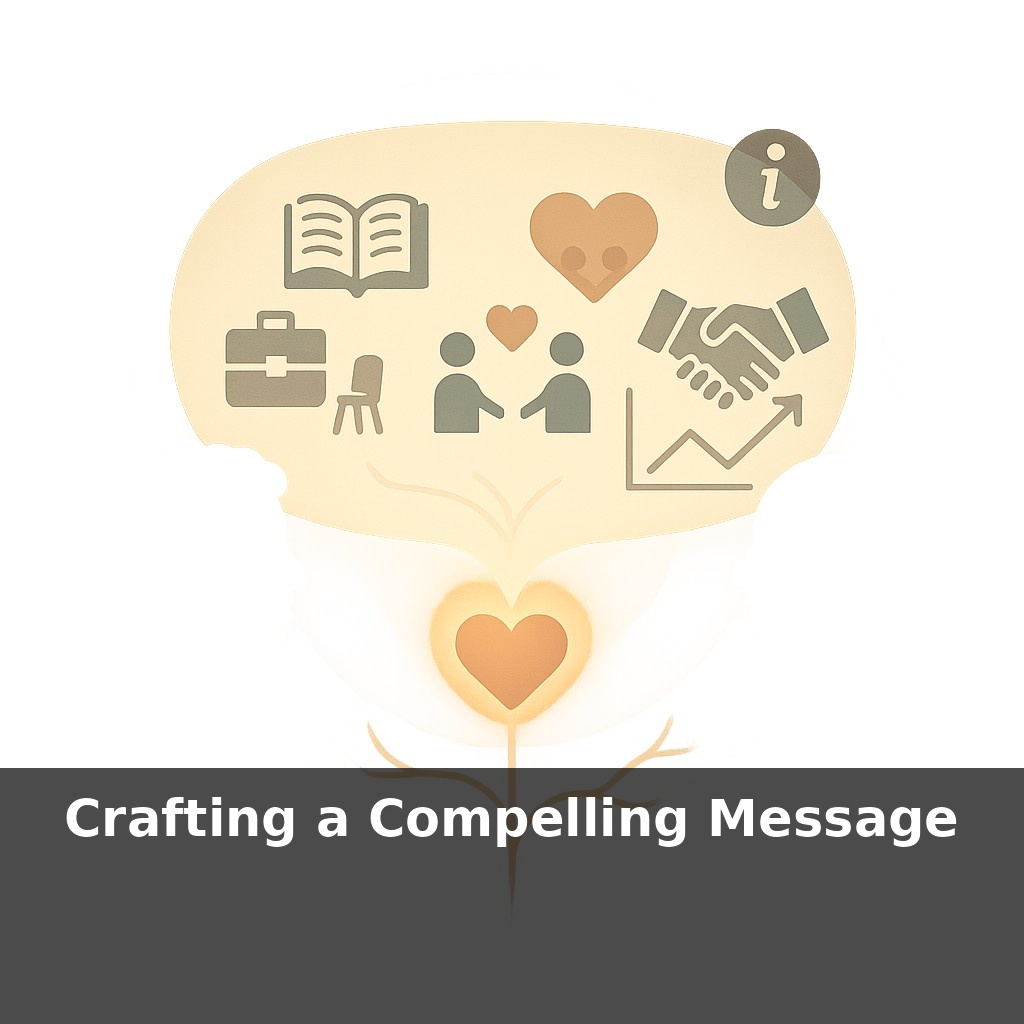
Most people, when they “craft a message,” start by asking: What do I want to say? Persuasive communicators ask a different question: What decision do I want this person to make, and what do they need to feel and understand to get there? That shift turns a vague idea into a focused mission. In relationships—romantic, professional, or with friends—this matters more than polished wording. The same sentence can come across as defensive, caring, or manipulative depending on the intention behind it and the structure you choose. Think about an apology, a boundary, or a request for support. Each one has a hidden architecture: who you are to them (ethos), what emotion you evoke (pathos), and how clearly your reasoning lands (logos). Mastering that structure is how your messages stop getting “lost in translation” and start landing the way you meant.
So how do you actually *build* a message that lands—whether it’s “We need to talk” or “I’d love your help with this”? Start by zooming in on one concrete outcome: a decision, a feeling, or a next step you’d like to invite, not force. Then consider the context: their current mood, recent conversations, unspoken tensions, and what they risk by saying yes or no. A message that ignores context is like sending a perfectly written text with no signal—it never delivers. In real relationships, timing, channel (text, call, in-person), and even length quietly shape whether your words feel like pressure, partnership, or peace.
Here’s where we move from abstract principles to something you can actually *use* in a hard conversation, a vulnerable request, or a high‑stakes text.
Think of your message as having four layers, stacked in a deliberate order:
1. **Intention you don’t say out loud** Before words, decide: “I want us to understand each other,” or “I want to protect my limits *and* the relationship.” This private sentence becomes your filter. If you notice yourself drafting a message that doesn’t match it—full of blame, sarcasm, or vague hints—you know you’re off track *before* you hit send.
2. **Opening that regulates emotion, not just starts talk** Your first line either spikes defenses or lowers them. “We need to talk” drops people into threat mode. A regulating opener does one or more of these: - Acknowledge reality: “I know you’ve had a long day.” - Signal collaboration: “Can we look at something together?” - Clarify stakes: “This matters to me, and I don’t want to fight about it.”
3. **Core message built around one decision or shift** Most messages fail because they chase five goals at once: vent, prove a point, punish, educate, and fix. Pick one. Then structure around it: - Brief, concrete observation (“When X happened…”) - Felt impact (“I ended up feeling…”) - Meaning you’re *checking*, not imposing (“I’m telling myself that means…”) - Specific ask or offer (“What I’d like is…” or “Here’s what I can do…”)
Notice that you’re not flooding them with every example from the last three years. You’re curating just enough detail to make *this* moment legible.
4. **Exit that keeps the door open** The end of your message is where many people accidentally slam things shut. “Forget it” or “Whatever” leaves a residue of contempt. A cleaner exit: - “You don’t have to answer right now.” - “If I’m missing something, I’m open to hearing it.” - “Thank you for even considering this.”
What makes this structure powerful is how it quietly balances their perspective with yours. You’re not just broadcasting; you’re designing a path that’s easier to walk than resist. Your message becomes less “Here’s everything I feel” and more “Here’s the bridge I’m offering—will you meet me halfway?”
Think of the four layers as sliders on a mixing board you can adjust for different relationships. With a close friend, you might push vulnerability up: “My intention is to stay close to you through this,” then a soft opening: “Can we check in about something that’s been on my mind?” The core stays narrow: one situation, one impact, one honest guess, one request. The exit might underline safety: “No rush to respond—I care more about us being real than fast.”
With a manager, you might lean more on clarity than emotion. Silent intention: “I want alignment, not approval.” Opening: “Can we sync on how last week’s deadline went?” Core: a specific missed expectation, how it affected your work, the story you’re *not* sure is true, and a proposed solution. Exit: “If I’m off, I’d really like to understand your view.”
In dating, the same structure lets you raise standards without drama: one pattern, one feeling, one hypothesis, one boundary—ending with, “If this doesn’t work for you, I’d rather know than resent you.”
As AI tools flood every inbox and feed with decent‑sounding text, your real edge becomes *discernment*: choosing one sharp message over ten noisy ones. The question shifts from “Can I phrase this well?” to “Is this worth saying at all—and to whom?” Think less like a performer, more like an architect: who will use this, in what moment, and what load should it carry? The more your words match real stakes and real people, the harder they are to ignore.
Strong messages evolve. As you test this structure in real conversations, notice which phrases spark openness and which ones make people freeze, like debugging a glitchy app by watching where it crashes. Over time, you’re not just “saying things better”—you’re mapping how different people receive you, and quietly upgrading the relationship itself.
Start with this tiny habit: When you open your laptop each morning, jot a single sentence that answers, “For WHO is my message today, and what ONE change do I want them to make?” Then, underneath it, swap any “I” or “we” at the start of that sentence with “you,” so it’s instantly listener-focused. Finally, read that one-line message out loud once, imagining you’re saying it to your favorite real-life customer before you start any other work.