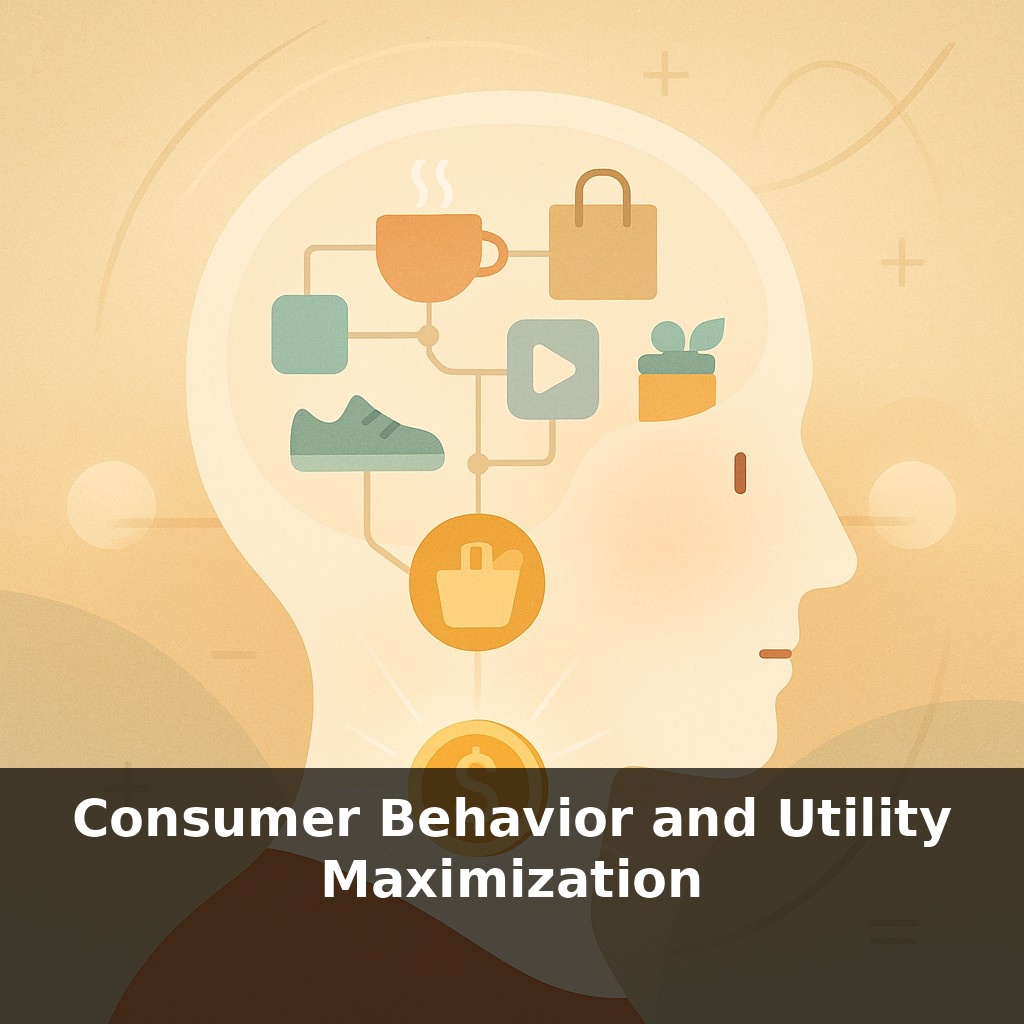
You’re not buying coffee, a streaming plan, or new shoes. You’re quietly solving a math problem in your head: “Where does my next dollar make me happiest?” In this episode, we’ll step inside that split-second calculation—and why companies study it so closely.
Economists call that quiet decision process “utility maximization,” but real life makes it messy. Your budget shifts, prices change, and companies constantly nudge your choices. A streaming service tests new bundles, a grocery app reshuffles discounts, a ride-share app tweaks surge pricing—all trying to stand where your “next dollar” is about to land.
And they’re not guessing. Recommendation systems learn which mix of products keeps you clicking “add to cart,” essentially mapping your personal satisfaction curve across thousands of options. At the same time, your own priorities evolve: a late work week raises the value of convenience food, a fitness kick lifts the appeal of gear over takeout.
In this episode, we’ll connect those shifting tradeoffs to a simple rule economists use to predict what ends up in your basket—and what quietly gets left out.
That “rule” becomes powerful when you zoom out from single purchases to your whole day. You’re constantly juggling margins: coffee vs. sleep, ride-share vs. bus, takeout vs. groceries. Each choice has a tiny “exchange rate” between money, time, and energy. Firms watch those exchange rates too. Surge pricing, flash sales, and personalized discounts are all bets on when your next unit of satisfaction flips from one option to another. The twist: your preferences aren’t fixed. A promotion, a newborn, or a health scare can redraw your entire utility map overnight.
Start with a simple picture: two things you buy a lot—say, coffee and streaming. You’ve got a fixed budget for both this week. Economists say you’re in “balance” when the extra satisfaction from your next coffee per dollar matches the extra satisfaction from your next hour of streaming per dollar. If one side feels better “value for joy,” you quietly shift money toward it until the imbalance disappears.
That balance condition has bite. It predicts that as coffee gets more expensive, you’ll only keep buying it if each cup means more to you than it used to—otherwise you slide dollars over to other uses. It’s the same logic firms try to reverse‑engineer from your clicks: they’re guessing where you’d start shifting that next dollar.
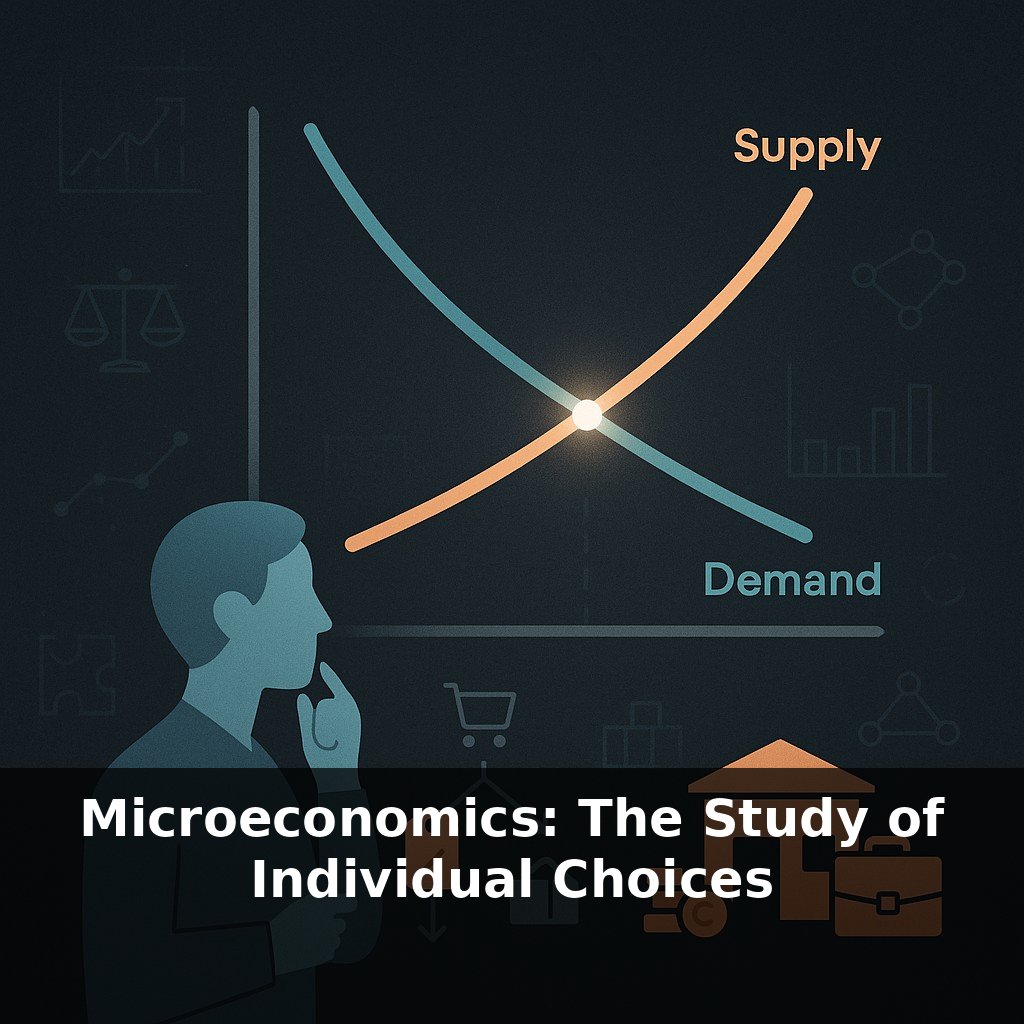
Now layer in the law of diminishing marginal utility. The first coffee of the day might feel essential; the third is “nice if it’s cheap.” The first streaming subscription opens a world of shows; the fourth mostly duplicates what you already have. As the extra satisfaction from each additional unit falls, the price you’re willing to pay for that unit falls too. Line up millions of these decisions and you get the familiar downward‑sloping demand curve.
The 2020 MIT result (revenue rising 10–15% with better estimates of marginal utility) is exactly about locating those “last acceptable units.” Personalized pricing nudges you right up to the point where one more dollar would make you walk away. Amazon’s recommendation engine doing 35% of sales is a related trick: recommend not what is absolutely best, but what is just attractive enough to win your next unit of attention or spending.
A sports analogy helps here: a good basketball coach doesn’t only know who the best shooter is; they know who is best for this specific shot, in this specific moment, against this specific defender. Your “next dollar” is that shot. The mix of groceries, services, subscriptions, and treats you choose is like a playbook, continuously adjusted.
And when your income rises, diminishing marginal utility explains why most U.S. households don’t simply multiply their grocery cart. The first chunk of food spending covers basics; beyond that, each extra dollar on food adds less satisfaction than, say, travel, fitness, or conveniences that save time. So spending tilts toward services, even if your tastes haven’t “luxurified” in any conscious way.
Think about a typical Saturday with three flexible categories: meals out, rides, and digital treats. You might start the day planning dinner at a nice restaurant, a couple of ride‑shares, and maybe a movie rental. As the day unfolds, your marginal utilities shift: a surprise brunch invite makes dinner out feel less special, a delayed train makes a ride‑share suddenly more valuable, and a generous friend sharing streaming passwords quietly lowers what you’d pay for your own rentals.
Firms anticipate these pivots. A food‑delivery app might time a push notification for 6:30 p.m., betting that your “extra joy per dollar” from convenience has just overtaken cooking from scratch. A gaming platform might offer a weekend bundle when your free time spikes, making the “next dollar” spent on in‑game items feel more rewarding than yet another subscription elsewhere.
Your challenge this week: On one day, pick two spending categories you juggle—like snacks vs. rides or apps vs. coffee. Each time you choose between them, quickly note which felt like the “better deal for happiness” and why. Don’t overthink it; one short phrase per choice is enough (“tired, saved time,” “already had snacks,” “needed focus”). At day’s end, look back and ask: when did the “winner” switch, and what changed—your mood, time pressure, alternatives, or prices? You’re not trying to optimize, just to catch those invisible tipping points as they happen.
Soon, those quiet tradeoffs you make could be tracked almost as closely as your steps on a fitness app. AI systems will infer when you’re “full” on one kind of experience and primed for another, steering offers like a GPS nudging you down certain streets. Policy makers may plug these patterns into carbon taxes or digital wellbeing tools, tuning nudges the way a coach adjusts training loads—raising hard questions about who sets the goals, and whose satisfaction counts.
As tracking improves, you might see “wellbeing budgets” alongside money budgets—apps flagging when another purchase looks more like a reflex than real gain. Like a smart thermostat learning when to dial heat up or down, tools could auto‑rebalance time, attention, and spending, raising a final question: how much of your own utility plan do you want to delegate?
Start with this tiny habit: When you open a shopping app or website, pause and say out loud, “What am I really getting from this—utility or just a dopamine hit?” and then put one item in your cart that clearly gives you long-term satisfaction (like a book you’ll re-read, a tool you’ll use weekly, or a course you’ll finish). Before you tap “buy,” quickly ask yourself, “On a 1–10 scale, how much marginal utility will this give me next week?” and if it’s under 7, leave it in the cart for 24 hours. Over time, this 10-second check-in will train your brain to spot where your real utility is hiding.