A typical home holds hundreds of thousands of objects—yet most people can’t name more than a small fraction of what they own. You open a drawer for one thing, and ten strangers stare back at you. Is your space supporting your life… or quietly stealing your time and energy?
The UCLA researchers who counted roughly 300,000 items in the average U.S. home weren’t just documenting excess—they were mapping a daily obstacle course. Every extra object becomes one more visual cue your brain has to process, one more decision you’ll eventually have to make. That mountain of “I’ll deal with it later” doesn’t just sit there; it quietly taxes your focus, your time, and even your mood.
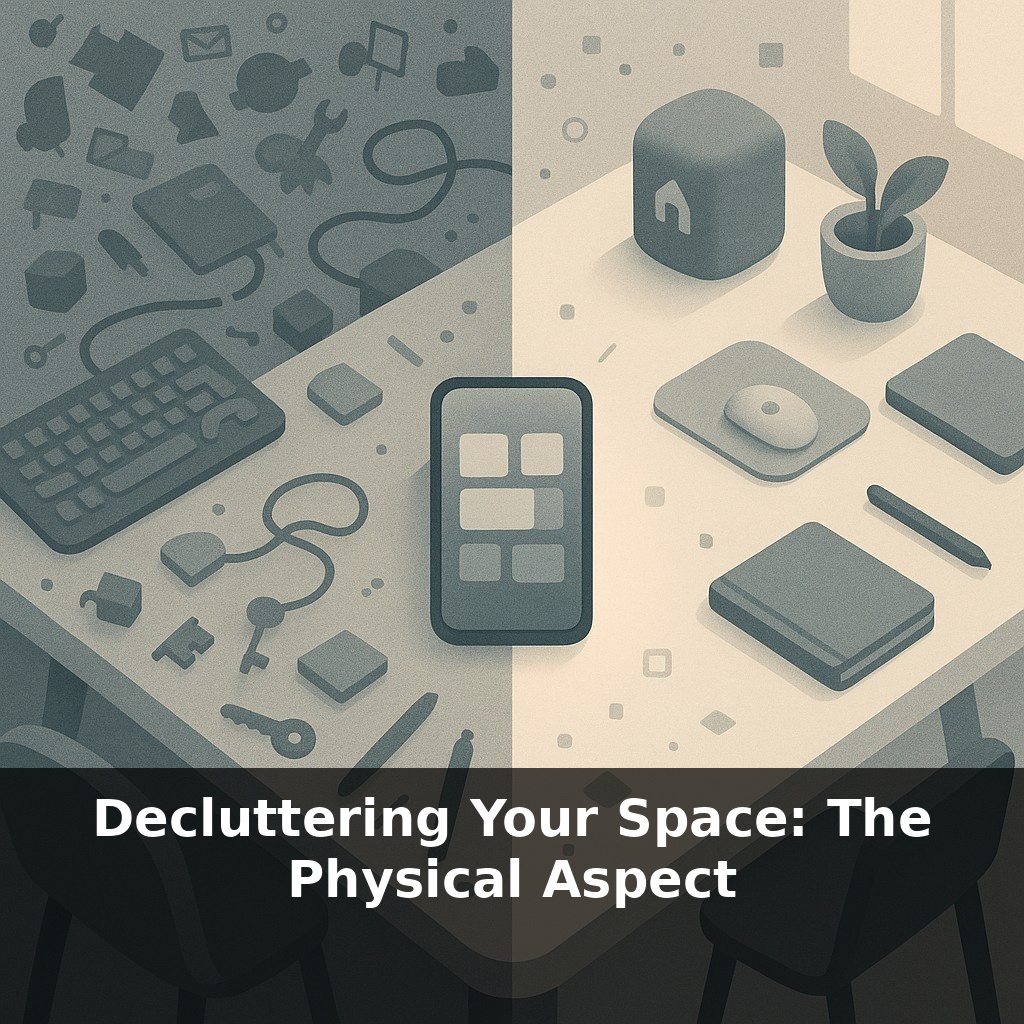
In this episode, we’ll zoom in on the physical side of minimalism: not abstract ideas, but the stuff under your bed, in your drawers, and stacked in the corner you’ve trained yourself not to see. We’ll look at how structured, bite-sized decluttering—choosing one shelf, one pile, one category at a time—can dial down stress, free up hours you didn’t know you were losing, and turn your home from a nagging to‑do list into a practical tool for your day.
Researchers have also found that it’s not just how much you own, but how your space is arranged that matters. When your most-used items live where you actually need them—keys by the door, chargers near the outlet you favor—your day moves with fewer stalls and detours. And when decisions are pre‑made through simple rules (“one in, one out,” or “only what fits in this bin”), you rely less on willpower in the moment. This is where minimalism stops being an aesthetic and becomes engineering: you’re designing your shelves, drawers, and surfaces to quietly help you do the right thing by default.
If an average home holds around 300,000 items, the real question isn’t “Do I own too much?” but “Which 5–10% actually pulls its weight?” The physical side of simplifying your life starts there: shifting attention from what’s technically useful someday to what’s actively earning its spot today.
A practical way to do this is by working in categories instead of rooms. Rooms mix purposes; categories expose redundancies. Line up just your coffee mugs, or only your black T‑shirts, or every charging cable you own. Seeing “twelve versions of the same thing” side by side makes it easier to decide how many you genuinely need in rotation versus what’s just padding your numbers.
Next, tighten your criteria. “Might use” is vague; “used in the last 90 days or essential for emergencies/tax/legal” is clear. You can also ask: - Would I buy this again at full price today? - If this disappeared tonight, would I notice within a week? - Does this have a specific “job” in my current life, not my fantasy life?
These questions cut through sunk-cost guilt and aspirational clutter—the gear for hobbies you don’t actually practice, the clothes for a lifestyle you don’t really live.
Once volume drops, layout becomes your secret ally. Group items by task, not by where they happened to land. Create “stations”: a mail‑processing spot with scissors, envelopes, and stamps; a nightly wind‑down tray with book, glasses, lip balm; a tech basket with chargers, battery bank, and headphones. The goal is fewer detours: when you’re doing a task, everything you need is within one or two arm’s reaches.
Within those stations, visibility beats perfection. Store things so you can see the front or top of each item at a glance: books upright, documents in vertical files, pantry goods with labels facing out. The more you can identify without digging, the fewer micro‑interruptions you face.
Decluttering is like pruning a garden: you’re not punishing the plants; you’re giving light and air to the ones that are actually growing. In your space, that means keeping what clearly supports the life you’re living now—and letting the rest go, so using your home starts to feel less like searching and more like moving in a straight line.
Think of a single kitchen drawer that works beautifully: the sharp knife is always in the front slot, the cutting board slides in vertically, the towel hangs on the oven handle. That drawer “teaches” you where things go without a label or a rule list. You can build that same self-explaining logic into other zones.
For instance, a “launch pad” by the door: hook for keys at eye level, shallow tray for wallet and headphones, single shelf for bag and outgoing items. If something doesn’t fit that small footprint, it doesn’t live there. Or a “focused desk” rule: only what you use every workday gets to stay on the surface—everything else must earn space in a drawer or cabinet.
Borrow patterns from places that already run smoothly: hotel nightstands with just a lamp, a notepad, and an outlet; coffee shops with clearly defined condiment bars; a well-run workshop where every tool has a visible outline. Your home can quietly operate the same way: each area with a clear job, and only the tools that job truly requires.
As homes shrink and devices multiply, physical “stuff” is quietly turning into data. Smart tags and AI inventory apps could flag duplicates, expiration risks, or long‑ignored items the way fitness trackers flag inactivity. Laws nudging repair over replacement may shift the question from “Where do I store this?” to “How do I keep this in service?” Therapists already suggest environmental tweaks; next could be personalized “space prescriptions” tuned like medication, adjusted as your life changes.
Your space will keep evolving with you; this isn’t a one‑time purge, but an ongoing edit. As seasons, projects, and relationships change, let your rooms “rewrite” themselves: rotate tools forward like a coach adjusting a lineup, bench what you no longer use, and promote what matters now—so your environment quietly reflects the life you’re actually living.
Before next week, ask yourself: 1) “If I opened my closet, desk drawers, or kitchen cabinets right now, which specific shelf or drawer instantly makes my shoulders tense—and what would it feel like in my body tonight if that one spot were finally cleared?” 2) “Looking at the items I haven’t used in the last 6–12 months (the extra mugs, old phone chargers, ‘someday’ craft supplies), which three could I honestly let go of today without my life getting worse—and what story am I telling myself that makes me want to keep them?” 3) “When I walk through my home this evening, which flat surface (the dining table, nightstand, or entryway table) do I ‘temporarily’ dump things on—and what simple rule could I try for one week to keep just that one surface clear?”