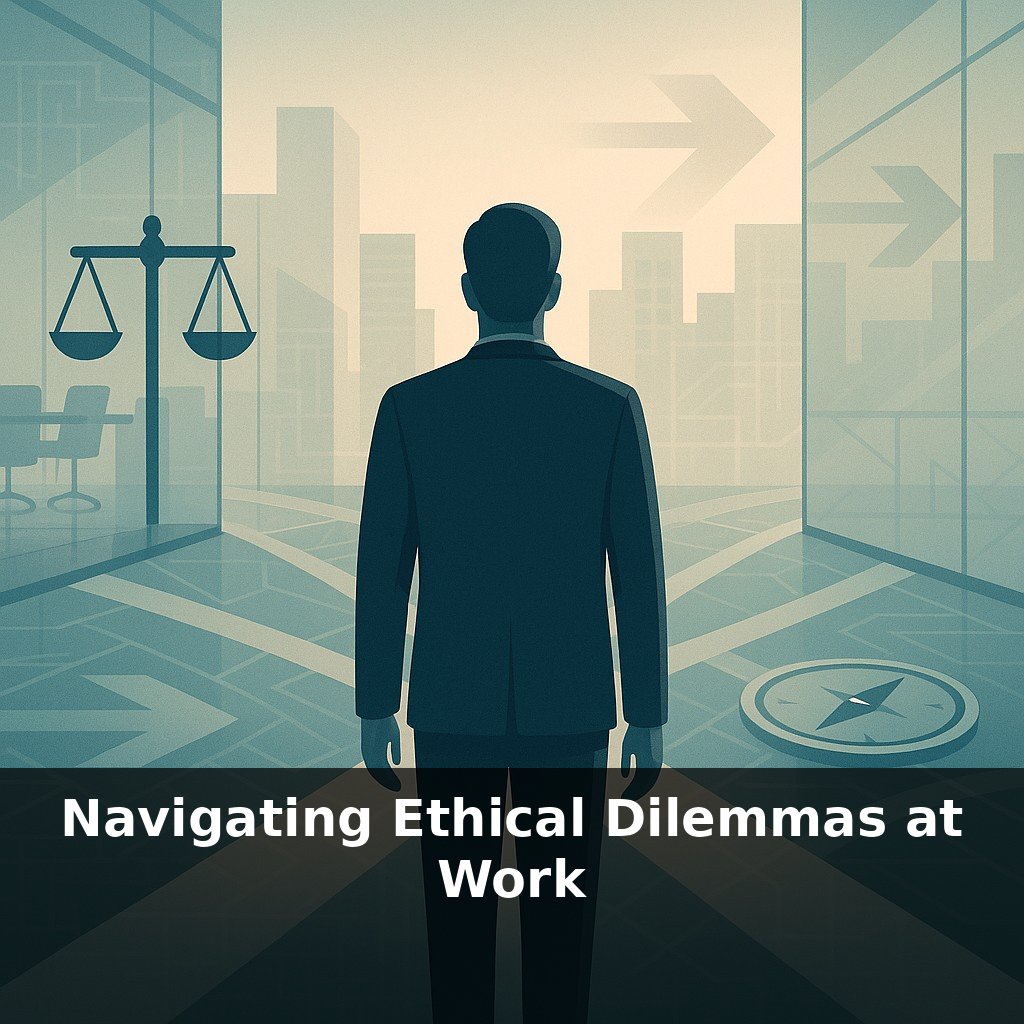
Midway through a high‑stakes meeting, your team must choose between a cheaper shortcut and a slower, safer plan. Everyone has opinions, no one has a clear method. Here’s the twist: the smartest leaders don’t trust their gut alone—they use simple tools to make ethics visible.
Instead of replaying that tense meeting in your head and wondering who argued better, zoom out and ask: what voices never even made it into the room? A community that will live beside the new site. A junior engineer who spotted a risk but stayed quiet. A regulator who will read your decision months from now, line by line. Ethical tools are designed to bring those “absent stakeholders” into the conversation in a concrete way. They don’t just structure debate; they change who and what gets counted. In practice, that can mean mapping who wins, who loses, and who carries long‑term risk—even if they’re not on the payroll. It can mean giving the environment, or future customers, a literal column on your decision sheet. As you’ll see, these methods aren’t about slowing you down; they’re about making sure you’re not moving fast in the wrong direction.
Many organizations now hard‑wire these questions into their processes. The World Bank, for instance, expects three out of four major infrastructure projects to include a formal plan for hearing and tracking stakeholder concerns. Inside companies, ethicists borrow tools from engineering and finance—stakeholder maps, cost‑benefit tables, decision trees—not to replace judgment, but to give it a sturdier frame. Done well, these tools don’t just prevent scandals or lawsuits; they quietly shape everyday choices about pricing, product design, data use, and layoffs long before a crisis hits.
Start with one concrete tool: a stakeholder map. Take a current decision—approving a new feature, choosing a supplier, restructuring a team—and force yourself to list every group touched by it. Not just “customers” and “investors,” but specific clusters: early‑adopter users, workers on night shifts, local competitors, regulators, families of employees. Next to each group, write two things: what they stand to gain, and what they stand to risk. This sounds basic, but most teams never get past the first three obvious names.
Now layer in a second tool: a simple ethical matrix. Across the top, keep those stakeholder groups. Down the side, choose 3–4 values that actually matter in your context—say, safety, fairness, autonomy, and sustainability. In each cell, jot how a given option performs for that group on that value. You’re not hunting for perfect numbers; you’re forcing your team to say, out loud, “Option A is great for short‑term profit but weak on fairness for contractors,” or “Option B slightly delays launch but drastically improves safety for end‑users.” Suddenly, disagreements stop being “you’re too cautious” versus “you’re too aggressive,” and become “we’re weighting safety and autonomy differently—do we agree with that?”
Cost‑benefit analysis often enters here, but modern versions go beyond pure dollars. You can assign qualitative scales or ranges—low, medium, high—for non‑financial impacts, and then ask: if we had to defend these rankings to an external reviewer, where are we least confident? Those are the places bias likes to hide. This is also where techniques like shadow pricing come in, especially when policies affect health, environment, or time. Putting a defensible value on a commute hour or a pollution reduction doesn’t magically settle the ethics, but it makes trade‑offs visible enough to argue about honestly.
Finally, link all this to a decision tree. Sketch out branches: “If we choose Option A and the risk materializes, then…,” including who bears which consequences and when. Attach your matrix insights to each branch. Over time, you can feed back real outcomes—what actually happened—to update how you score future decisions. That loop is where these tools stop being paperwork and start becoming organizational memory.
Your challenge this week: pick one live decision and pilot a “mini toolkit.” One page only: top half is a rough stakeholder map, bottom half is a 3×3 ethical matrix. Bring it to your next meeting and insist the group fill in the blanks before anyone votes. Watch which boxes spark the most discomfort—and treat that discomfort as the most valuable data in the room.
Think about a product team debating whether to add a “dark pattern” that nudges users into a subscription. Instead of arguing abstractions like “user freedom” versus “revenue targets,” they run a quick ethical matrix and see one stark pattern: short‑term gains for quarterly numbers, long‑term frustration for loyal users and support staff who handle complaints. The visual layout makes it hard to pretend these trade‑offs are invisible. One fintech startup I worked with did something similar for a new lending feature and discovered that their “average user” framing quietly masked how much risk was being pushed onto first‑time borrowers; they redesigned the feature to cap exposure for that specific group.
A useful way to test your own process is to notice where decisions still rely on heroic individuals—whistleblowers, lone contrarians, veteran managers “just knowing.” Systematic tools are less dramatic, but they turn those instincts into shared structure everyone can see, challenge, and improve.
Soon, skipping these tools may be as unacceptable as skipping financial audits. As AI starts drafting options and surfacing patterns, your role shifts from “decider” to “ethics editor,” questioning hidden assumptions like a good fact‑checker. Think of each choice as laying bricks in a long corridor: one misaligned brick seems trivial, but repeat it and the whole hallway warps. Over time, disciplined use of these tools can reshape not just outcomes, but your organization’s moral reflexes.
Treat these tools as prototypes, not monuments. Let them evolve with each decision, like upgrading software after every release. Over time, you’ll start spotting patterns in your own blind spots: voices you chronically miss, impacts you consistently underweight. Follow that trail with curiosity, and your process—not just your outcomes—will grow more trustworthy.
Here’s your challenge this week: Choose one real decision you’re currently stuck on (like whether to switch jobs, launch a side project, or move cities) and run it through a 30-minute “decision sprint” today. First, set a 5-minute timer and list your top 3 options plus the *one* key metric that matters most for this decision (for example: learning, income, time freedom, or relationships). Next, spend 10 minutes doing a quick “reversibility check” and “regret test” on each option: Is it reversible within 3–6 months, and which choice are you most likely to regret *not* trying? Finally, commit in writing to a deadline (within 48 hours) to choose one option, and pre-schedule a 15-minute calendar block one month from now to review whether that decision is working based on your chosen metric.