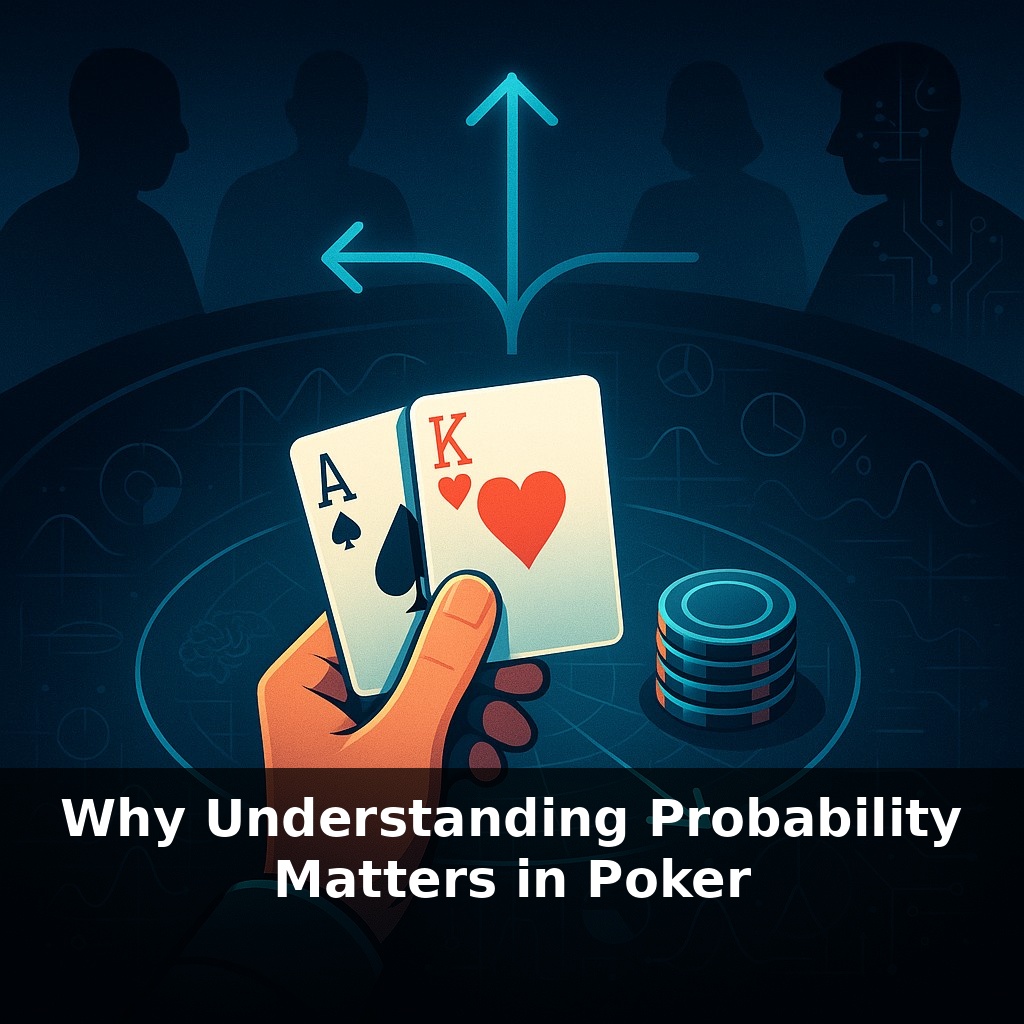
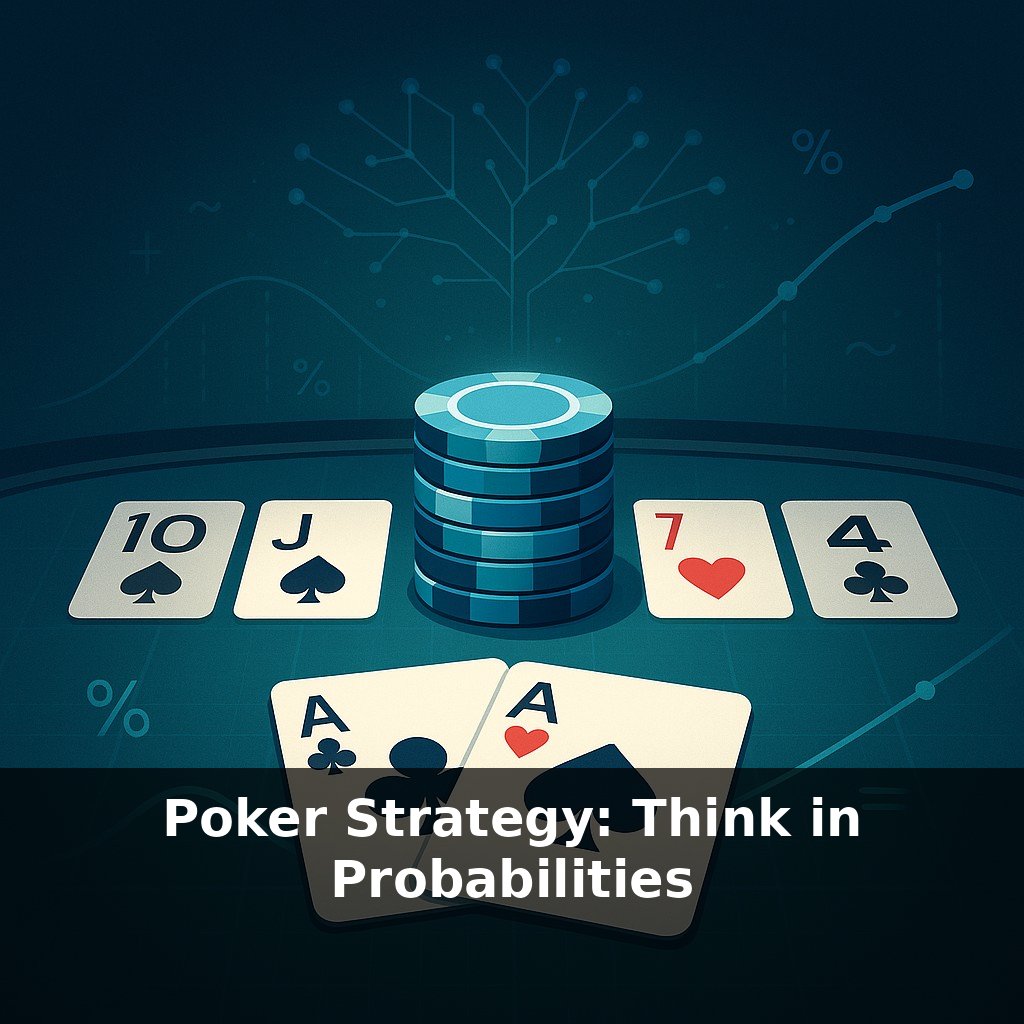
Half the players at your table are secretly guessing. The other half are quietly running the math in their heads. Same cards, same seats, totally different game. In one hand tonight, you’ll face a close decision—call, fold, or raise—and probability will whisper the real answer.
Pros don’t just “think in odds” once a hand gets big; they weave them into every tiny decision, almost like a drummer keeping perfect time while the band improvises. The visible bet sizes are just the surface. Underneath, they’re tracking how often certain board textures will improve ranges, how frequently bluffs *should* appear, and how much future money a marginal spot might unlock.
This is where a lot of solid, technically competent players stall: they know basic math, but they don’t consistently *apply* it. They call in obviously bad spots because it’s “only a little more,” or fold in profitable ones because the pot “feels small.” Over thousands of hands, that leak isn’t small at all—it’s the difference between being vaguely break‑even and quietly printing a few big blinds per 100 hands while everyone else blames bad luck.
At the table, this “whispered” layer of numbers does more than tell you whether to continue in a hand—it gives you a framework for every close decision. It’s the difference between reacting to action and quietly steering your own course. When you know roughly how often your draws complete, how frequently opponents can show up with better value, and how thin edges stack over a session, you stop treating each hand like a standalone drama and start seeing a longer storyline. Spots that once felt like coin flips become structured trades: you’re accepting short‑term swings in exchange for long‑term, repeatable edges.
You can feel that “whispered” layer of numbers most clearly when the hand is close and the pressure is high. Two players face the same uncomfortable turn card. One thinks, “Ugh, gross spot.” The other quietly asks: “How often do I improve, how often am I already ahead, and what does that mean *in dollars* over the next thousand times this happens?”
That second question is where probability stops being trivia and starts being a money machine.
First, it turns raw chances into *prices*. Knowing that 9 flush outs get you there often enough from flop to river is nice; pairing that with what it costs to continue is where decisions gain teeth. When the call is cheaper than your chance of winning, you’re effectively buying $1 for 80 cents. When it’s more expensive, you’re paying $1.20 for the same $1. The hand’s outcome still swings, but the *trade* you made was either objectively good or bad.
Second, it lets you compare invisible options. Folding is 0 EV. Calling is a specific EV based on your equity versus the other player’s holdings. Raising changes both players’ futures: it can deny their chance to realize equity, force mistakes with weaker holdings, or isolate you against a stronger range. You’re no longer asking, “Do I feel like gambling?” but, “Which line earns more over time if this spot repeats?”
Third, it ties your decisions to something stable: frequency. You don’t care whether this particular river bluff works; you care whether bluffing *this size* in *this node* at roughly the right rate prints over thousands of trials. Top pros’ win rates sound small—those 2–5 units per hundred hands—but they’re the compound interest of tiny, repeated probability edges.
That’s exactly how tools like Libratus separated from elite humans: by treating every node as a tiny investment choice and ruthlessly favoring lines with better long‑run return, no ego, no fear, no boredom.
In practical terms, your goal isn’t to become a human calculator. It’s to calibrate your intuition so that your “feel” for a spot closely tracks the real numbers. Just like a basketball shooter who’s taken a million reps, you want your snap judgement—call, fold, raise—to already be weighted by how often certain outcomes realistically occur.
A close river spot is a perfect testing ground. Say you’re in position with a medium-strength hand facing a chunky bet. Old you thinks in yes/no: “Call or fold?” New you thinks in *how often*: “If he’s bluffing here even 1 in 4 times, does this call actually win long‑run?” You don’t need the exact number; you just need to be roughly right more often than the field.
Take a concrete line: you’re on a draw facing a turn shove in a deep‑stacked cash game. Instead of panicking, you quietly list: (1) how many cards help you, (2) how likely villain is to barrel rivers when you hit and when you miss, (3) whether stacks behind justify a thin peel. Suddenly it’s not a “hero call” or a “nitty fold”—it’s a structured investment with an estimated return.
This is where tech‑style thinking shows up in human play. You’re not enumerating trillions of nodes like Libratus, but you *are* asking the same kind of question: “Given these inputs, which branch of the tree pays more if I had to live with this choice a thousand times?”
When human edge shrinks, the real skill becomes *directing* your decisions, not just calculating them. Probability fluency lets you audit coaches, solvers, even HUD stats the way a film director evaluates takes: you see where a line leaks value, not just where it “feels off.” In other fields, this same mindset underpins threat modeling, portfolio choices, even A/B tests—anywhere you must act under fog, steering by patterns rather than single outcomes.
Your challenge this week: pick one recurring spot—say defending the big blind or playing flush draws—and treat it like a mini tech project. Log every instance for 1,000 hands, note your decision, then later check how often each line would’ve paid off using a simple equity calculator. You’re not chasing perfection, just tightening the screws on your internal model.
Over time, that quiet calibration changes how you sit at the table. You stop chasing every wave and start picking the ones worth paddling for, even if a few still crash on you. That shift—from reacting to steering—turns variance into background noise and lets small, well‑chosen edges compound into something real.