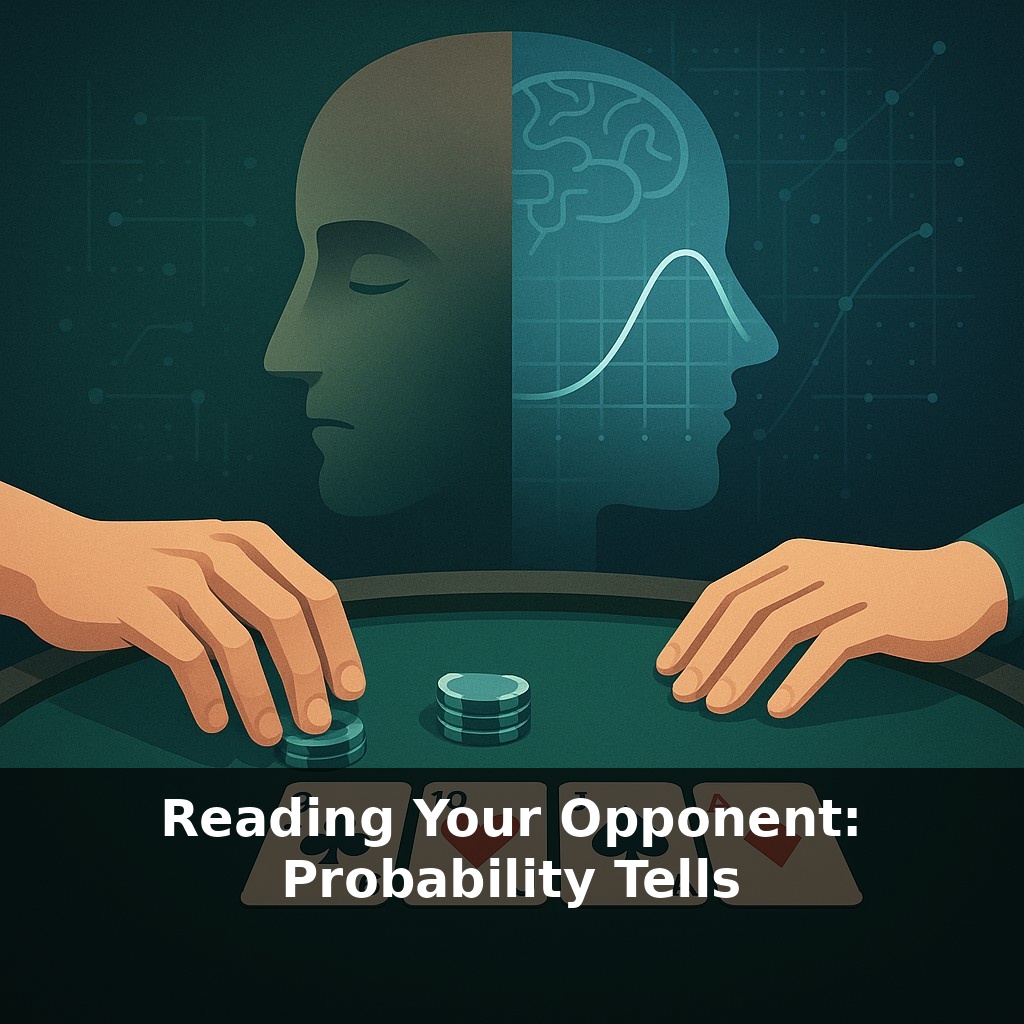
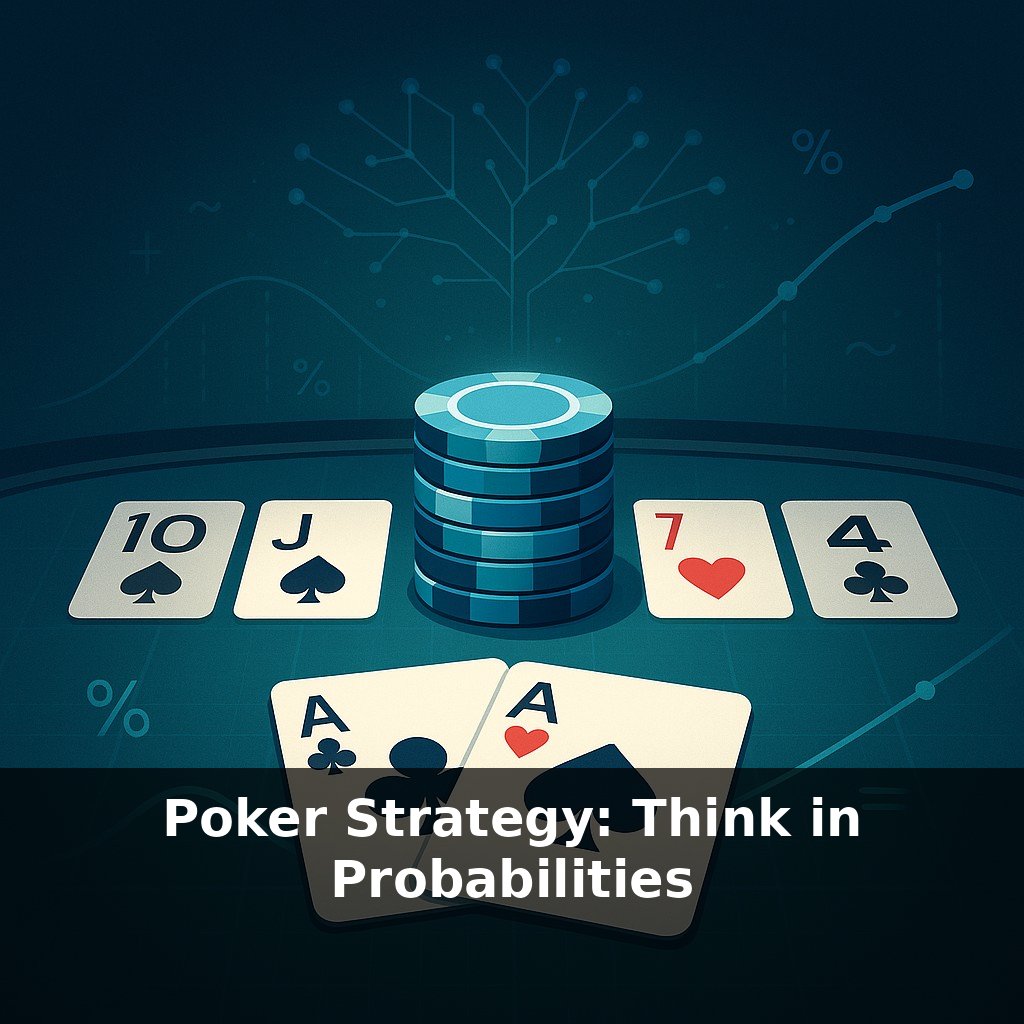
In live poker databases, players who blend math with reading people quietly win more over time. One player tanks on the river, hand shaking… then over-bets. Another snap-checks with a relaxed smile. Same board, same pot odds—but your decision should be completely different.
Such complex judgments highlight a brutal truth in a quiet 1–2 NL game: two players with identical technical skill can have wildly different winrates, simply because one notices things the other filters out. A thumb rhythmically tapping after the turn card. A player who always talks *more* when their river bet is thin. The tiny delay before someone checks a scary river card they *should* have barreled. These aren’t magic tricks; they’re data points your brain already picks up, then discards. The real edge comes from learning to catch those fragments and line them up with the story the hand is telling. Not to “soul read,” but to nudge close decisions toward clarity. In this episode, we’ll zoom in on that bridge between numbers and nerves—how to translate raw, messy human behavior into a structured, probabilistic edge you can actually trust.
Most players treat “tells” as random trivia: funny quirks they notice, then forget. The real upgrade comes when you start treating behavior like another stat in your HUD—messy, incomplete, but quantifiable. A delayed c-bet can lean your estimate toward medium strength; a sudden shift from chatty to silent can nudge your weighting toward polarization. You’re not trying to *know* their hand—you’re trying to slightly reshape the range you’d assign if you were blindfolded. Think of it as adding a translucent layer over your range chart, darkening some combos, fading others, based on what their body is quietly voting for.
The first layer is still cold math: ranges, combos, frequencies. But now you’re going to *reshape* that layer in real time using what you see and hear.
Start by defining a default, “if I were blindfolded” range. Preflop position, stack depth, tendencies you’ve observed over an orbit—this gives you the baseline. Then, as the hand unfolds, every action and micro‑action gets treated as a vote: does this make strong hands more or less likely? Does it increase or decrease the share of bluffs?
To keep yourself honest, think in small nudges, not wild swings. A nervous swallow on the river shouldn’t turn 10% bluffs into 90% bluffs; it might turn 10% into 14%. Most of the edge is in those subtle re‑weightings.
A simple three‑step filter helps:
1. **Timing:** Is their decision *faster* or *slower* than their personal norm? A player who normally snap‑checks but now tanks before checking has done something unusual. Unusual usually means polarized. You don’t know *which* side yet; you just know the middle of their range probably shrank.
2. **Consistency:** Does the behavior match past showdowns? If you’ve seen this player over‑talk with bluffs twice, that pattern earns more weight than a generic book tell. If it’s the first time you’ve seen it, you tag it mentally but discount it heavily.
3. **Context:** Where are we in the hand and session? A guy who just lost a big pot and suddenly goes silent after betting may be emotionally tilted, not “strong.” Session context often explains noise that looks like a tell.
Overlay this with the pot odds math instead of replacing it. Suppose the river pot is $200, they shove $100. You need about 33% equity. Pure range math says you’re right on the edge with your bluff catcher. Now factor in behavior: they fired quickly, avoided eye contact for the *first* time all night, and their bet sizing is larger than their usual thin value. Each point is a small nudge toward “this player is more polarized and more bluff‑heavy here than my default.” If those nudges collectively push your estimated bluff portion from, say, 30% to 40%, the call becomes clearly profitable.
Over time, you’re training yourself to attach rough percentages to human messiness—never certain, but precise enough to move close spots out of the guessing zone and into the “good gamble” zone.
A good way to see this in action is to zoom into one specific spot: facing a 3‑bet from the blinds. Your default range work says they’re likely weighted to strong broadways and big pairs. Now layer in behavior.
Hand one: they 3‑bet small, neatly stack their chips, then look back at their cards as the flop comes K‑7‑2. Their breathing stays slow, posture unchanged. When you call flop and turn, there’s no visible shift. By showdown, you see A‑K. You tag this as “composed, organized, small 3‑bet = strong.”
Hand two: same player, same positions, but this time the 3‑bet is larger, grabbed in an uneven pile, tossed in faster. On a dry Q‑5‑2, you notice a quick glance at your stack, then an unusually long pause before a half‑pot continuation bet. They later table A‑J offsuit. Now you’ve got a contrast pair.
Over a session, you’re collecting these pairs like a photographer learning light—seeing how small changes in timing and rhythm shift the “exposure” of their range toward value or air.
Soon, your edge might depend on tools as much as talent. As AI vision creeps from labs onto smart glasses, a quiet opponent could be pulsing with hidden data: heart‑rate spikes, pupil shifts, subtle tremors. Think of it like suddenly seeing the wind on a golf course—every gust mapped in real time. That visibility could force casinos to police devices, while serious players double down on “analog” skills: noticing patterns, calibrating instincts, and staying unreadable themselves.
Your reads will always be a bit blurry, but that’s the point: you’re not chasing mind‑reading, you’re sharpening a lens. Treat each orbit like sketching the same portrait from new angles—bet size, cadence, posture, silence. Over time, those rough sketches overlap into a map that quietly shifts your choices from “I hope” toward “I’m okay with this gamble.”
Before next week, ask yourself: 1) “In the last few sessions I played, what specific betting patterns (size changes, timing, check-raises on certain boards) did I notice from regular opponents, and what concrete probabilities would I now assign to the hands they were likely holding in those spots?” 2) “The next time someone makes an unusual line—like an overbet on the river or a limp–re-raise preflop—how will I pause in real time and run through at least two plausible ranges for them, assigning rough percentages instead of just going with a ‘feeling’?” 3) “After your next session, specifically choose 2-3 hands where opponents made unconventional plays, and analyze: ‘Given the actions on each street, what was the most likely hand range they were representing, and how can I adjust if faced with a similar situation again?’”