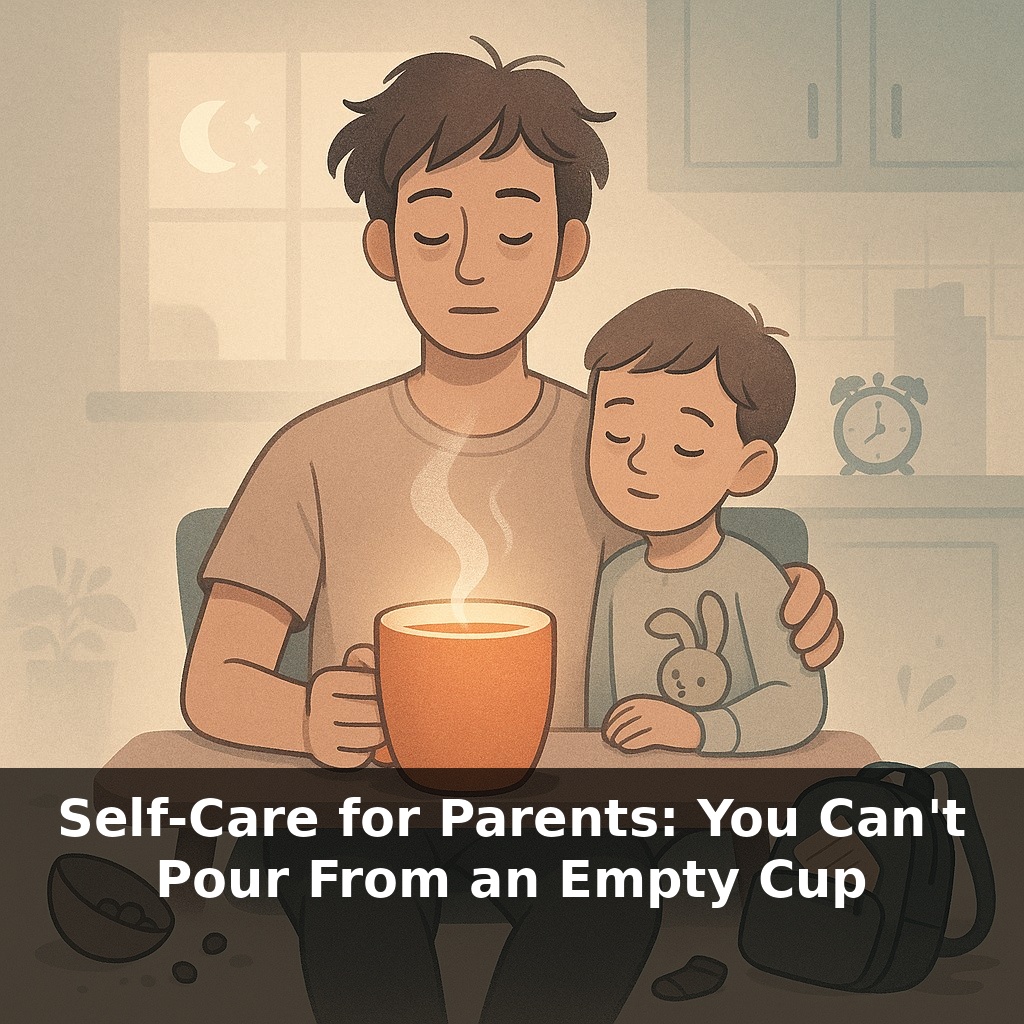
The morning rush is chaos—shoes lost, cereal spilled, a tearful child. Yet amidst the scramble, some parents maintain calm. The secret? Surprisingly, it might all hinge on last night's sleep. Here’s the twist—your patience may depend less on “being a good parent” and more on how you treated yourself yesterday.
Here’s where it gets uncomfortable: many parents would rather feel exhausted than “selfish.” You might think, *“Other people have it harder,”* or, *“I’ll rest when things calm down.”* But research on parental burnout shows a different pattern—parents who push through without refueling don’t just feel worse; their kids actually pick up more tension, more criticism, and less warmth over time. It’s like cooking on a pan that’s too hot: everything starts to stick and burn, even when you’re “doing it the same way.”
The twist is that your nervous system quietly keeps score—of how often you pause, connect, move your body, ask for help. Those tiny choices shape how quickly you snap, how well you repair, and how safe your child feels with you emotionally, even on chaotic days.
Here’s the uncomfortable irony: the more depleted you feel, the more likely you are to cut the *very* things that would help you show up as the parent you want to be. Playdates, walks, five quiet minutes with coffee, texting a friend back—you may label these as “extras,” when the data says they’re part of the core job. Studies on Mindful Parenting and Triple P show that when parents deliberately schedule tiny recharge moments, kids don’t just behave better; they read their parents as kinder, more predictable, and easier to talk to, even when life around the family doesn’t get any easier.
Here’s the twist most parents never see coming: the research doesn’t just say “take care of yourself”; it quietly maps *where* your energy leaks and *how* to plug them.
Psychologists break down your “parenting fuel” into three main tanks: physical, emotional, and cognitive. When one is running low, the others work overtime to compensate—until they can’t.
Physical is the most obvious: movement, nutrition, and basic rest. But instead of chasing a perfect routine, studies suggest looking for *predictable micro-rhythms*—like walking the same loop after dinner, stretching while the kids brush teeth, or always drinking a glass of water when you pour one for your child. These consistent signals help your body shift out of survival mode more often, so everyday annoyances don’t hit as hard.
Emotional fuel is about how you process stress rather than whether you have it. Parents who regularly “offload” with at least one supportive adult—through a weekly phone call, group chat, or standing coffee date—show lower markers of chronic stress, even when their workload stays heavy. The key isn’t venting endlessly; it’s knowing there is at least *one* place where you can be honest without managing anyone else’s feelings.
Cognitive fuel is your mental bandwidth: attention, planning, decision-making. This is where parental overload quietly explodes. Constantly juggling meals, schedules, emails, and permission slips keeps your brain in a near-continuous “task switching” state. Even simple habits—like writing tomorrow’s three priorities on a sticky note, or building one “no new decisions” night each week (leftovers, movie, early bed)—can free enough bandwidth to respond thoughtfully instead of reflexively.
And here’s a powerful shift: boundaries aren’t barriers *against* your child; they are structures that protect these tanks *for* your child. When you say, “I’m going to sit for ten minutes, then I’ll play,” you’re not just buying a break. You’re teaching your child that needs can be named, limits can be set kindly, and relationships don’t require constant self-erasure to stay close.
A useful way to spot where your “tanks” are leaking is to trace specific moments, not vague moods. Think of last week: maybe you snapped over spilled juice, or froze when your teen rolled their eyes. Instead of judging yourself, rewind that scene and look upstream. Had you answered messages nonstop that afternoon? Skipped lunch to squeeze in one more task? Said yes to a favor you wanted to refuse? Those tiny upstream choices quietly drained the bandwidth you needed later.
Concrete tweaks often work better than big resolutions. One parent I worked with added a “transition lap” around the block before picking up the kids—five minutes of walking, no podcasts, just arriving in their own body. Another built a standing Sunday check-in with a sibling, specifically to complain, laugh, and swap ideas about the week. Over time, both noticed fewer “I’m at my limit” explosions—not because their kids changed, but because their internal dial wasn’t already turned to 9 before anything even happened.
Technology may soon act like a quiet co‑pilot for parents. As wearables flag rising stress or shallow breathing, apps could suggest a 60‑second reset before tension spills into the room—more like a friendly nudge than another task. Pediatric visits might routinely include a quick parent check‑in, the way dentists now screen for oral cancer. Like a well-tuned weather radar, these systems could help families spot approaching “storms” early and choose calmer routes through everyday chaos.
Your week doesn’t need a full overhaul; it needs small, non‑negotiable “green lights.” A 3‑minute stretch after dishes, texting a friend while the pasta boils, stepping outside to feel the air for ten breaths—each is like quietly opening a window in a stuffy room. Over time, those cracks of fresh air become the climate your child grows up in.
Start with this tiny habit: When you close your child’s bedroom door at night, pause your hand on the doorknob and take one slow, deep breath just for you. As you exhale, silently say, “Refilling my cup,” and notice one sensation in your body (warmth in your chest, tension in your shoulders, etc.). Then do one 10-second comfort action—sip a drink of water that’s already on your nightstand or stretch your arms over your head once before you grab your phone or start chores.