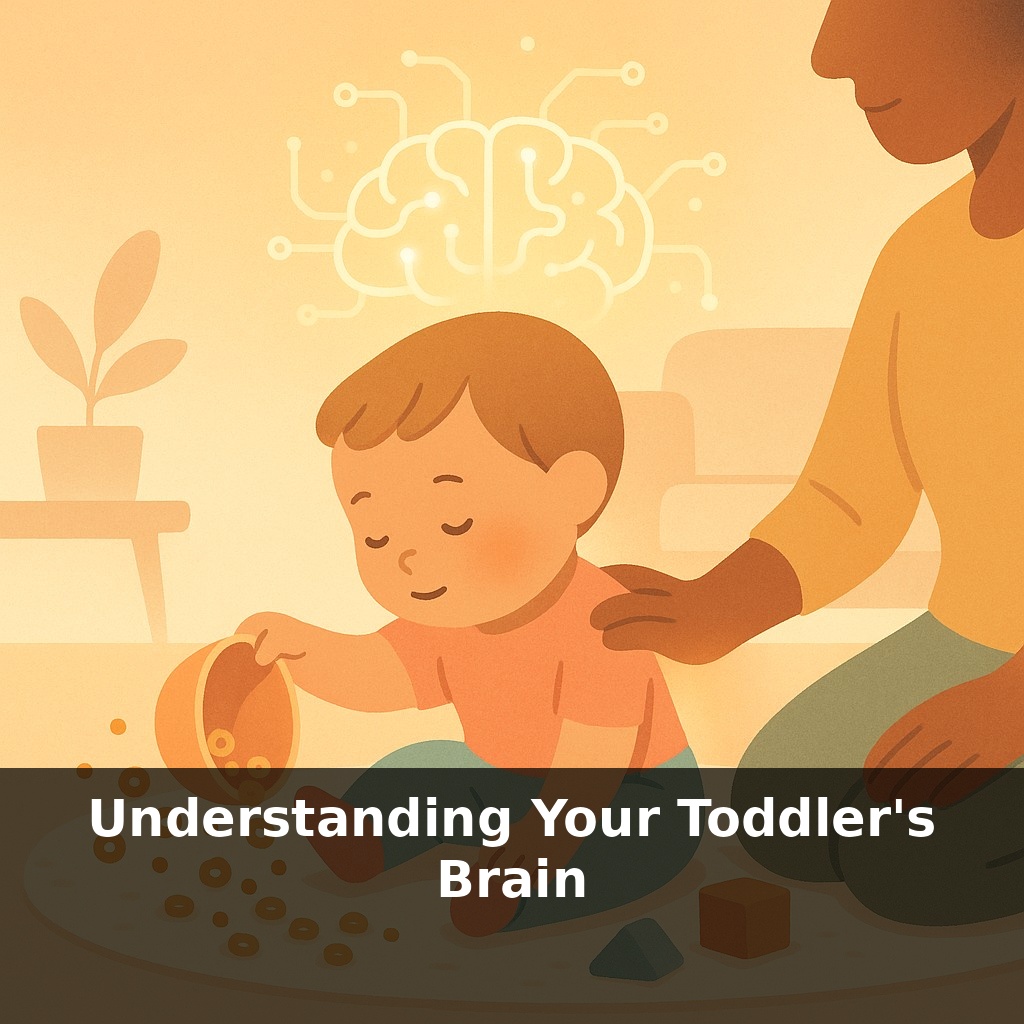
Right now, as your toddler dumps cereal on the floor, their brain is wiring faster than at any other time in life. Here’s the twist: the way you react in those messy, noisy moments is quietly building the circuits for their future calm, curiosity, and kindness.
You don’t need flashcards or fancy toys to influence all this brain action—in fact, your toddler’s brain cares far less about “educational” apps and far more about the boring, everyday stuff you already do. The way you answer “Why?” for the tenth time, how you say “no” when they swipe your phone, the silly song you make up while changing a diaper—these tiny moments are treated like VIP data by their nervous system. Think of your usual routines—getting dressed, snack time, bath, bedtime—as a kind of daily playlist. When that playlist reliably includes warm eye contact, simple back-and-forth talk, and you calming yourself out loud (“I’m frustrated, I’m going to take a deep breath”), their brain starts to treat safety, language, and self-control as “top hits” worth replaying and strengthening. Over time, these repeated micro-moments become the quiet backbone of how they handle stress, learn, and connect.
Here’s the twist most parenting books gloss over: your toddler’s brain isn’t aiming for “good behavior,” it’s running a 24/7 survival experiment. Every slammed door, soft laugh, or rushed “uh-huh” becomes data: “Is this world safe? Do my feelings matter? Do people listen to me?” Their nervous system tracks patterns, not perfection. That’s why a calm “I’m here, you’re safe” after a meltdown carries more weight than the meltdown itself. Across hundreds of diaper changes, car-seat battles, and grocery trips, your consistent “I see you” gradually teaches their brain: connection is the default, not the exception.
Here’s where the science gets practical. Between one and three, your child is quietly running three big “experiments” on the adults around them:
1. **“Do people come back?”** Every time you say “I’ll be right back” and actually reappear with the wipes, the snack, or the favorite blanket, a tiny prediction in their brain gets updated: “Oh, when someone says they’ll come back, they usually do.” That prediction becomes a template they’ll later use with teachers, friends, even managers. Consistency doesn’t mean never leaving; it means your words and actions mostly match.
2. **“Do my signals matter?”** A whine, a tug on your leg, a full-body scream—these are all early versions of email subject lines: “Need help,” “Overwhelmed,” “Bored.” When you notice and name what’s going on—“You’re pulling my arm; you want up,” or “Your face is tight; you’re mad I turned off the show”—you’re basically teaching their internal spam filter what should go to “trash” and what deserves a careful read. Over time, their brain learns: “Feeling something is useful; it brings support,” instead of “Feelings are dangerous or pointless.”
3. **“What do people do with big feelings?”** This is where your own nervous system steps into the spotlight. The research on tantrums shows they peak in toddlerhood and usually pass quickly when the adult stays regulated. Your tone, breathing, and body posture are like a live tutorial: slam doors and yell, and their brain files that as one option; exhale, speak steadily, and move slowly, and that becomes another. You won’t nail it every time—and you don’t have to. But when you circle back with, “I shouted earlier; that was scary. I’m practicing calmer words,” you show that repairs are part of relationships, not proof they’re broken.
All of this happens in the background of regular life: buckling car seats, saying no to more screen time, narrating what you’re doing in the kitchen. You’re not just keeping them alive and vaguely entertained; you’re helping them build a private rulebook about people, feelings, and problems—one messy, noisy interaction at a time.
Think less “perfect script,” more “small, repeatable moves.” Two scenes:
Your toddler is tugging at your leg while you’re trying to reply to a message. Instead of a distracted “Wait,” you crouch to their level for five seconds: “You want me. I’m finishing this, then I’ll play cars.” You tap the phone, say “Done,” then turn fully toward them. Tiny sequence. Huge clarity: signals noticed, promises kept.
Later, they shriek because you poured the wrong color cup. Instead of debating, you become a sportscaster: “Red cup! You wanted blue. Your body’s very stiff. That’s anger.” You set the blue cup nearby, stay close but quiet. When they start to settle, you add, “There it is—your body is softer now. Ready for a sip?” You’re not rewarding the scream; you’re labeling the storm and the calm.
Across a day, these five‑second choices stack up like small deposits in an account labeled “People are steady; my feelings have names; I can come back from big yuck.”
By preschool, today’s tiny experiments with you quietly shape how your child approaches friends, frustration, and even future screens. Think about how you use tech: scroll to escape, or to connect? They’re watching that pattern more than any rule you say. As tools get smarter—AI toys, “learning” shows—your steady presence stays the non‑negotiable ingredient, like clean water in cooking: invisible when it’s there, but everything falls apart without it.
So as you scroll, cook, or commute, think of each short check‑in—one extra sentence, one deep breath—as a tiny turn of the dimmer switch rather than a grand makeover. Some days you’ll miss the moment; that’s data, not failure. Stay curious: which small tweak today seems to soften their shoulders, brighten their eyes, or shorten the storm?
Before next week, ask yourself: “The next time my toddler melts down (over the blue cup, screen time, or leaving the park), how will I remind myself that their ‘upstairs brain’ is offline and lead with calming connection instead of correction?” “What is one specific transition tomorrow (getting dressed, bath time, bedtime) where I can slow down, get to their eye level, and name their feeling out loud before trying to change their behavior?” “When I feel myself getting triggered by whining or defiance, what simple regulation move will I practice first—three deep breaths, stepping into the hallway for 10 seconds, or putting a hand on my heart to reset—so I’m modeling the regulated brain I want them to grow into?”