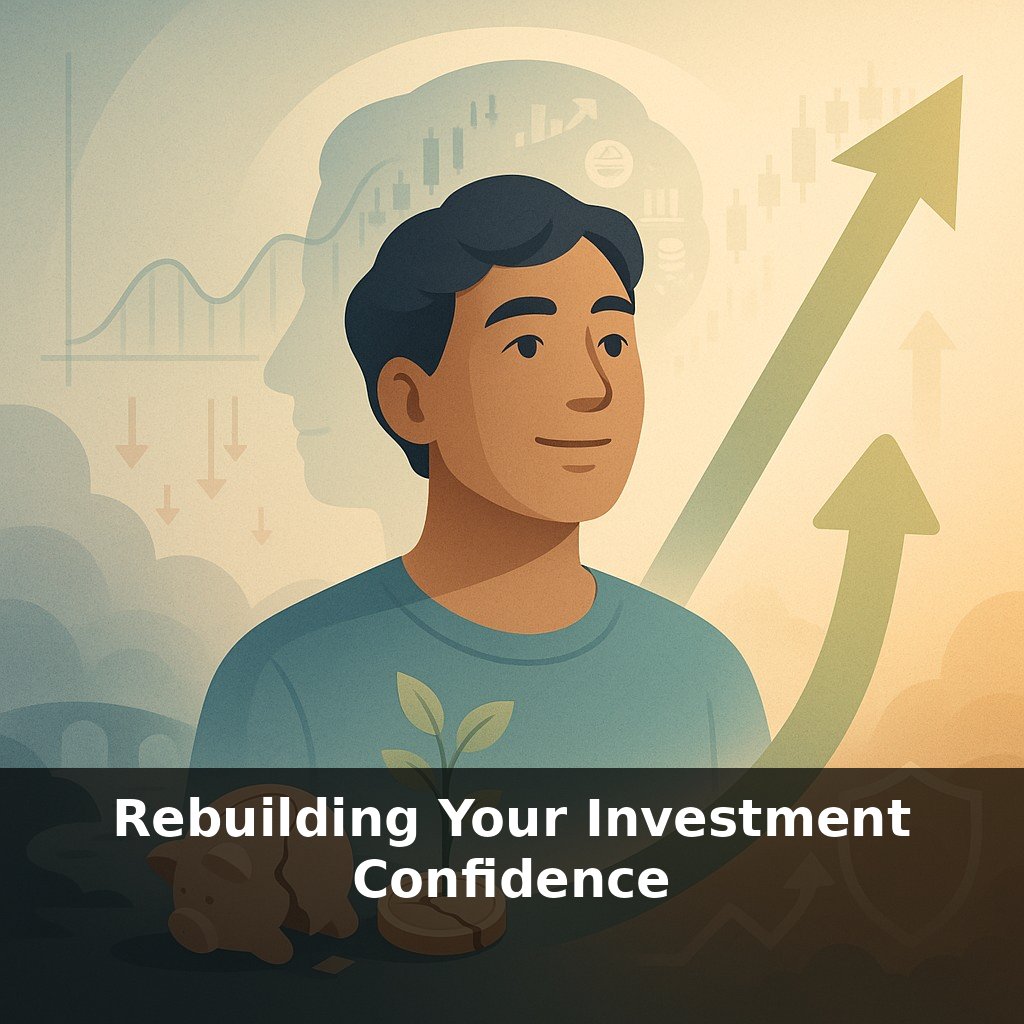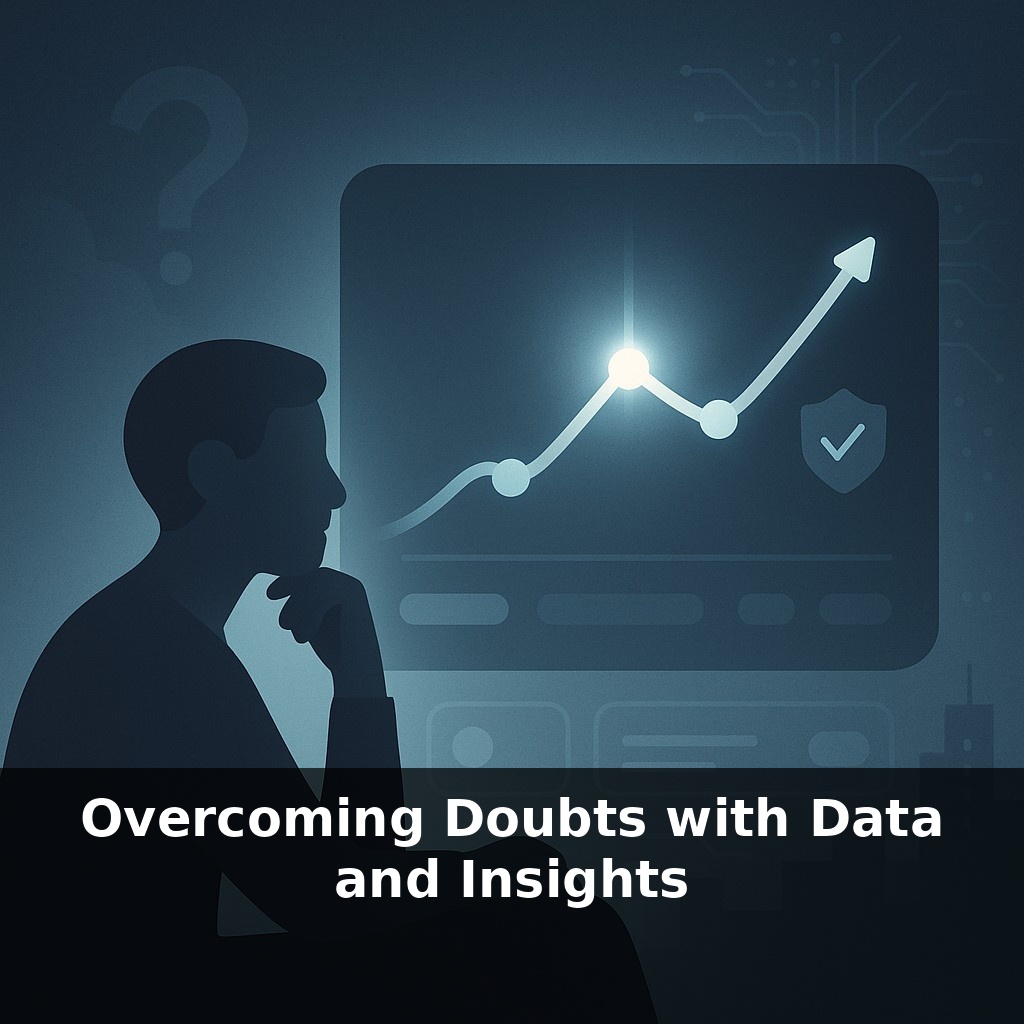
Most of the trades happening on Wall Street today are made by machines, not humans. Yet you might still be second‑guessing your own account. In this episode, we’ll step into three real‑life investing moments where data quietly settles the argument your doubts keep restarting.
You’ve seen how professional systems quietly guide decisions in the background; now we’ll bring that mindset into the messy, very human moments inside your own account. Doubt usually doesn’t show up when everything is calm. It hits when markets swing, headlines scream, or a friend brags about a “can’t‑miss” play. Your brain starts negotiating with your plan: “Maybe I should wait… maybe I should switch… maybe this time is different.”
In this episode, we’ll zoom into those pressure points and show how a few simple dashboards, rules, and checkpoints can act like a second, calmer mind. Instead of wrestling with abstract fears, you’ll see how to translate “I’m worried” into questions that numbers can actually answer—so your plan doesn’t get rewritten every time your feelings do.
Think of this as moving from “I feel” investing to “I know what usually happens when…” investing. The goal isn’t to turn you into a robot or to ignore your instincts; it’s to give your instincts something solid to react to. Instead of asking, “Is this scary headline a sign I should bail?” you’ll learn to ask, “What does my actual data say about moves like this?” We’ll explore how to turn your account history, contribution pattern, and risk level into a kind of personal weather report—so on stormy days, you’re checking instruments, not just dark clouds.
Start with one uncomfortable truth: your feelings about the market rarely arrive with a timestamp, a magnitude, or a margin of error. Data can give you all three.
The first shift is to separate **questions** from **stories**. When your portfolio drops, your mind tells a story: “This always happens to me… I bought at the top… it’s never coming back.” A data‑anchored investor converts that swirl into specific, testable questions: - How big is this drawdown compared with past ones I’ve lived through? - How often have similar drops recovered—and over what time frames? - Does this move push my risk level outside the band I chose?
Once you phrase it as a question, you’ve created something numbers can actually answer.
Next, see your portfolio not as a single verdict on “how you’re doing,” but as a set of **repeatable experiments**. Every contribution, rebalance, and allocation tweak is a small hypothesis: - “If I keep 70% in stocks, will I still sleep at night during a 20% drop?” - “If I rebalance once a year, does my risk stay in my chosen range?” - “If I automate contributions, do I actually invest more consistently?”
You’re not trying to be right once; you’re trying to be less wrong, over and over.
This is why so much professional money relies on **rules that survive many market environments**. Systematic rebalancing, for example, isn’t about timing the market; it’s about forcing yourself to “sell a bit of what just did well and buy a bit of what just did poorly” on a schedule—precisely the opposite of what your emotions usually want.
To bring this down from Wall Street scale to your account, think in three layers:
1. **Observation layer** – What’s actually happening? Percent drawdown, contribution rate, allocation drift, fee drag. 2. **Decision layer** – Under what conditions will you act? Thresholds for rebalancing, for changing contributions, for revisiting risk. 3. **Review layer** – Did sticking to (or breaking) your rules help or hurt? How often did fear or FOMO override your plan, and what were the outcomes?
Over time, this turns your history into a feedback loop instead of a highlight reel of regrets. The goal isn’t to eliminate doubt; it’s to give doubt a structured place to argue—then let the evidence vote.
Think of three small “labs” where you can quietly test your thinking. In the first lab, you track your actual reactions to market moves. Say your account falls 8% in a month. Instead of labeling it “a disaster,” you log: date, size of drop, what you felt like doing, and what you actually did. Over a year, you’ll see patterns: “I tend to want to sell after 5–10% drops, even though those have usually recovered within X months.”
In the second lab, you borrow discipline from the pros. Take one rule used by institutions—like rebalancing when any major asset drifts more than 5 percentage points from target—and apply it to a small, clearly defined slice of your money. Watch what would have happened if you’d followed that rule over the past three years versus your real choices.
In the third lab, experiment with “if‑then” triggers: “If my portfolio falls 15%, then I will increase my monthly contribution by 10% for six months.” You’re training yourself to respond to stress with structured action instead of scattered improvisation.
A single line of code in your broker’s system can now scan more scenarios in a minute than most humans could in a lifetime of “gut checks.”
As tools get smarter, your edge shifts from having data to deciding **which** data you’ll listen to. Think of future AI copilots less as fortune‑tellers and more as lab assistants: they’ll surface patterns, but you’ll choose the experiments. The real opportunity isn’t prediction; it’s designing a process you’ll actually trust when the next storm hits.
As you add these small experiments, your account stops feeling like a test you’re doomed to fail and starts to feel more like a pilot’s cockpit—messy skies, but clear instruments. You’re not chasing certainty; you’re building a record of “how I behave under pressure.” Over months, that log becomes proof you can trust your process more than today’s mood.
Start with this tiny habit: When you feel yourself hesitating on a decision because “you’re not sure,” open the Notes app on your phone and type just **one specific question** you wish data could answer about it (for example: “Did last month’s Instagram Reels actually bring more demo signups?”). Then, in that same note, add **one concrete metric** you’d check for that question (like “profile visits” or “reply rate”). Do this every time doubt pops up for a day—no analysis, no dashboards yet, just building a tiny habit of turning vague doubt into a clear, data-ready question.