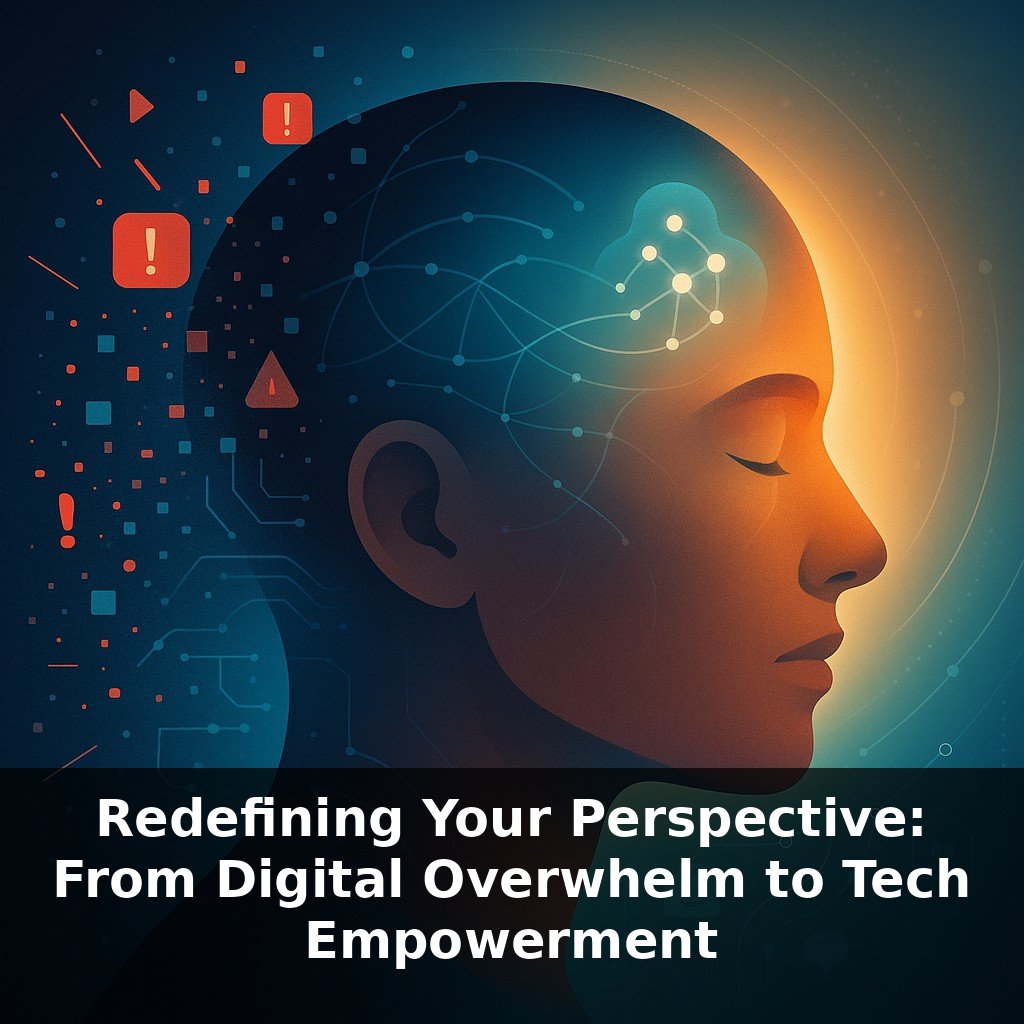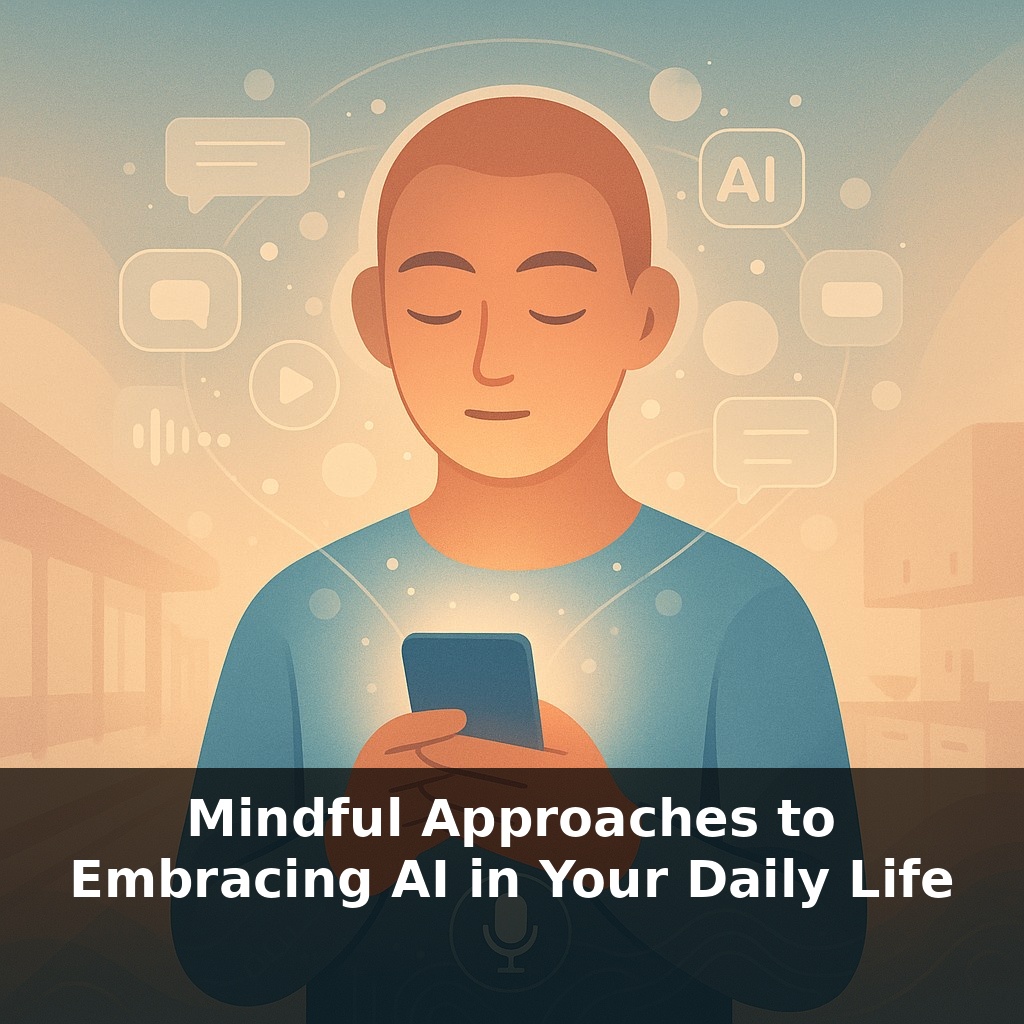
Right now, the world spends roughly six and a half hours a day staring at screens—yet most of us still say we “don’t have time.” You’re walking to the train, cooking dinner, brushing your teeth… and AI is quietly shaping what you see, hear, and think next.
You don’t need to move to a cabin in the woods to have a healthier relationship with technology—you just need to start noticing how and when it quietly takes the wheel. One notification pulls you into a group chat, an auto-play video keeps you “just one more minute,” a suggested email reply answers on your behalf. None of these moments feel dramatic, but together they can gently bend the shape of your day. Mindful AI use isn’t about rejecting these tools; it’s about reclaiming the moments where you want to be the one choosing. That might mean letting an AI summarize a dense report so you can leave work earlier, while also deciding not to check an algorithmic feed in the first hour after you wake up. Small, intentional choices like these can turn your phone from a constant tug on your attention into a quieter, more cooperative presence in your life.
Instead of trying to overhaul your whole digital life overnight, it helps to zoom in on just a few recurring moments in your day. Think about the first tool you open when you sit down to work, or the app you reach for in those in-between spaces—waiting in line, riding the bus, standing by the kettle. These are the pockets of time where AI quietly becomes your default companion. The goal isn’t to strip these moments of tech, but to notice whether the tools you’re using actually match what you need: focus, rest, connection, or entertainment. Once you see the mismatch, even tiny tweaks can feel surprisingly liberating.
Here’s where it gets interesting: once you start spotting those subtle handoffs to your phone or laptop, you can decide which ones to keep—and which to rewire. A useful first step is separating your tools into three rough categories: helpers, hijackers, and hazy in‑betweens.
Helpers are the ones that clearly return more energy, time, or clarity than they take. Think of using a transcription service so you can listen fully in a meeting instead of frantically typing, or letting a writing assistant handle tedious rephrasing while you focus on the key ideas. These tools feel like hiring a competent assistant for a specific job.
Hijackers do the opposite: you open them for one clear purpose and surface ten, twenty, forty minutes later, slightly dazed and not much better off. The telltale sign is that slight mental hangover—“Wait, what was I doing?” These are worth treating with extra caution, not because they’re “bad,” but because their incentives often conflict with yours.
The third group is where mindful experimentation pays off: tools that could live in either camp depending on how you use them. A personalized playlist that drowns out office noise might be a focus superpower; the same algorithm, left on infinite shuffle, can keep you from ever hearing your own thoughts.
Mindful integration doesn’t mean judging yourself for using any of these. It means making their roles explicit. For each major app or AI‑powered feature you rely on, you can ask three questions:
- What job am I hiring this for? - How will I know it’s doing that job well? - Under what conditions do I *not* want this running?
That last question is crucial. Many people set up “focus modes” at work, but fewer consider quiet zones for their inner life: no voice assistant while journaling, no smart recommendations during family meals, no productivity bots during a creative brainstorm.
Over time, this turns your tech setup into something closer to a curated studio than a crowded bazaar. The same device that once pulled you in a dozen directions can become a set of well‑labeled instruments you pick up—or put down—on purpose.
Consider a few concrete swaps. Instead of scrolling headlines over breakfast, you might ask a chatbot for a 90‑second briefing on just the topics you care about, then close it and eat in silence. During a commute, you could have an assistant turn a long article into an audio summary so you can look out the window instead of down at your screen. If writing drains you after work, you might let a model generate the first rough outline of an email or report, and keep the more human parts—nuance, judgment, final phrasing—for yourself. Some people treat recommendation engines like a guest curator: they’re allowed to suggest three new songs or videos, never an endless stream. One analogy that can help: think of these systems as a smart trail guide on a hike—great for pointing out paths and views, but you still choose the route, the pace, and when to stop and sit quietly.
Soon, “default settings” won’t just live in phones—they’ll quietly shape glasses, cars, even kitchen counters. The real shift is identity: do you see yourself as a passive user or an active editor of these systems? Treat new features like trying spices in a recipe: add one at a time, taste the result, keep only what improves the dish. Over years, this turns your tech choices into a visible record of what you value, not just what you click.
Treat this less like fixing a problem and more like learning a new instrument: awkward at first, then quietly satisfying as you hit fewer wrong notes. Your challenge this week: pick one routine—mornings, commutes, or evenings—and redesign it so any algorithm involved serves a single, clear purpose you chose in advance. Notice how that small edit feels.