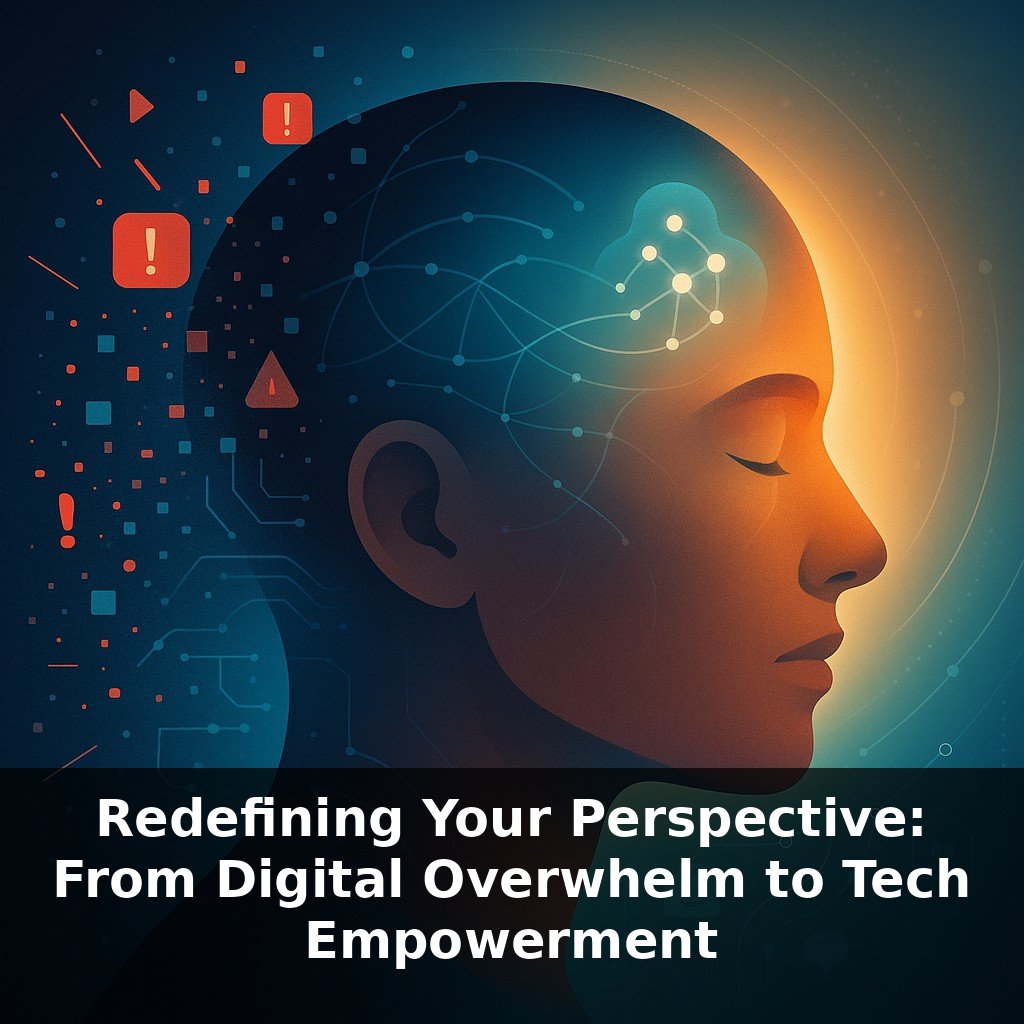
Right now, most people spend more time negotiating with their phones than talking to friends. Yet a quiet shift is happening: some are letting AI decline invites, rewrite messages, even schedule rest. The paradox is simple: can delegating more to machines actually give you more of yourself back?
72% of people who use AI to limit screen time end up reclaiming more than an hour and a half of their day. Not because the apps are magical, but because they turn vague intentions into specific boundaries: “not now,” “only this much,” “only for this.” That’s the quiet superpower of agentic AI in a balanced life—it doesn’t just do more for you, it helps you do less of what drains you.
We’re moving from “AI as a clever search box” to AI that can track your habits, propose tiny experiments, and nudge you toward choices that match your values: going for a walk instead of another scroll, finishing a deep-work block before checking messages, ending work on time because your calendar agent refused that extra 6 p.m. meeting.
The question is no longer whether AI can help, but how far you want it involved in the rhythms that define your days.
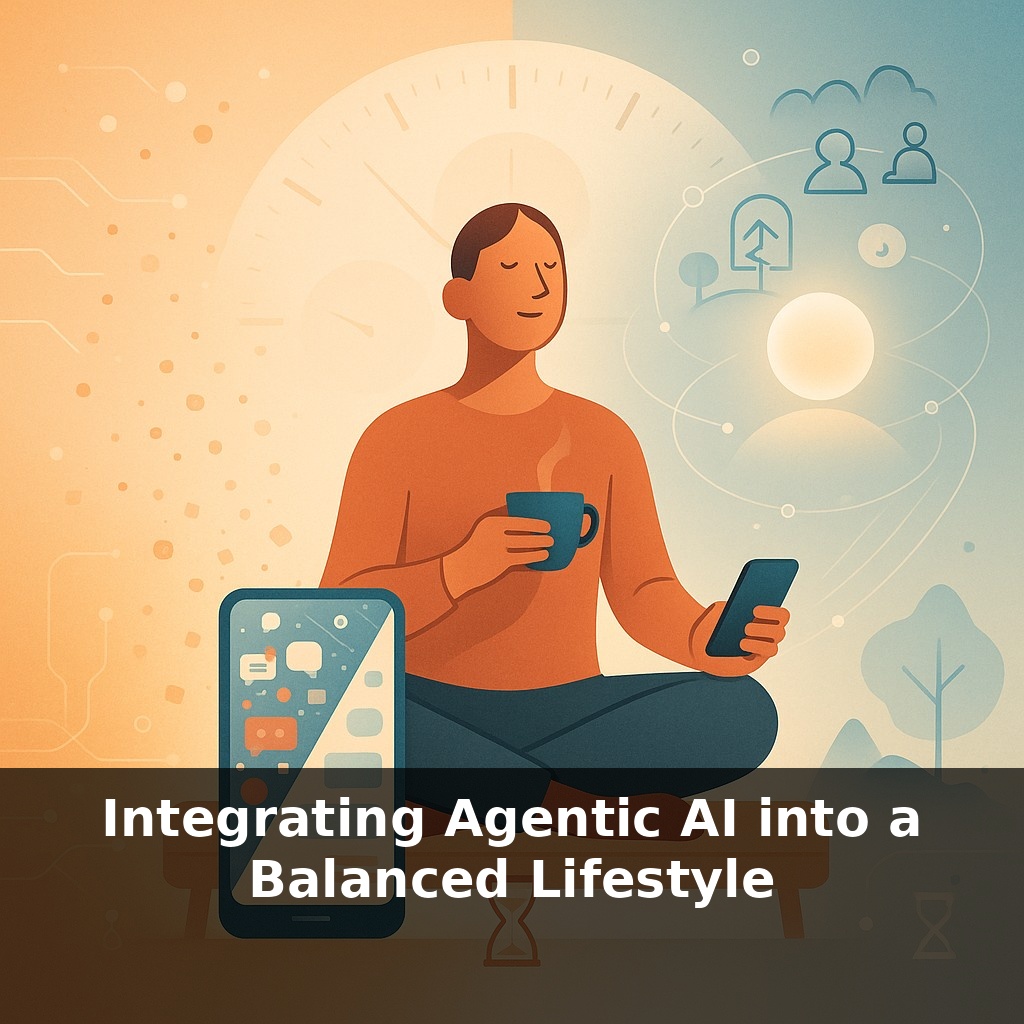
The next step is deciding where these systems belong in your life at all. Not every arena needs an AI co-pilot. Some people start with energy-heavy zones—email, budgeting, logistics—then deliberately keep others human-only: journaling, parenting choices, creative drafts. You can also vary the “amount” of autonomy: maybe your fitness agent proposes three options, but you choose; your focus agent can auto-block social apps, but only during blocks you approve each morning. Think of it as designing “zones” in your day: AI-assisted, AI-suggested, and strictly AI-free.
Most people never actually decide what AI is *for* in their lives; they just accept whatever the default settings push at them. That’s where imbalance creeps in—not from the technology itself, but from the absence of a deliberate “job description” for it.
A practical starting point is to define three roles an AI agent can play: scout, assistant, and guardrail.
As a **scout**, it explores on your behalf. Not by roaming the whole web for you, but by scanning *your* world for opportunities you’d usually miss. A journaling micro-agent might notice: “You write about being exhausted every Wednesday—do you want to make that a lighter day?” A budgeting agent could surface: “These subscriptions went unused for 60 days—review them?” The key is that it proposes patterns; you still decide which ones matter.
As an **assistant**, it handles the repeatable overhead that keeps you from the work or rest you actually want. Instead of “AI, do everything,” think: “AI, do the boring 30%.” A health agent can transform vague goals into concrete constraints: “You said 7 hours of sleep and 8k steps matter more than late-night emails; want me to cap screen time at 10:30 p.m. and schedule a 10-minute walk between your 2–3 p.m. calls?” This is where systems like fitness coaches or focus tools shine: they translate preferences into day-to-day friction that supports your intentions.
As a **guardrail**, AI becomes the thing that tells you “no” when you’d usually rationalize “just this once.” Research on screen-time agents shows that simple, timely friction—locking non-work apps after a limit, or requiring a 30-second pause before opening social media—meaningfully shifts behavior. A similar pattern works for work itself: an agent that flags “You’ve added 3 extra tasks to today; two will push into your evening. Still proceed?” restores a micro-moment of choice.
One way to keep all three roles from quietly overrunning your life is to imitate a good trail guide in nature: visible, supportive, but never dragging you down a path. Regularly audit: Where is AI offering options? Where is it executing without review? Where is it allowed to interrupt? Adjust those dials before convenience turns into autopilot.
Think about where you *feel* the day tilting off-balance. For some, it’s the jittery context-switching between Slack, email, and docs; for others, it’s the quiet slide from “one video” to “where did my evening go?” Those are prime places to test small, contained agents rather than handing over your whole schedule.
You might start with a focus agent that only touches one hour: it queues deep-work tasks, hides low-priority pings, and then reports, “Here’s how you actually used that block.” Or try a micro-agent on your commute that serves one purpose: queue a short article, a language lesson, or a stretch routine—never news feeds.
Your challenge this week: pick *one* daily friction point—mornings, late-night browsing, or post-lunch slump. Deploy a single-purpose AI agent there, but constrain it with two rules you write in advance (for example: “no changing my calendar without asking” or “no notifications after 9 p.m.”). At week’s end, keep it, refine it, or turn it off based on one metric: did it create more unlabeled, genuinely free time—or less?
As agents sharpen, the real shift may be *felt* more than seen: fewer micro-decisions, but higher stakes for the ones you still make. Instead of endlessly tapping, you’ll increasingly be *curating*—choosing which agent gets to touch sleep, money, or relationships. Think less about single apps, more about composing a “crew” with different temperaments: a strict guard for finances, a playful coach for learning, a calm editor for your attention. The art will be knowing when to dismiss them.
The deeper shift isn’t just outsourcing tasks; it’s reshaping how you relate to time. When agents quietly handle logistics, you can notice subtler signals: boredom, curiosity, early fatigue. Those are invitations, not glitches. As you tune your “crew” of tools, the real experiment becomes: what do you protect, on purpose, when the busywork finally stops?
Before next week, ask yourself: 1) “If my agentic AI handled one recurring task for me every day this week (like inbox triage, calendar reshuffling, or summarizing long docs), which one would free up the most mental space—and what exact instructions will I give it today to start?” 2) “Looking at my day, where do I actually want *less* AI—maybe my morning routine, workouts, or time with family—and what clear boundary (time block, app limit, or ‘no-AI zone’) will I set today to protect that?” 3) “When my AI suggests an ‘efficient’ choice that clashes with my values (like skipping a break or pushing through fatigue), what question will I train myself to ask—e.g., ‘Does this still serve my long-term wellbeing?’—and in which real situation today will I practice pausing to ask it?”