About two out of three divorces quietly blame the same villain: “communication problems.” Yet here’s the twist—most of those couples *were* talking. In this episode, we’ll explore how you can be speaking daily… and still never actually say what you truly need.
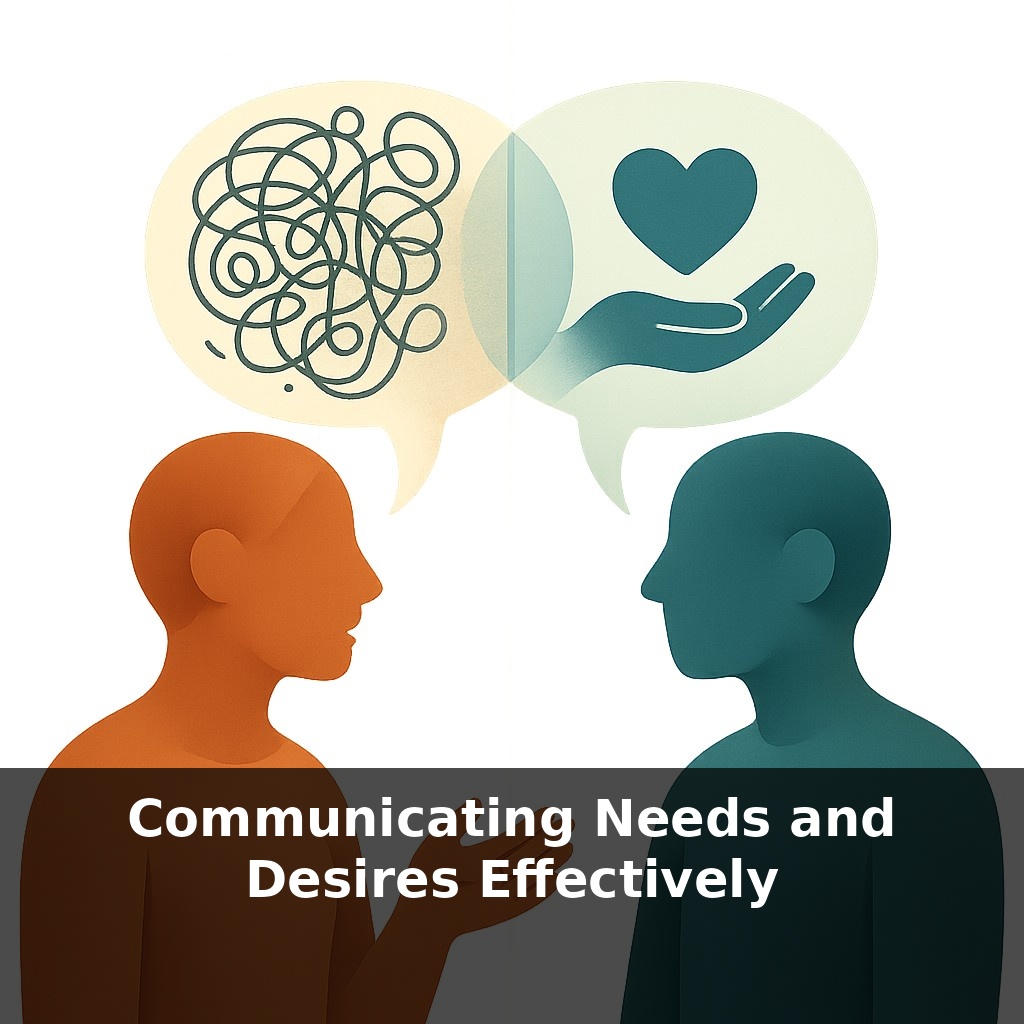
So if talking isn’t the problem, *what* is? Often, it’s that our real needs are hiding underneath complaints, jokes, or silence. “You never help around the house” might actually mean, “I’m overwhelmed and need support.” A sarcastic, “Wow, late again,” might be a nervous attempt to say, “I felt unimportant when you didn’t show on time.”
Many couples get stuck in this loop: one person drops a hint, the other reacts to the tone instead of the message, and both walk away feeling misunderstood. Over time, you can end up negotiating chores, schedules, even sex—without ever touching the deeper desires for respect, affection, or partnership.
In this episode, we’ll unpack how to turn those disguised messages into clear, emotionally safe requests your partner can actually respond to.
Today, we’ll zoom in on *how* you say things, not just *what* you say. Research on couples who stay together longer shows a clear pattern: they tend to talk in ways that are both honest and non-attacking. That means sharing the impact on you without turning your partner into the villain.
We’ll draw from approaches like Nonviolent Communication, the Gottman “soft start-up,” and other evidence-based tools—not as rigid scripts, but as flexible habits you can adapt to your personality. Think of this as learning a new duet in music: the goal isn’t perfection, but rhythm, timing, and staying in tune together when emotions run high.
When researchers study couples who actually *improve* over time, they see three skills working together like parts of the same tool: how you talk, how you listen, and what you do with the emotion in the middle. We’ve started with how you talk; now let’s zoom in on those other two pieces.
First, listening. Not the quiet, waiting-for-your-turn-to-argue kind—listening that shows, “I’m actively trying to understand your inner world.” Studies using empathy measures find that one simple move reliably changes the emotional temperature: paraphrasing. When you briefly reflect back what you heard—“So for you, it felt like…”—your partner’s nervous system gets a cue that it’s safer to stay in the conversation. The content matters, but the *signal* is, “You make sense to me, even if I don’t agree yet.”
Second, curiosity. Many arguments get stuck because both people are fighting about *who’s right*, instead of becoming curious about *why this matters* so much. A small shift—“Help me understand what this taps into for you”—often reveals deeper layers: fears about being taken for granted, old family patterns, or worries about the future. Curiosity doesn’t mean you’re conceding; it means you’re gathering enough information to respond to the real issue, not just the surface behavior.
Third, emotional pacing. Communication research shows that conversations go off the rails not only because of harsh words, but because bodies get overwhelmed. Heart rate spikes, muscles tense, and suddenly even neutral comments feel like attacks. Couples who do better long-term learn to notice this *in real time* and call gentle time-outs: “I want to keep talking about this, and I can feel myself getting flooded. Can we pause for fifteen minutes and come back?”
Here’s where clarity comes in: when you return from that pause, it helps to separate three pieces—what happened, what you made it *mean*, and what you now *need*. This turns vague frustration into something your partner can actually engage with: a specific moment, a personal interpretation, and a concrete, doable request.
Think of it as updating a shared travel plan: you’re not just reporting that the road is bumpy; you’re saying where you are, how the bumps feel to you, and which direction you hope to go next—together.
Think of your next tough conversation as standing with your partner in front of a blank canvas. Most of us grab the darkest color first: “You never…” “You always…” Those strokes dry fast and are hard to paint over. Instead, try starting with lighter, more precise colors—short, concrete moments rather than global judgments.
For example, swap “You don’t care about my day” for: “When I shared about my meeting and we switched topics quickly, I felt brushed aside and a bit lonely.” Notice how this version stays anchored in one scene, not your whole history.
You can also experiment with *scale*: - Micro: “Tonight, what I’d really love is ten minutes of phone-free time together on the couch.” - Mid: “This month, could we pick one evening a week that’s ours and protect it?” - Macro: “Long-term, it’s important to me that our relationship feels like a team, not parallel lives.”
Moving between micro, mid, and macro needs lets your partner see the immediate step *and* the bigger picture you’re hoping to build.
As AI tools, wearables, and cultural norms evolve, your daily conversations may start to feel more like co‑design sessions than battles. An app might flag, “This text sounds like blame—want help softening it?” A watch could nudge you when your pulse jumps, suggesting a brief pause before you reply. Over time, couples who practice these micro‑adjustments can turn conflicts into something closer to joint problem‑solving, the way two climbers read the same rock face and plan their next move together.
As you practice these shifts, expect a bit of wobble—like learning a new dance step while the music’s still playing. Missteps don’t mean failure; they’re data. Over time, you’ll start noticing earlier when tension rises, catching small moments where a softer word or slower breath gently steers you both back toward feeling on the same side.
Start with this tiny habit: When you notice yourself thinking “It’s fine, I don’t want to make a fuss,” quietly ask yourself, “What *specifically* would I like instead—one sentence?” Then, whisper that one clear sentence out loud to yourself, starting with “I feel…” and “I’d like…,” for example, “I feel overwhelmed; I’d like 10 minutes to finish this before we talk.” If you’re about to enter a conversation (a meeting, text, or call), pause and rehearse just that one sentence under your breath first. This way, you’re training your brain to turn vague discomfort into a simple, speakable need in the exact words you’ll use with others.