“Most bursts of anger in your body fade in about a minute and a half—unless your mind fans the flames. You snap at a coworker, replay the argument on your commute, and you’re still wired at bedtime. If the body lets go so fast, why can a single comment ruin an entire day?”
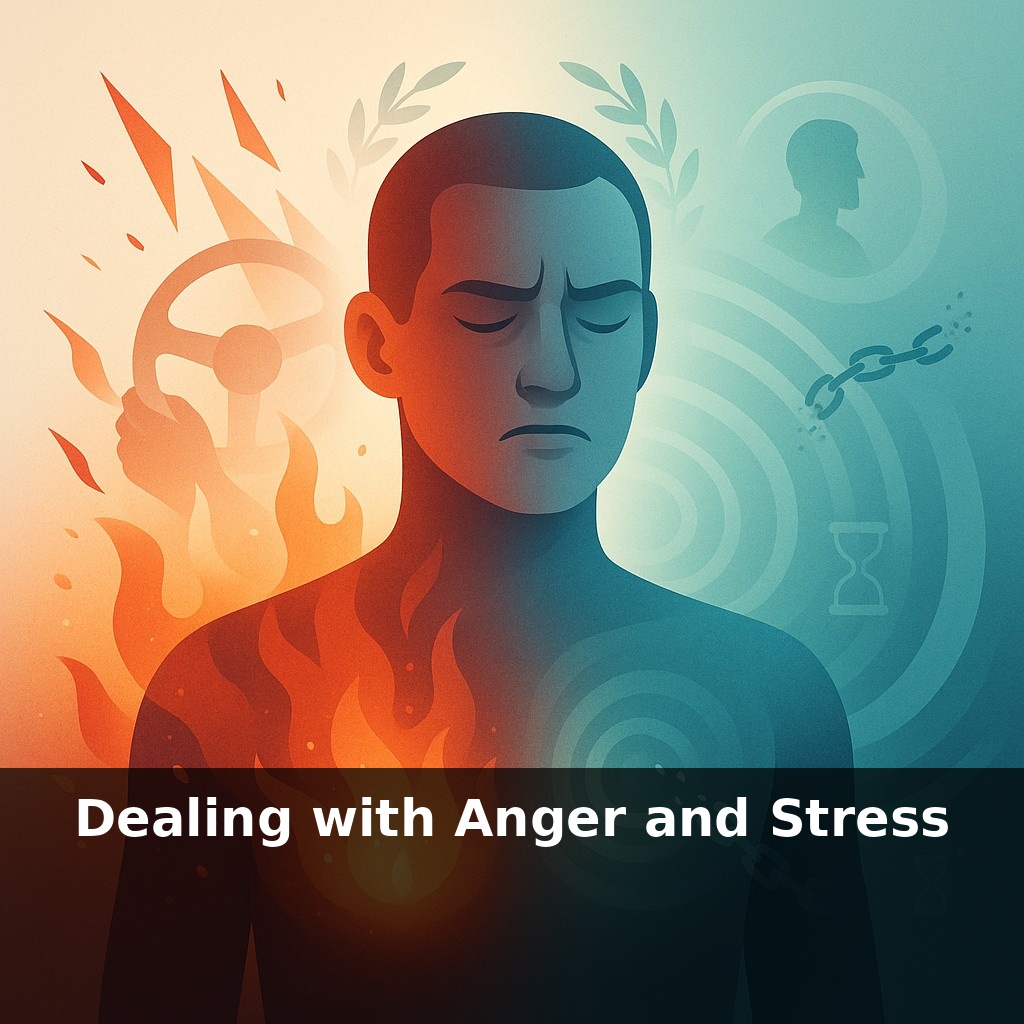
Seneca would say the real danger isn’t that we feel anger, but that we quietly *agree* with it. The insult feels justified, the delay “unacceptable,” the disrespect “intolerable”—and before we notice, we’ve handed the steering wheel to our worst impulses. Modern therapy gives this a clinical name (cognitive distortions), but Seneca treats it as a moral and practical failure: we’ve stopped being the editor of our thoughts and become their stenographer. Yet this isn’t about becoming cold or passive. The Stoic move is more radical: to turn every jolt of anger or stress into a signal to wake up. Instead of asking, “Why are they like this?” we ask, “What exactly did I just *assume*?” That tiny shift—from accusation to examination—is where philosophy stops being abstract and starts re‑wiring our day.
Seneca thinks our first angry impression is more like a rough draft than a verdict. The coworker is “obviously” lazy, the driver “definitely” disrespected you, the email “clearly” meant to criticize—yet all of that is interpretation layered over a bare event. Modern neuroscience backs this up: the brain fills gaps at high speed, favoring threat, not accuracy. That’s useful for crossing a busy street, but terrible for reading intentions in a terse message. The practice, then, isn’t to feel less, but to delay belief: to treat each surge of anger as a pop‑up window asking, “Are you sure you want to click ‘Send’ on this story?”
Seneca’s next move is surprisingly concrete: he wants you to catch the anger *before* it becomes a policy in your mind. For him, there are three stages: the first jolt, the inner “yes” to it, and then the full‑blown storm. Only the middle part is fully under your control. You don’t choose the flash of irritation; you do choose whether to sign off on its story and let it draft your next action.
This is where **premeditatio malorum** comes in—not as dark brooding, but as mental training. Seneca advises rehearsing common annoyances in advance: the late train, the rude client, the family member repeating the same comment you’ve corrected ten times. You quietly tell yourself: “This may happen today. If it does, I’ll meet it with patience and clarity.” When reality arrives, it’s no longer a shocking insult from the universe; it’s a scenario you’ve already seen and survived in your mind.
Modern research suggests this kind of preparation doesn’t just feel helpful; it actually changes your stress response. Rehearsed setbacks trigger less hormonal chaos, which gives your judgment a longer runway. You’re not calm because life got easier; you’re calm because the event has moved from “unthinkable” to “expected and manageable.”
Seneca also presses us to examine the *size* of our response. He asks, in effect: “What exactly are you punishing yourself for?” A delayed email costs five minutes; an afternoon of simmering costs hours of focus, sleep, and peace. That trade is rarely rational. This is where **cognitive reframing** earns its keep: you deliberately search for a more accurate, less catastrophic interpretation. Maybe they weren’t attacking you; maybe they were rushed, stressed, or simply clumsy with words.
None of this means becoming a doormat. Seneca allows for firm boundaries and decisive action, but he wants them rooted in your values, not in the heat of the moment. Think of a seasoned coach on the sidelines: fully engaged, giving sharp feedback, but not throwing chairs when the call goes against the team. The energy is there, yet it’s channeled, not unleashed at random.
Over time, this combination—anticipating trouble, right‑sizing your response, and acting from principle—turns anger from a default reaction into a rare, deliberate tool. Stressful events don’t vanish, but they stop dictating who you are when they arrive.
A manager I coached used to fire off scathing Slack messages when projects slipped. Instead of trying to “be less angry,” he ran a weekly drill: every Monday, he listed three likely friction points—missed deadlines, vague updates, last‑minute scope changes—and wrote the exact response that would align with his standards *and* his long‑term goals for the team. When the tension hit on Thursday, he simply followed his own script. What felt “natural” before—sharp sarcasm, public blame—started to look sloppy compared to his prewritten, value‑driven responses.
You can do something similar in your personal life. Think of the three most common triggers in your week: a partner’s tone, a coworker’s interruptions, a recurring logistical mess. Draft a short “if‑then” playbook: “If this happens, I’ll ask one clarifying question before I react.” That one beat of structure is like adding a circuit breaker to your emotional wiring: the same current flows, but it stops blowing the whole system every time there’s a surge.
Anger and stress are becoming data points. As wearables link spikes in heart rate to specific meetings, commutes, or conversations, you’ll be able to see your “irritation map” for the week. That makes Seneca’s pause less philosophical and more like a performance metric: a skill you can train, track, and refine. The frontier isn’t just fewer outbursts, but designing days, teams, and even city spaces that quietly reduce the number of triggers you ever have to wrestle with.
Treat this as ongoing craftsmanship: you’re tuning how you respond, not chasing perfection. Notice which people, times of day, or topics make your “inner prosecutor” loudest, and experiment with tiny adjustments—more sleep, clearer agreements, shorter meetings. Over weeks, anger becomes less like a verdict and more like a hint to redesign the setup.
To go deeper, here are 3 next steps:
1. Try a 10-minute guided anger-calming practice on the free Insight Timer app (search “Rage to Stillness” by Sarah Blondin) the next time you feel your body heat up—use it as your “pattern interrupt” instead of doom-scrolling or venting. 2. Grab one evidence-based toolkit for stress from Dr. Jud Brewer’s website (his “Unwind Anxiety” app or his TED Talk “A Simple Way to Break a Bad Habit”) and experiment with his “note the trigger–note the behavior–note the result” loop the very next time you find yourself stress-eating or snapping at someone. 3. Start a short evening “anger debrief” routine using the questions from Harriet Lerner’s *The Dance of Anger* (chapter on “Who’s Responsible for What?”) and discuss one insight with a trusted friend or partner this week, so you’re not trying to process all that tension alone.