Understanding Impulse Buying
📝 Transcript
You walk into a store for one thing, and walk out with a bag of “how did this happen?” purchases. Here’s the twist: that decision was shaped in milliseconds—before you felt like you’d decided anything. Today, we’re peeling back what actually happens in that tiny invisible moment.
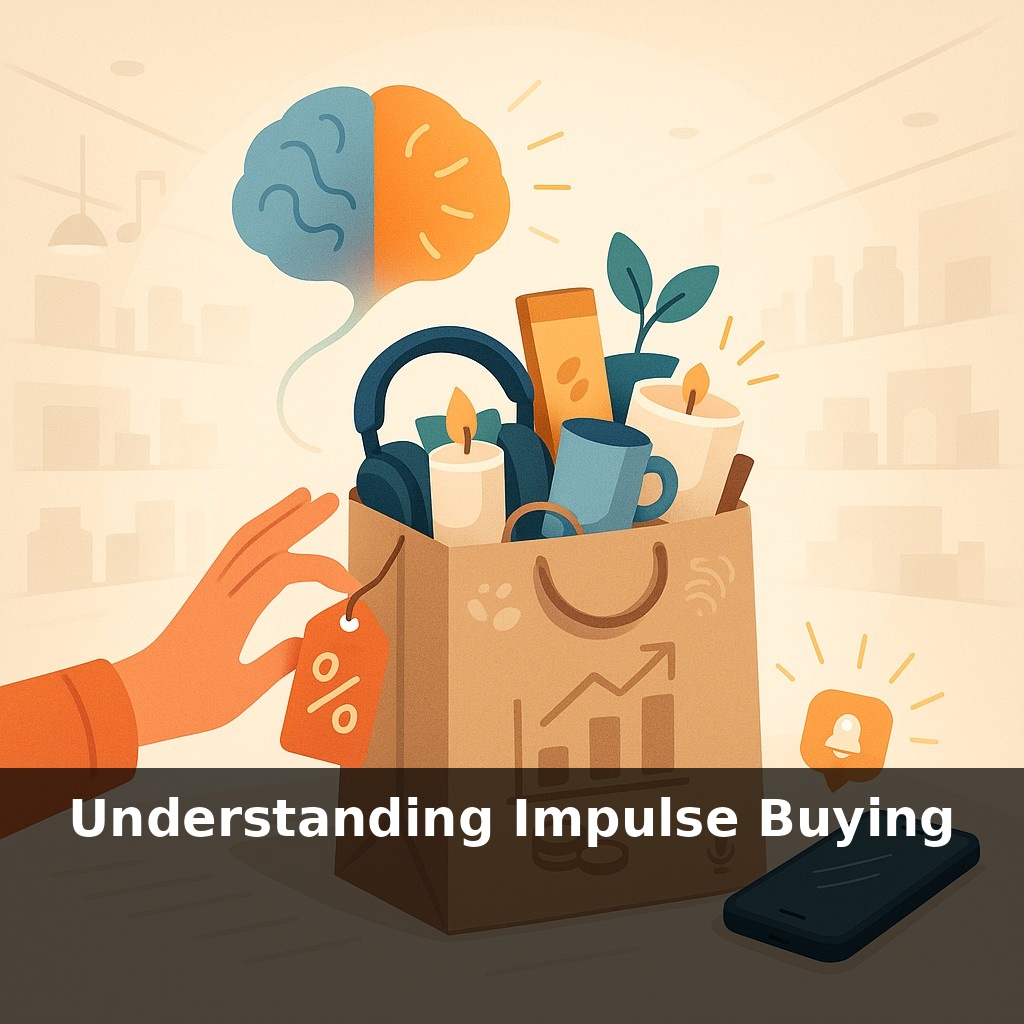
That “how did this happen?” bag isn’t random—it usually has fingerprints from your surroundings all over it. The colour of a SALE tag, the way items are grouped, the timing of a push notification, even the song playing in the background can quietly tilt you toward “why not?” instead of “do I really want this?” In a supermarket, end-of-aisle displays aren’t just convenient; they’re designed to catch your tired, wandering attention at the exact moment your self-control is lowest. Online, that same role is played by “Only 2 left!” banners and one-swipe checkouts that turn hesitation into a quick tap. And here’s the uncomfortable part: these cues are often tuned using data from millions of shoppers just like you. In this episode, we’re going to surface those cues so you can spot them in real time—and decide when you actually want to say yes.
Stores and apps don’t just throw these tactics at everyone the same way—they’re tuned to *you*. Loyalty cards, browsing history, and past orders quietly map your habits: what you buy when you’re tired, what you add late at night, which brands you can’t resist on sale. From there, systems predict when you’re most likely to say “yes” without thinking and line up temptations right on cue. It’s less like a loud salesperson, more like a silent, smart thermostat constantly adjusting the “temperature” of offers around you so you stay in the comfort zone where spending feels natural, not noticeable.
Marketers have a label for those “how did that end up in my cart?” moments: impulse purchases. But in research, it’s defined much more narrowly than “buying something fun.” Impulse buying is specifically when *emotion* and *immediacy* drive the choice more than any clear plan or prior intention. That’s important, because it separates “I finally bought the blender I’ve been researching” from “I grabbed this fancy gadget at checkout because it looked cool.”
In brain terms, what stands out is *speed*. Reward circuits light up almost instantly when you see something attractive or “special.” The part of your brain that handles trade‑offs and longer‑term consequences shows up later to the conversation, almost like a co-worker walking into a meeting that has already started. The shorter the gap between “ooh, want” and “own it,” the less chance that slower system has to weigh in.
This is where situation matters more than personality. Studies find that impulse buying surges when you’re:
- **Cognitively tired** (after work, after making lots of small decisions) - **Mildly stressed** (in a rush, juggling kids, worried about something else) - **Slightly elevated in mood** (celebrating, treating yourself, weekend vibes) - **Disoriented or overloaded** (new store layout, crowded sale, multiple tabs)
Under those conditions, your brain leans harder on shortcuts: *It’s on sale, it must be a good idea*, or *Future Me will figure out how to pay for this*. You’re not “being irrational” on purpose; you’re just running low on bandwidth.
Online and offline environments quietly stack these conditions. Long aisles, dense menus, pop‑ups, and endless scrolls all increase mental load. Then, when your focus is fraying, a “perfect fit” add‑on appears right where your eye already is. It doesn’t feel like pressure; it feels like convenience.
A useful way to see this is to treat your attention like limited battery power. Every choice—comparing brands, checking prices, resisting a temptation—drains that battery a little. By the time you reach the end of the trip or the checkout page, the “rational” part is running on low power mode, and small frictions or small delights can tip you toward “just get it.”
The practical leverage point isn’t fighting every urge; it’s protecting your battery and slowing that crucial first leap from “want” to “buy,” so your later‑arriving systems have a fair say.
Think about three common situations. First: you’re waiting in a slow line, phone in hand. You open a shopping app “just to look.” A flash banner, a “recommended for you” item, and a 1-tap checkout later, you’ve bought something you didn’t know existed three minutes ago. Nothing dramatic happened—you were just bored, slightly annoyed, and holding a frictionless buying machine.
Second: you stop for milk after work and your basket is empty for the first few aisles. Near the front, there’s a tiny display of premium chocolate and cold drinks right after the busiest section. You’ve already made a dozen micro‑choices about brands and sizes; by the time you reach that display, your mental energy is thinner, and “little treats” slide in more easily.
Third: remember that cinema popcorn moment—the smell hits you before the thought does. That’s what many “quick add” buttons are doing: creating a sensory shortcut straight to “yes” before you’ve fully formed the question.
Impulse control is becoming a financial skill as critical as basic budgeting. As neuro‑pricing tools spread, retailers may shape offers as precisely as a thermostat adjusts room temperature. Your defenses won’t just be “willpower,” but settings you choose—like spam filters for your wallet. Picture turning on “slow mode” for spending: auto-delays on tempting categories, or apps that quietly nudge you toward goals when your behavior drifts. The frontier won’t be *whether* you’re influenced, but *who* you let steer.
So instead of trying to dodge every nudge, treat each one as a signal to zoom out: *What story is this purchase part of?* A Friday treat, a tool, or just digital clutter? Like reorganising a messy desk, small tweaks—unsubscribing from flash‑sale emails, moving shopping apps off your home screen—can quietly shift your default from reflex to intention.
Here's your challenge this week: For the next 7 days, every time you feel the urge to make an unplanned purchase (online or in-store), pause and set a 10-minute timer before you decide. During that timer, say out loud which trigger just showed up for you—boredom, stress, reward, FOMO, or “it’s on sale”—and then check your bank app to see exactly how much you’ve already spent on non-essentials this month. If after 10 minutes you still genuinely want it, you’re allowed to buy it—but you must screenshot the purchase and put it in a folder called “Impulse or Intentional?” so you can see the pattern by the end of the week.
From this course
Smart Shopping and Spending
5 episodesUnlock all episodes
Full access to 5 episodes and everything on OwlUp.
Subscribe — $1.99/monthLess than a coffee ☕ · Cancel anytime