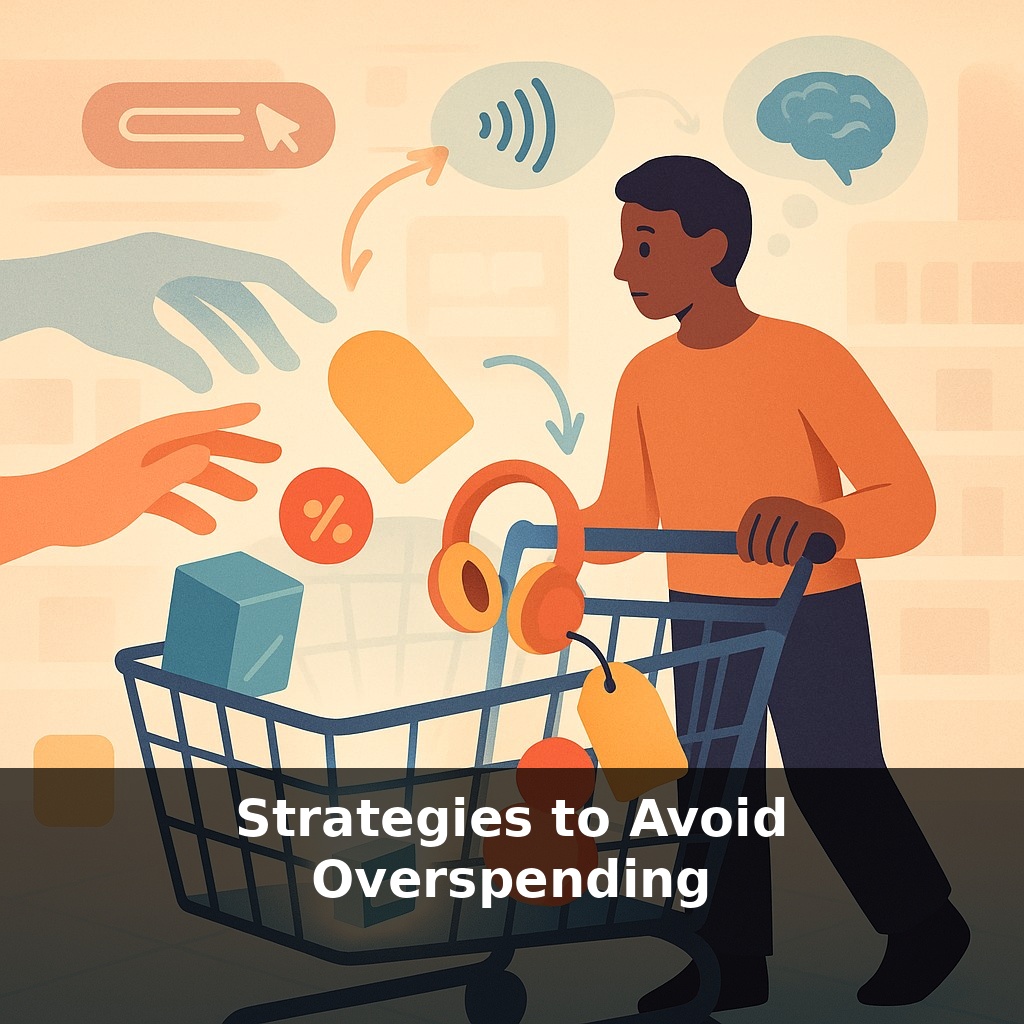
The average American makes about four impulse buys a week—yet most people swear they’re “pretty good with money.” You’re in the store for toothpaste, and a few minutes later there’s a new gadget in your cart. If you barely remember deciding to buy, who’s really in control?
You’ve already seen how those “I barely decided to buy that” moments can sneak into your cart. Now zoom out: it’s not just single purchases—it’s the entire environment quietly nudging you to spend. One-click checkout, saved cards, buy-now-pay-later, endless flash sales: the modern money system is designed to remove every tiny pause that might give you time to reconsider. And it works. The less friction there is, the more we leak cash in ways we don’t notice until the statement arrives. In this episode, we’re going to flip that script. Instead of relying on willpower, you’ll learn how to build in smart “speed bumps” that slow spending just enough to protect you—without turning your life into a spreadsheet. Think of it as installing guardrails on a mountain road: most of the time you won’t need them, but when you do, they can save you from a very expensive crash.
Now we’re going to zoom in on what actually drives those leaks. Overspending usually doesn’t come from one huge blowup; it’s the steady drip of “tiny” upgrades, add‑ons, and treats that feel harmless in the moment. Algorithms learn your tastes, stores personalize offers, and subscriptions quietly renew in the background. You’re not just choosing; you’re being constantly prompted. The goal isn’t to ban fun or obsess over every dollar. It’s to set up a system where you can still say “yes” to what you value—while defaulting to “no” for everything that doesn’t clearly make your life better.
Think of this in three layers: what you see, what you decide, and what’s around you when you decide.
First, visibility. Most people can quote their rent but have only a fuzzy guess about “everything else.” That fog is where money disappears. When researchers ask people to estimate their non‑fixed spending, they tend to be off by 20–30 %. The cure is unromantic but powerful: track every dollar that isn’t a bill for a month. Not to judge it—just to see it. Use whatever you’ll actually stick with: a budgeting app, a spreadsheet, or even a shared note on your phone. Label categories loosely at first (groceries, eating out, random online, etc.). You’re building a dashboard, not a prison.
Next, intentional limits. Once you see the pattern, you can stop treating “whatever’s left” as spending money. Zero‑based and 50/30/20‑style approaches work because they force you to give every dollar a role before it hits your account. Instead of “I’ll try to spend less on takeout,” it becomes, “I’m giving myself $180 this month, or $45 a week.” That number can be generous or tight; what matters is that it’s chosen on purpose and checked against reality. If you blow through it by the 20th, that’s information, not failure—you either need a different number or different habits.
Finally, environment. This is where you quietly change the “default settings” of your financial life. Clear out saved cards from browsers and shopping apps so buying always requires one more step. Turn off non‑essential sale notifications. Move shopping apps off your home screen. If there’s a store or site that routinely tempts you, create a tiny obstacle: log out each time, or keep your password in a manager so you can’t just breeze in. One analogy from tech: overspending is like apps running in the background draining battery; you’re shutting down the ones you don’t need so power goes to what matters.
Layer in automation on top of that environment. Have transfers to savings and debt happen the day you’re paid, so “extra” money is pre‑committed to your priorities. When your future self already has a claim on that cash, every unplanned purchase becomes a conscious tradeoff instead of a reflex swipe.
Think of a few real‑world setups. One person uses two checking accounts: the first catches income and instantly pushes “future money” out—rent, savings, debt, yearly bills. The second is the only card in their wallet; whatever’s there is fair game. No mental math, just a clear line between “spoken for” and “spendable.” Another person runs a weekly “money warm‑up” on Sunday nights: 10 minutes to glance at their balance, skim upcoming calendar events, and pre‑decide where likely extra spending will go—a friend’s birthday, a work lunch, a small splurge. That turns surprises into planned choices.
You can also reverse‑engineer big wins from small tweaks. People who run an “unsubscribe sprint” twice a year set a 30‑minute timer, open bank and email, and ruthlessly kill anything they wouldn’t miss in a month. Others adopt a 48‑hour list for non‑urgent wants: every tempting item goes on it with a date; only what still matters after the wait earns a slot in next week’s spending plan.
Your weekly budget might soon work more like a smart thermostat than a spreadsheet. With open‑banking rails, you could set “temperature ranges” for categories, and your bank quietly dials payments up or down to keep you in the zone—cooling dining out when travel heats up, for example. AI tools may forecast cash‑flow crunches from your calendar and location, nudging you before you tap “buy.” As BNPL gets clearer statements, schooling could shift from just “how credit works” to training people to script those smarter defaults.
As you layer these tweaks, notice how your mood, energy, and even who you’re with sway your choices. A rough day at work, a late night scroll, a friend who always says “treat yourself” — each tilts the table. Map those patterns and you can start redesigning when and how you shop, like rearranging furniture so you stop bumping into the same corner.
Here’s your challenge this week: Pick **one spending trigger** you heard about in the episode (like late-night Amazon scrolling, takeout when you’re tired, or “just browsing” Target) and set a hard rule you’ll follow for 7 days—such as **no app orders after 8 pm** or **no cart at Target, only a basket and a list of 5 items**. Turn off **one-click purchasing** on your main shopping site today and require yourself to use a **48-hour waiting list** (a note on your phone) for anything over $25. At the end of the week, total how much you *didn’t* spend because of these rules and decide one specific goal that savings will support (like padding your emergency fund or knocking down a credit card).