About two-thirds of shoppers admit they buy things they never planned to. You’re at the checkout, one small “treat” jumps in the cart, then another. Later, your bank app feels like someone else did the shopping. How would life look if every dollar actually felt like *you*?
Sixty‑four percent of shoppers make at least one unplanned buy every month—yet most of us can’t clearly name the last three purchases that genuinely made life better. That gap is where mindful spending lives: not in cutting everything “fun,” but in sharpening the difference between a quick buzz and a lasting boost.
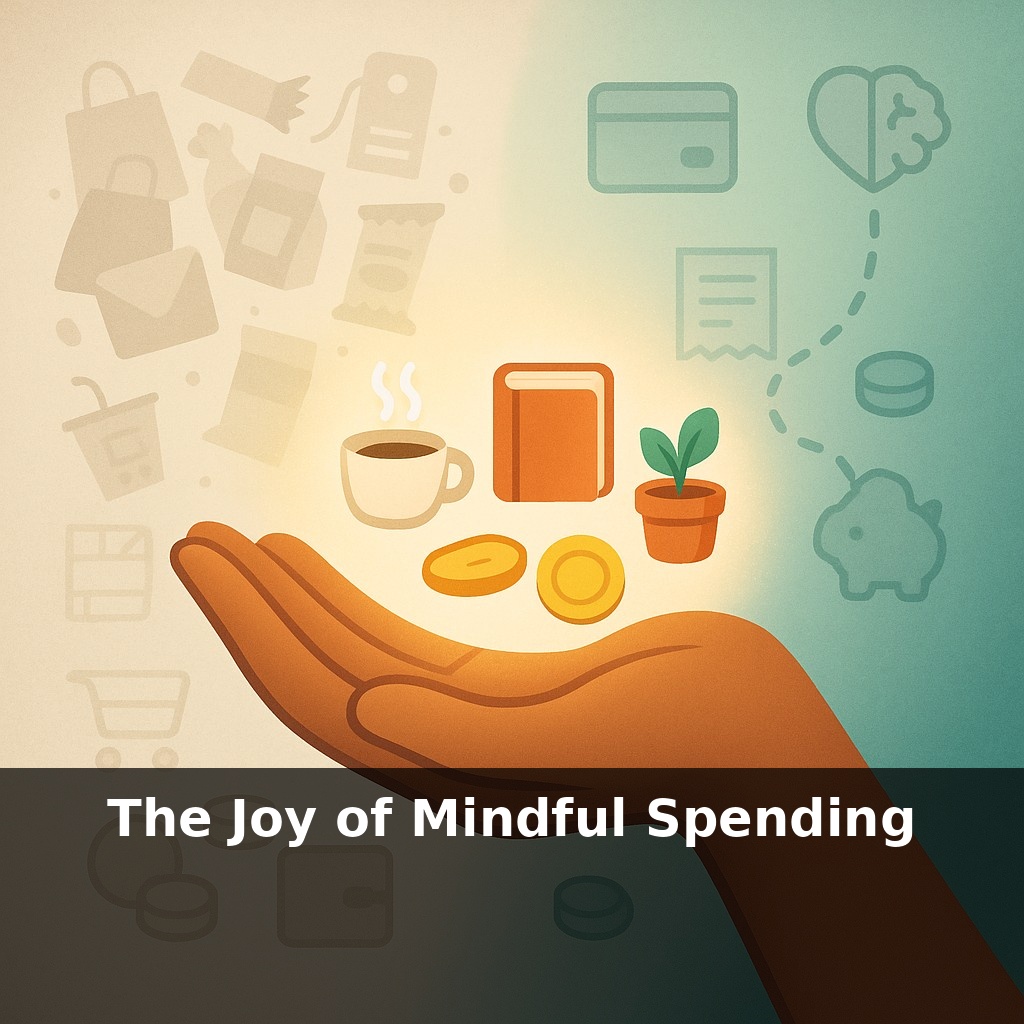
Mindful spending asks a different starting question than “Can I afford this?” or “Is this on sale?” It asks, “Does this move me toward the kind of life I actually want?” That might mean paying more for shoes you’ll happily wear 300 times, and skipping three forgettable takeout orders you only half enjoy. It might mean canceling a dusty subscription so you can redirect that same money into a monthly coffee with a friend—or a course that excites you.
You’re not just managing money; you’re quietly editing your future days.
Here’s the twist: even when people earn more, satisfaction often plateaus because new income quietly leaks into habits we barely notice—extra subscriptions, upgrades, tiny “why not?” clicks. Research in positive psychology shows we feel happier when money becomes a tool for experiences, relationships, and growth rather than background noise. That might look like choosing one concert you’ll remember for years over five rushed delivery orders you’ll forget next week. Mindful spending is less about self‑denial and more about turning down the volume on autopilot so you can actually hear what matters.
When researchers study how people actually use money, a pattern keeps showing up: we’re surprisingly bad at predicting what will feel good later. We picture the shiny new thing, not the Tuesday night we’re too tired to use it—or the mild annoyance every time we see it, unused, on a shelf. Mindful spending closes that gap between fantasy and reality by asking you to test desires instead of trusting them at face value.
One simple way researchers do this is with “anticipated vs. experienced” happiness. Before a purchase, people rate how happy they think it will make them. Later, they rate how it *actually* felt. Big guesswork gaps show up most with status items and convenience buys, and much less with things tied to relationships, learning, or daily comfort. In other words, the stuff we buy to impress others tends to underdeliver; the stuff we buy to support how we live tends to age well.
This is where a short pause becomes powerful. You don’t need a spreadsheet; you need a few pointed questions: “How often will I use this in the next month?”, “What problem does it solve?”, “Whose life besides mine gets better because of this?” Those questions shift you from the “front of the brain” that gets hooked by novelty to the part that can picture next week, next month, next year.
The science on generosity drives this home. In one classic experiment, people were randomly assigned to spend a few dollars on themselves or on someone else. The amount was tiny, but the pattern was clear: giving money away reliably produced more joy. That doesn’t mean you should never buy yourself anything; it means purchases that connect you to other people punch above their price tag.
Companies are starting to recognize this, too. When Patagonia ran its unusual “Don’t Buy This Jacket” campaign, it didn’t tank sales; it nudged customers to think about repair, longevity, and values. Revenue still grew, while more people chose to fix what they owned. That’s mindful spending at a systems level: less churn, more intention.
The same principle scales down to your day: fewer “just because” clicks, more decisions that feel like casting a vote for the kind of person you’re becoming.
Your spending already tells a story; mindful spending is about deciding to become the editor instead of a background character. Think about three recent buys that quietly upgraded your life in ways you didn’t expect—a better pillow that fixed your neck, a notebook that finally kept your ideas in one place, a transit pass that made commuting less chaotic. These are your “proof points” that money can be a tool for ease, not just excitement.
You can also spot patterns in what consistently *doesn’t* land: the gadget that lives in a drawer, the novelty snack you never finish, the “aspirational” workout gear that still has tags. Those aren’t failures; they’re data about what future you doesn’t actually care about.
Here’s where curated examples help. One person might redirect $30 from random app upgrades into a monthly babysitter so they can have an uninterrupted evening at home. Another might trade two bar nights for a weekly pickup game fee that keeps them moving and connected.
Analogy: mindful spending works like refactoring code—removing clutter, making each function (dollar) do something clear and useful.
Mindful spending doesn’t just tidy your bank account; it quietly rewires demand. As more people favor durability, experiences, and generosity, markets follow—like drivers naturally forming new lanes where traffic actually flows. Brands that help you repair, share, or resell what you own become more attractive, and “fast everything” starts to look dated. Over time, success is measured less by how much you buy and more by how well your money supports a life that feels coherent.
Over time, these tiny, deliberate choices stack up like bricks, shaping a home you actually want to live in—one built around energy, connection, and meaning instead of clutter and “meh” purchases. Your challenge this week: notice one expense a day that doesn’t feel like “you,” and brainstorm a swap that would leave you lighter, not just richer.