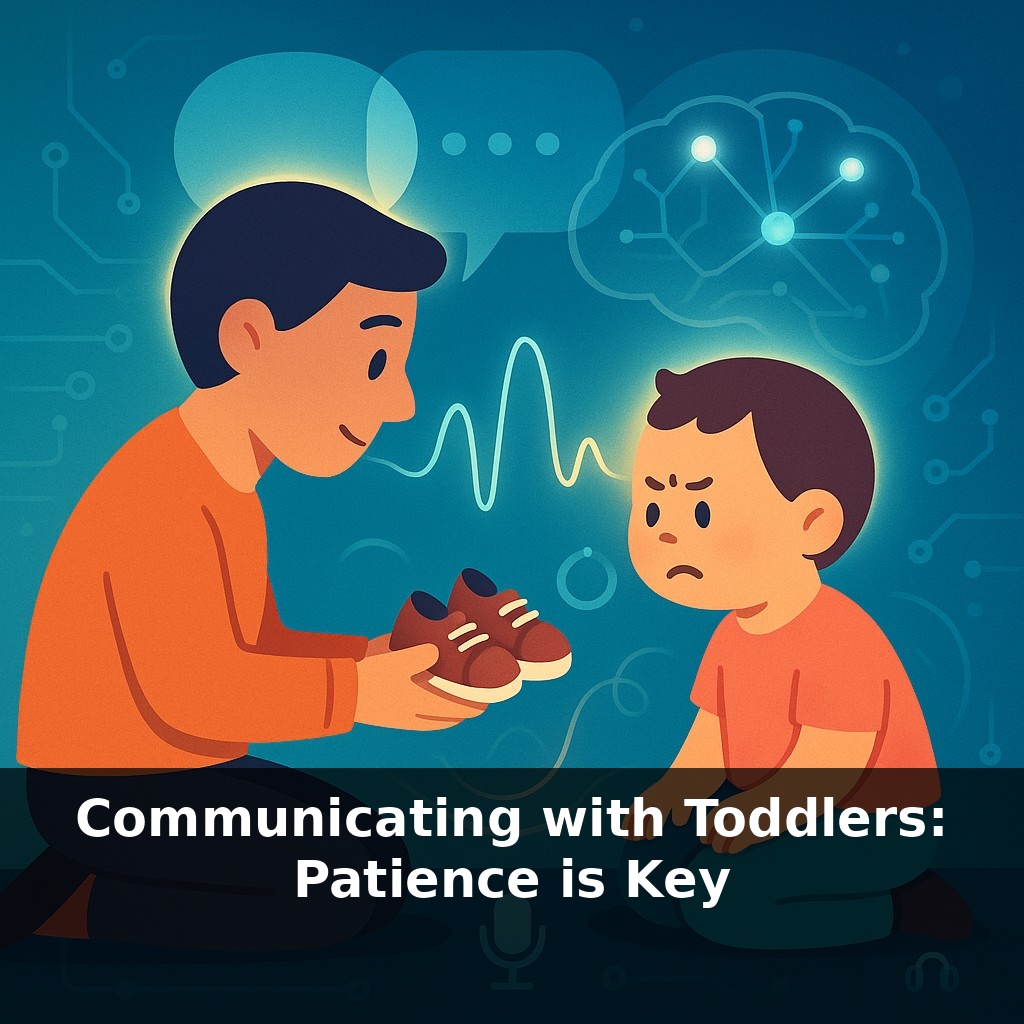
Toddlers often understand two to three times more words than they can say—so why does asking them to put on shoes explode into a meltdown? In this episode, we’ll step into that gap between “I get it” and “I can’t do it yet,” and explore how your patience rewires their brain.
Ninety percent of your child’s brain volume will be in place before they start kindergarten, but how those connections are wired depends heavily on the everyday conversations you’re having right now. Toddlers are soaking up not just *what* you say, but *how* you say it—your pace, your tone, your pauses, even what you do with your face and hands when you’re frustrated. This is where patience becomes practical, not abstract. Each calm “Let’s try again” during a struggle, each labeled feeling—“You’re mad the tower fell”—is like a daily workout for their language and self-control systems. Over time, those tiny reps add up. Instead of aiming for perfectly peaceful days, think in terms of small, repeatable moves that slowly shift the pattern of your interactions, especially in the messy, in‑between moments: transitions, tired evenings, and public meltdowns.
Think of toddler communication as a series of tiny negotiations: over snacks, car seats, bath time, which socks are acceptable today. Underneath those clashes is a nervous system that swings quickly from calm to overload. Patience here isn’t just “not yelling”; it’s slowing your own reactions enough to notice *why* this moment is hard for your child. Is it a surprise change, a tired body, too many words at once? When you adjust—shorter instructions, a visual cue, a silly song while you wait—you’re not “giving in”; you’re teaching them how people work together when things feel big and confusing.
Here’s the twist that often surprises parents: being patient with a toddler is *less* about having saint‑like calm and *more* about running a simple communication “playbook” when things get bumpy.
First, shrink your words. Toddlers tune out long explanations. Swap “We’re going to be late, and I really need you to cooperate and put on your shoes now” for “Shoes time. Shoes on feet.” One clear idea per sentence. Pause. Let their brain catch up before adding the next step.
Second, give the brain something to *do*, not just something to *stop*. “Don’t throw” is vague. “Balls stay on the floor. Throw ball *here*” while you point to a spot channels the impulse instead of fighting it head‑on.
Third, use repetition on purpose. Saying the same short phrase in the same situation (for example, “Hands are for helping,” “Feet stay on the ground,” “Gentle touches”) turns into a predictable script they can eventually say with you—and then by themselves—long before they can invent their own solutions.
Fourth, narrate the *process*, not the performance. Instead of “Good job, you’re so smart,” try “You kept trying the puzzle until it fit.” This kind of feedback quietly teaches persistence and problem‑solving, not perfectionism.
Fifth, slow your body, not just your voice. Toddlers read posture and movement like headlines. Dropping to their eye level, relaxing your shoulders, and keeping your hands visible can settle them faster than any speech.
Sixth, borrow time. When a “no” is unavoidable, pair it with when or what *can* happen: “No more crackers. Crackers are all done. Apple after nap.” Consistent “no + when/what next” messages help them feel less trapped and more oriented.
Finally, expect practice, not instant mastery. Self‑control at two is more like a wobbly toddler on skates than a seasoned athlete. Your steady, predictable responses are the rink walls they bounce off while they learn their balance over hundreds of tiny falls and recoveries.
You’re buckling a screaming toddler into the car seat, cheeks hot, hands shaking. In that moment, “patience” can feel like a luxury you don’t have. Try zooming in smaller: instead of fixing the whole scene, pick *one* thing to steady—the words coming out of your mouth. For example: “Seat belt on. Then music.” Same tone, same phrase, every time. It’s less poetic than a big lecture, but far easier to reach for when your own stress is spiking.
Think of it like hiking a steep trail: you don’t leap to the top; you choose the next solid rock. With toddlers, that “rock” might be a go‑to sentence, a silly ritual high‑five, or a hand on your own heart while you take a breath before answering. Over days and weeks, these tiny, repeatable choices become a kind of shared language for hard moments. The goal isn’t perfect calm; it’s making the next difficult interaction just one notch more workable—for both of you.
Toddlers today will grow up in homes filled with sensors, screens, and smart helpers, so your patience isn’t just shaping *them*—it’s quietly training the tech around them too. As AI tools learn from family patterns, they’ll mirror what they “see”: rushed commands or back‑and‑forth turn‑taking, sharp tones or steady ones. Your slow, responsive style can become the “reference track” systems use when suggesting scripts, routines, even alerts—like a metronome setting the tempo for future support.
Patience with toddlers isn’t about never losing your cool; it’s about repairing when you do. A simple “I yelled. I’m sorry. Let’s try again,” teaches them that relationships bend instead of break. Like tending a small garden, those tiny repairs, predictable phrases, and do‑overs slowly grow a family culture where big feelings can show up and still be safe.
Before next week, ask yourself: When my toddler resists (getting dressed, brushing teeth, leaving the park), what words and tone did I use in that moment, and how might it have felt from their point of view? In our next tough moment, can I pause for 5 seconds, get down at their eye level, and ask myself, “What is my child trying to communicate underneath this behavior—are they tired, overwhelmed, wanting control, or needing connection?” At the end of each day, which one interaction am I most proud of where I stayed patient, named their feelings (“You’re mad we have to leave; it’s hard to stop playing”), and set a clear limit—and what did I do differently that I can repeat tomorrow?