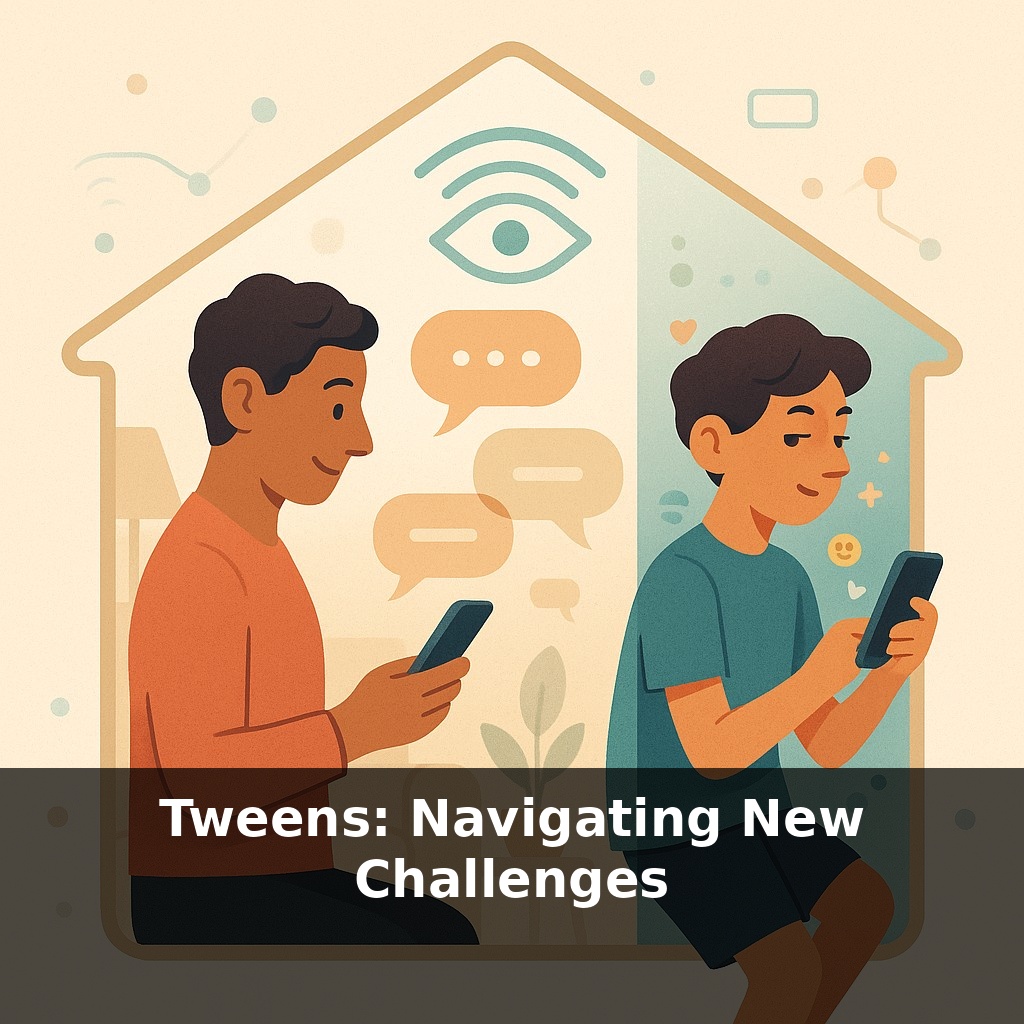
“By middle school, most kids have already dipped a toe into social media—often years before they’re ‘officially’ allowed. Your nine‑, ten‑, or eleven‑year‑old is suddenly craving privacy, but still secretly checking: ‘Are you watching? Are you with me in this?’
Parents often say tweens feel like “a different kid in the same house.” One minute they’re goofy and cuddly; the next, a single comment about a group chat or a missed invite can trigger a shutdown or an eye‑rolling storm. That’s not just “attitude”—it’s their brain rapidly upgrading how it handles status, fairness, and belonging. They’re testing: “How much control do I get now? What happens if I push back?” At the same time, they’re quietly scanning you for cues: “Can you handle my big feelings? Are you someone I can tell the hard stuff to?” The tricky part is that your instinct might be to lecture, fix, or sneak‑monitor, while what actually builds influence at this age is something that feels slower and less satisfying in the moment: staying curious, asking real questions, and letting them do a bit more steering while you stay clearly in the driver’s seat.
By the tween years, “because I said so” stops working the way it used to. They’re starting to notice double standards, compare rules with friends, and keep mental receipts of what feels fair. One sharp comment about a game limit or group hang can land less like guidance and more like a public review of your whole parenting style. At the same time, their world is widening: teachers, coaches, and classmates suddenly hold real sway. That means your influence depends less on enforcing every rule perfectly and more on how you handle the inevitable clashes—like a coach who still trusts the player after a bad game, but doesn’t bench themselves.
Many parents respond to this new phase by swinging hard in one of two directions: clamp down tighter (“No, because I said so, end of story”) or back off completely (“Fine, you handle it, you’re almost a teen”). Both moves make sense emotionally: one comes from fear, the other from exhaustion. But tweens actually do best in the messy middle—where you stay very present, but shift how you use your power.
Think of three levers you can adjust without giving up your role: voice, choice, and structure.
Voice is about how much say they have in decisions that affect them. A tween who feels heard is far more likely to follow a rule they argued against. That can sound like: “Sell me on why 10:00 is better than 9:30. What are you picturing, and what would help me feel okay about that?” You’re not promising a yes; you’re inviting a case. Even when you land on a no, the conversation itself builds trust.
Choice is about real options within your non‑negotiables. Instead of debating whether homework happens, you negotiate the “how” and “when”: “You can start now and be done before dinner, or take a break and start at 6:30. Which works tonight?” You’re handing them a bit of the steering wheel on process, while you still set the destination.
Structure is the part they won’t ask for but desperately need. Predictable routines, tech rules that apply to you too, clear follow‑through when lines are crossed—these act like guardrails on a mountain road. They reduce the number of on‑the‑spot battles, which means you have more energy for actual conversations instead of constant firefighting.
Underneath all this is one core question tweens are asking: “When I mess up, will you move closer or farther away?” They assume you’ll set limits; what they’re testing is whether your relationship survives their pushback. When you can say, “I’m upset about what happened, and I’m still on your team,” you’re not being soft. You’re reinforcing the one safety net that peers, apps, and algorithms can’t replace: a parent who stays connected while they practice being more independent.
A seventh‑grader slams the door after you ask about a group project. Old you might chase them down with a mini‑lecture. New you might treat it like a scouting mission: “We’ll skip solutions for a minute. Paint me the scene—who was there, what was said?” You’re signaling: I’m here to understand first, not to grade your choices.
Voice could sound like: “On a scale from 1–10, how unfair did that feel? What am I missing from your side?” You’re not agreeing; you’re gathering data. Choice might be: “You can cool off in your room or shoot hoops in the driveway. Either way, we’ll circle back at 7:45.” Structure shows up when 7:45 actually happens, even if they shrug through half the talk.
One small, concrete move: when they bring you a problem—friend drama, a confusing DM—ask, “Do you want me to mostly listen, help brainstorm, or step in?” That tiny menu quietly trains the very skills you hope they’ll use when you’re not in the room.
Many tweens will soon face tools and pressures you never met at their age—AI “friends,” ultra-targeted feeds, even biometric trackers in school. Instead of trying to predict every threat, think in skills, not scenarios. Can they pause before posting, name what they’re feeling, and disagree respectfully with a friend or algorithm? Those habits are like core strength in sports: invisible in the moment, but they stabilize every new move they try online, at school, and with you.
You won’t decode every eye‑roll or group‑chat mystery, and that’s okay. Treat this phase like learning a new sport together: expect awkward plays, celebrate small wins, review the “game tape” after hard days. Your challenge this week: once a day, say, “Tell me one thing that surprised you today,” then just follow their lead.