Nearly every major company proudly publishes a code of ethics—yet scandals keep happening. A CEO weighs a risky shortcut, a doctor debates bending rules to help one patient, an engineer questions an algorithm’s fairness. In each case, logic isn’t missing—ethics is steering it.
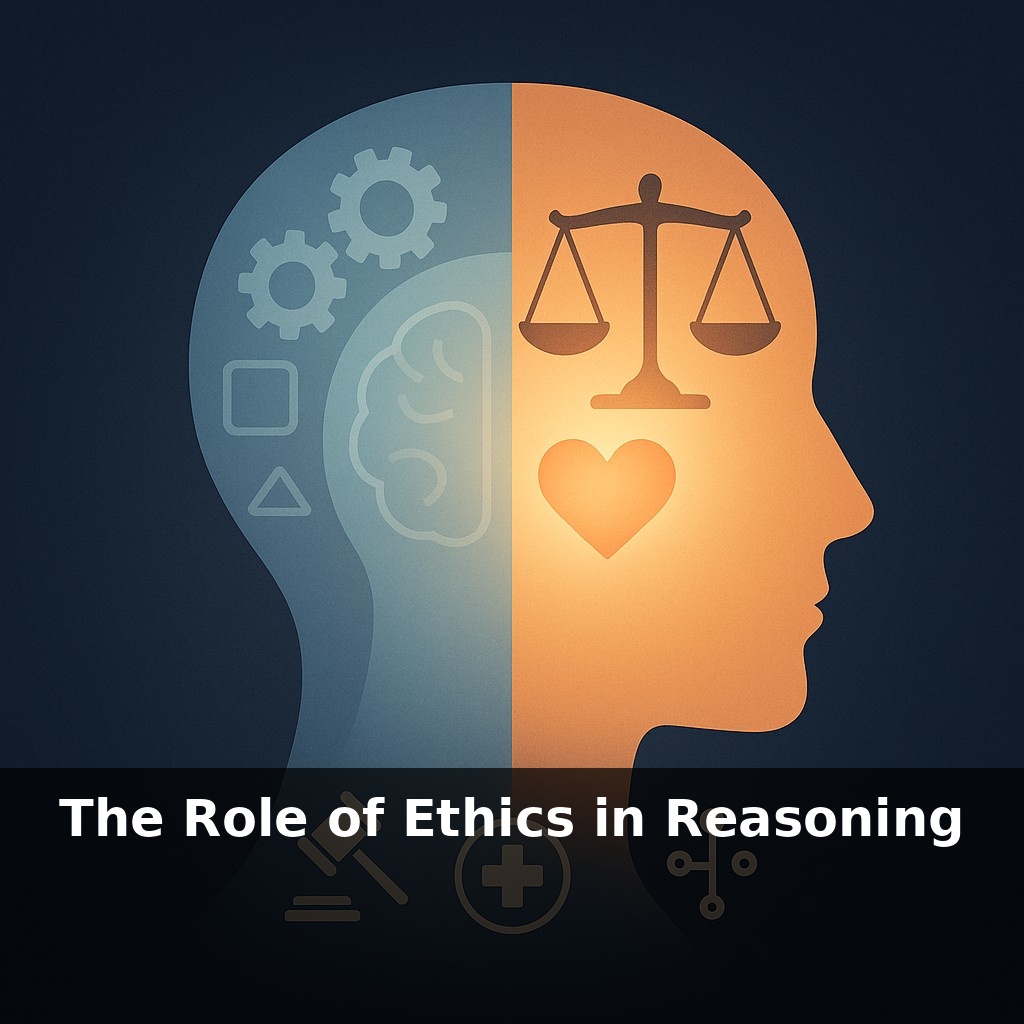
A courtroom, a hospital triage room, a product design meeting—they all showcase the same quiet fact: our reasoning never walks in alone. It’s carrying moral assumptions, prior commitments, and gut-level reactions, even when we’re convinced we’re being “purely rational.” When a judge weighs precedent against mercy, or a doctor balances one patient’s needs against limited resources, the calculations aren’t just about probabilities and outcomes; they’re also about what kind of person, institution, or society they’re trying to be. Cognitive science backs this up: our values don’t just decorate our choices at the end—they influence which data we notice, which trade-offs feel acceptable, and which arguments even sound convincing. To reason well, then, isn’t only to avoid logical fallacies; it’s to surface the ethical lenses already shaping how we think, and question whether they deserve that power.
Open a neuroscience paper on moral judgment and you’ll see something striking: when people face a dilemma, the parts of the brain linked to emotion and social meaning light up alongside areas for calculation. This isn’t a bug—it’s a built-in feature of how humans handle conflict, trust, and responsibility. Everyday choices quietly echo big philosophical debates: a manager deciding whom to promote brushes up against fairness, a data scientist tuning a model touches questions of harm, a friend keeping a confidence confronts loyalty. Philosophy names these tensions; real life forces you to navigate them.
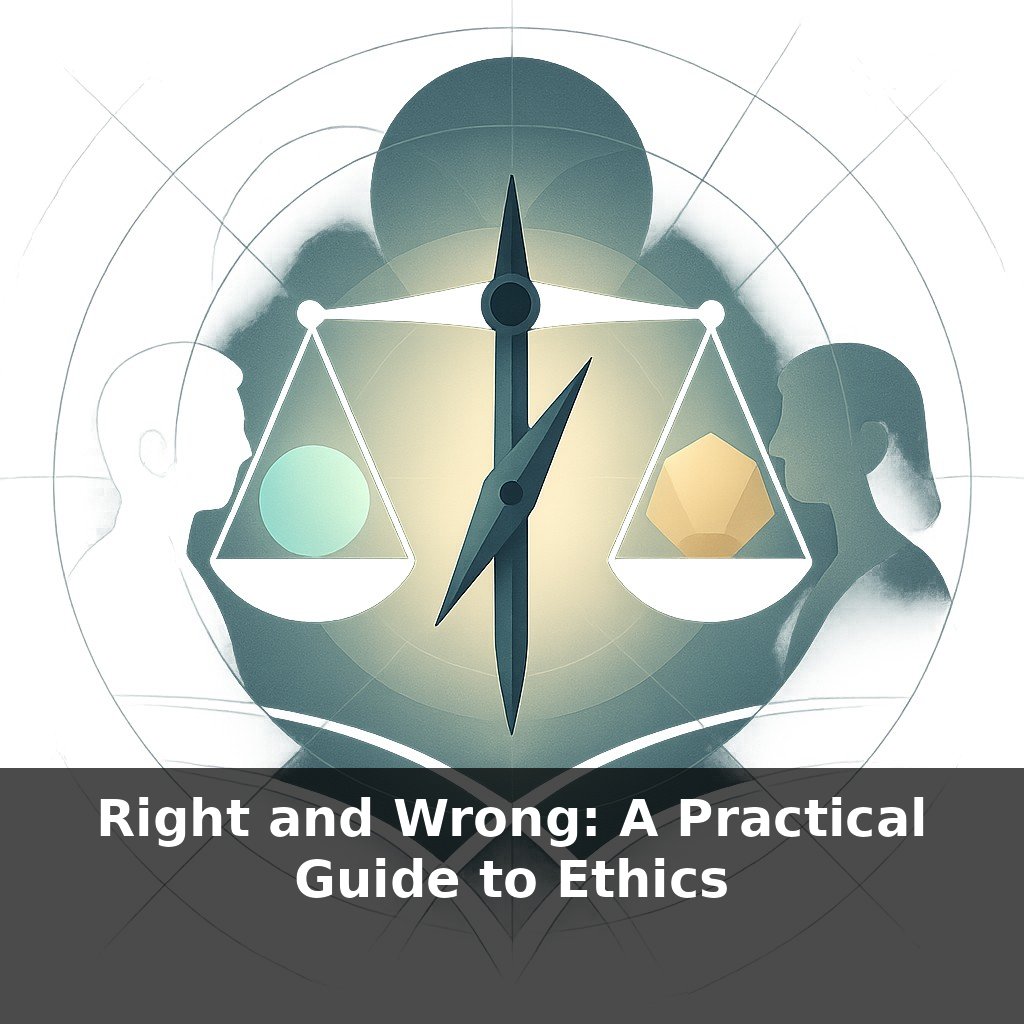
When philosophers and psychologists study how ethics shapes thinking, they often zoom in on three different “styles” of moral evaluation—each nudging our reasoning in its own way.
Utilitarian approaches push you to ask, “What leads to the best overall outcomes?” This can sharpen your attention to data: projected impacts, costs and benefits, who gains and who loses. In a product team deciding whether to release a feature that saves time for millions but disadvantages a small group of users, a utilitarian frame spotlights aggregate effects and long-term consequences. It trains you to map ripple effects others ignore—but can also tempt you to treat people as numbers on a spreadsheet if you never question what “best overall” really means, or whose perspective defines it.
Deontological approaches instead ask, “What rules or duties must not be broken?” This style reshapes your search for evidence: you look for promises made, rights at stake, regulations and precedents. A journalist weighing whether to publish leaked documents, for instance, may fix on duties of truth-telling, source protection, and minimizing foreseeable harm. This can protect against rationalizing convenient exceptions—yet rigid rule-focus can blind you to cases where rules conflict, or where following one rule mechanically would clearly betray another you also care about.
Virtue-based approaches zoom out further: “What kind of person—or institution—are we becoming if we choose this?” Here, your reasoning orbits character traits like honesty, courage, fairness, humility. A researcher deciding whether to rush a flashy result into print might ask not only, “Is this allowed?” or “Does this help the most people?” but also, “Does this reflect intellectual integrity?” This lens changes which options even feel live: some possibilities simply don’t fit the kind of agent you aspire to be.
In practice, people blend these styles. A hospital triage team may juggle expected outcomes (utilitarian), non-negotiable policies and patient rights (deontological), and the professional virtues they’re sworn to uphold. Neuroscience findings about overlapping emotional and deliberative processes suggest this mix isn’t neatly separated in the brain; your justifications are often post-hoc stories woven around an already value-laden response.
The art, then, is not to pick one framework forever, but to learn to notice which one is quietly in charge of your thinking—and to ask whether a different lens would reveal arguments or stakeholders you’ve been missing.
A tech company deploying facial recognition hits a crossroads. One team argues: “It boosts airport efficiency; delays drop, security improves.” Another team pushes back: “Misidentification rates are higher for certain groups; we risk discrimination claims and real harm.” A third voice asks, “If we become known for rolling out tools that quietly marginalize people, what does that say about our culture?” Notice how each camp spotlights different data, different stakes, different futures.
Neuroscience findings matter here: when these teams debate, they’re not switching emotion off to “finally be rational.” Instead, emotional salience helps mark which metrics feel urgent. A legal risk might barely register, while a story of one falsely detained traveler reshapes the whole conversation.
Ethical reasoning is like using a GPS on a long trek: terrain data (facts) and your walking ability (logic) matter, but the route you choose depends on whether you prioritize scenic paths, safety, or getting there fastest. Change the priority, and your “best” path changes with it—often before you consciously notice why.
Seemingly “neutral” tools will soon have traceable moral signatures, the way food has ingredient labels. Policy debates may shift from *whether* a system is ethical to *which* trade-offs it encodes and who signed off. Expect careers built around auditing these choices, much like financial inspectors today. Your own habits of justification will matter more, too: people who can unpack their decisions in public will gain trust, while opaque brilliance risks being sidelined in high‑stakes domains.
So the task isn’t to “add ethics at the end,” but to treat each decision like tending a shared garden: small daily choices shape what can grow later. As AI, law, and medicine entwine further, the live question becomes less “Is this allowed?” and more “If this became a habit, what kind of future would it quietly normalize for everyone?”
Start with this tiny habit: When you catch yourself making a quick judgment about someone’s choice (a coworker’s decision, a news headline, a friend’s comment), pause and silently ask yourself, “What value might they be protecting here?” Then, name just one possible value in your head—like fairness, loyalty, safety, or freedom. If you still disagree, add one more silent question: “What value am *I* protecting in my reaction?”