 2min preview
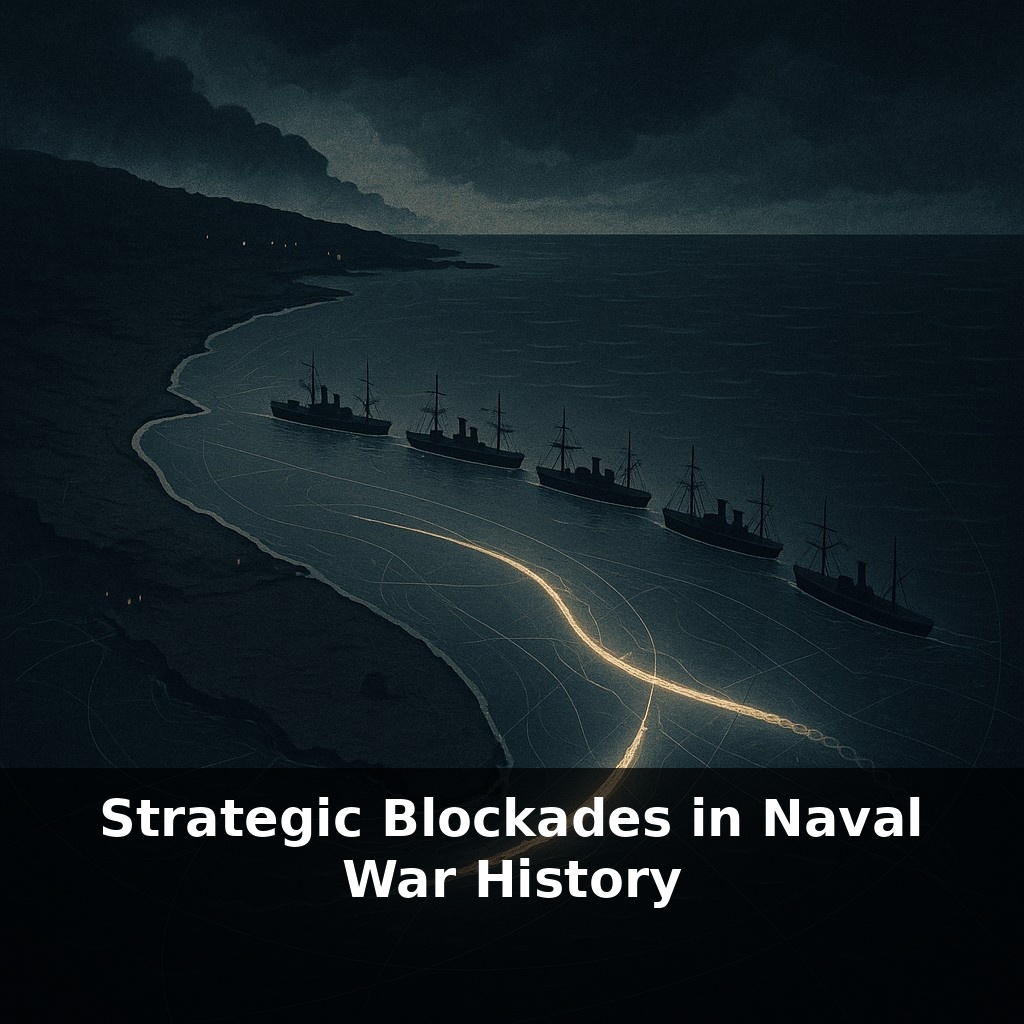
Strategic Blockades in Naval War History
📝 Transcript
A war can be lost without a single decisive sea battle. A quiet line of ships, sitting miles offshore, can strangle a nation more effectively than guns. Tonight, we step onto those distant waves, where control of a few narrow sea lanes can decide the fate of millions.
Nine ships. That’s all it took in 1861 for the Union to declare a blockade on over 3,000 miles of Confederate coastline—a move many European observers dismissed as theater. Yet within a few years, Southern ports that once pulsed with cotton and gold became quiet, hungry places. History is full of these moments when the decisive “battle” is a long wait, not a sudden clash.
To understand why, we have to zoom out from any single fleet and look at the wider web of finance, diplomacy, and industry. A blockade doesn’t just meet ships at sea; it collides with bankers in London, grain merchants in Buenos Aires, and dockworkers in Shanghai. Like watching a storm front roll across an ocean, the real drama is how pressure in one corner of the map reshapes weather everywhere else.
Subscribe to read the full transcript and listen to this episode
Subscribe to unlockSubscribe for $1.99/month to unlock the full episode.
From this course
The Art of War: Timeless Strategies Through History
4 episodesUnlock all episodes
Full access to 4 episodes and everything on OwlUp.
Subscribe — $1.99/monthLess than a coffee ☕ · Cancel anytime