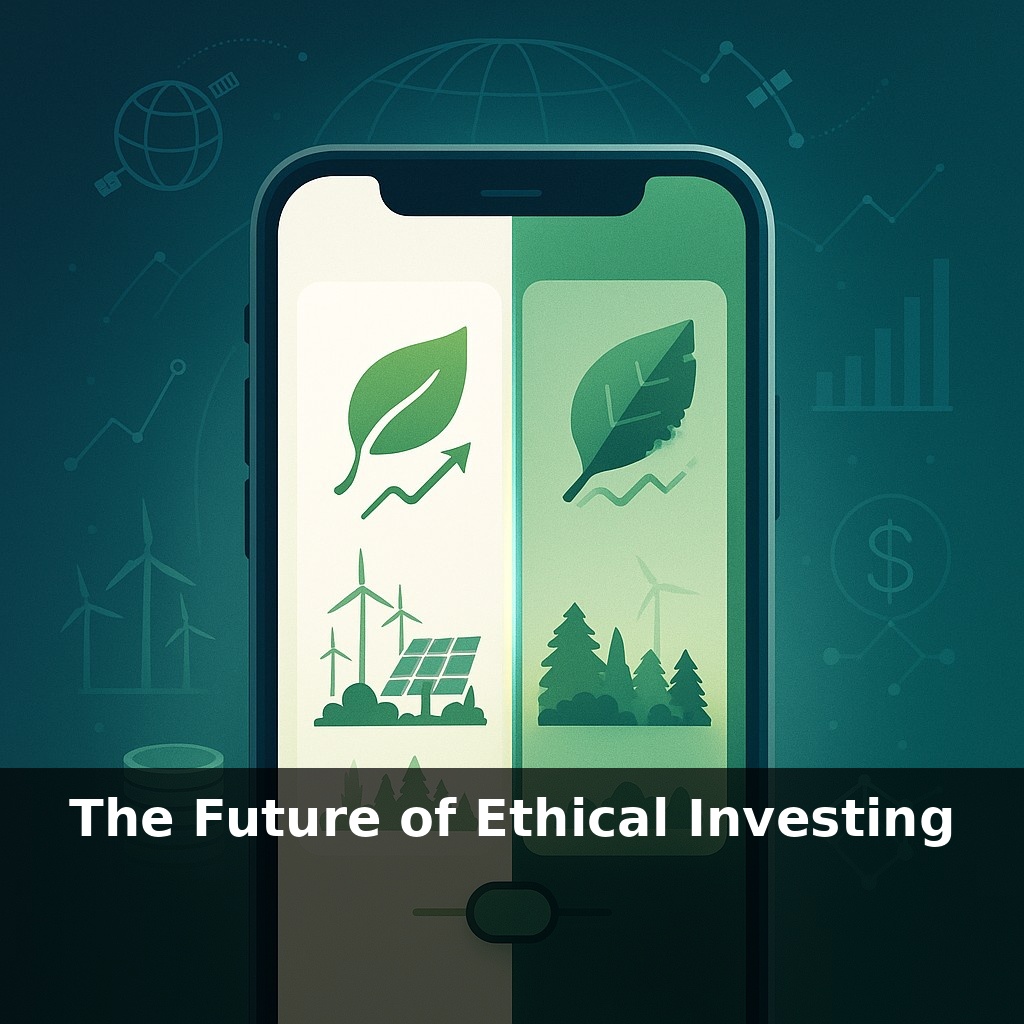
By the time you finish this episode, another few million dollars will have quietly shifted into “ethical” funds—some truly impactful, some just expertly rebranded. You’re scrolling your brokerage app; two funds claim to be green. One really is. One isn’t. How do you tell?
Bloomberg thinks that within a year or so, one in every three dollars managed globally will carry an ESG label. At the same time, satellites are scanning most of the world’s forests every few days, AI is scraping supply-chain controversies in real time, and regulators from Europe to Asia are rolling out detailed disclosure rules. That quiet label next to a fund’s name is about to be backed—or exposed—by an enormous amount of data.
In this episode, we’ll explore how ethical investing is evolving from “trust me” marketing to “show me” evidence. We’ll look at how new tools let you trace whether a climate fund is really backing transition technologies, whether a “social” strategy supports fair labour practices, and how sustainability bonds actually finance on-the-ground projects. The goal isn’t perfection; it’s learning to use this emerging toolkit so your portfolio reflects both your thesis and your conscience, with fewer blind spots.
Regulation is quietly raising the stakes. In Europe, SFDR forces funds to declare how sustainability is actually built into their process. In the U.S., the SEC has begun fining managers whose glossy brochures don’t match their holdings. Meanwhile, corporate climate pledges are moving from soft promises to legally testable claims, complete with interim targets and audit trails. For individual investors, this shift turns vague good intentions into something closer to a contract: if a product markets itself on ethics, you’re increasingly entitled to evidence—and recourse if it falls short.
Global capital is moving faster than most people realise. ESG-labelled assets are projected to hit $53 trillion by 2025, and yet the tools for interrogating that capital are changing even faster. Three shifts matter for you as a conscious investor: better data, smarter analytics, and new market plumbing.
First, data. Until recently, ESG analysis relied heavily on company self-reporting and occasional NGO reports. Now, satellites track forest loss and methane leaks, sensors monitor air and water quality, and alternative datasets map everything from workplace safety incidents to diversity metrics. Planet Labs, for instance, is refreshing images over most forests every few days—so if a company promises “zero deforestation,” independent analysts can check whether nearby tree cover is quietly disappearing. This doesn’t just expose greenwashing; it also helps uncover under‑the‑radar leaders that are actually improving.
Second, analytics. AI systems can scan earnings calls, legal filings and local-language news to flag controversies long before they blow up in mainstream media. They can also spot patterns: maybe firms with strong worker-safety records have fewer costly outages, or those with robust data privacy avoid fines and churn. Crucially, though, ESG ratings built on these tools are far from uniform. Methodologies differ, and correlations between major raters can be surprisingly low. The opportunity for you is not to find “the one true score,” but to treat ratings as inputs: compare them, look for disagreements, and ask why.
Third, market structures. Green, social and sustainability bonds now channel hundreds of billions into projects like grid upgrades, affordable housing and clean transport. Blockchain experiments are adding traceability: some platforms already tag carbon credits or supply‑chain data on‑chain so that an investor can see, for example, which solar farm or reforestation project a specific instrument funded and whether it’s delivering verified results. It’s early, and there’s hype, but the direction of travel is clear: more granular links between capital deployed and outcomes achieved.
Put these pieces together, and the edge goes to investors who can blend thematic knowledge—climate tech, social equity, biodiversity—with digital fluency. You don’t need to code; you do need to be curious about the sources and limits of ESG data, and willing to question simple labels in a world that’s finally getting complex in useful ways.
Think of a climate‑oriented company that talks about decarbonising cement. One research path is the glossy investor deck; another is what the data now quietly reveals. You might see patents filed for low‑carbon processes, hiring spikes in materials science roles on LinkedIn, and energy‑use trends inferred from satellite‑observed plant expansions. None of that appears in a marketing brochure, yet it sharpens your conviction about whether this is a serious transition player or a story stock.
Or take a “social” theme ETF. Instead of stopping at a high‑level score, you can drill into how its top holdings treat workers: unionisation disputes flagged in local news, glassdoor‑style sentiment scraped by AI, or accident trends drawn from safety regulators. Some investors already layer these signals on top of basic filters to build watchlists of firms whose practices are quietly improving, not just those already celebrated.
Used this way, data isn’t a verdict; it’s a series of clues, letting you test your thesis about impact and return rather than outsource it.
ESG’s next phase won’t be a new label; it will feel more like switching from a static map to live navigation. Data will stream in continuously, updating risk and opportunity signals as conditions shift. Carbon, nature loss and labour standards will be priced into loans and insurance the way credit scores are today. Expect more outcomes‑linked fees, where managers are rewarded only if specific real‑world targets are met. Your edge will come from learning to question the dashboards, not just follow them.
The frontier now is collaboration: regulators refining rules, platforms opening APIs, and investors sharing playbooks rather than hoarding “secret sauce.” Think of it as moving from solo stock‑picking to a coordinated relay race, where clean hand‑offs of data, standards and accountability matter as much as speed. In later episodes, we’ll unpack how to choose your leg of that race.
Here’s your challenge this week: Choose **one** company or fund you currently invest in and run it through *two* ESG tools (for example, MSCI ESG ratings and Sustainalytics) to compare their scores and controversies. Based on what you find, either (1) keep it and commit to increasing your position by a specific dollar amount that aligns with your values, or (2) set up a sell order this week and move that same amount into a more ethical option, like a screened ESG ETF or impact fund mentioned in the episode. Before the week ends, turn on any “sustainability” or “impact” filters inside your brokerage app so every future investment you browse is automatically screened for ethical criteria.