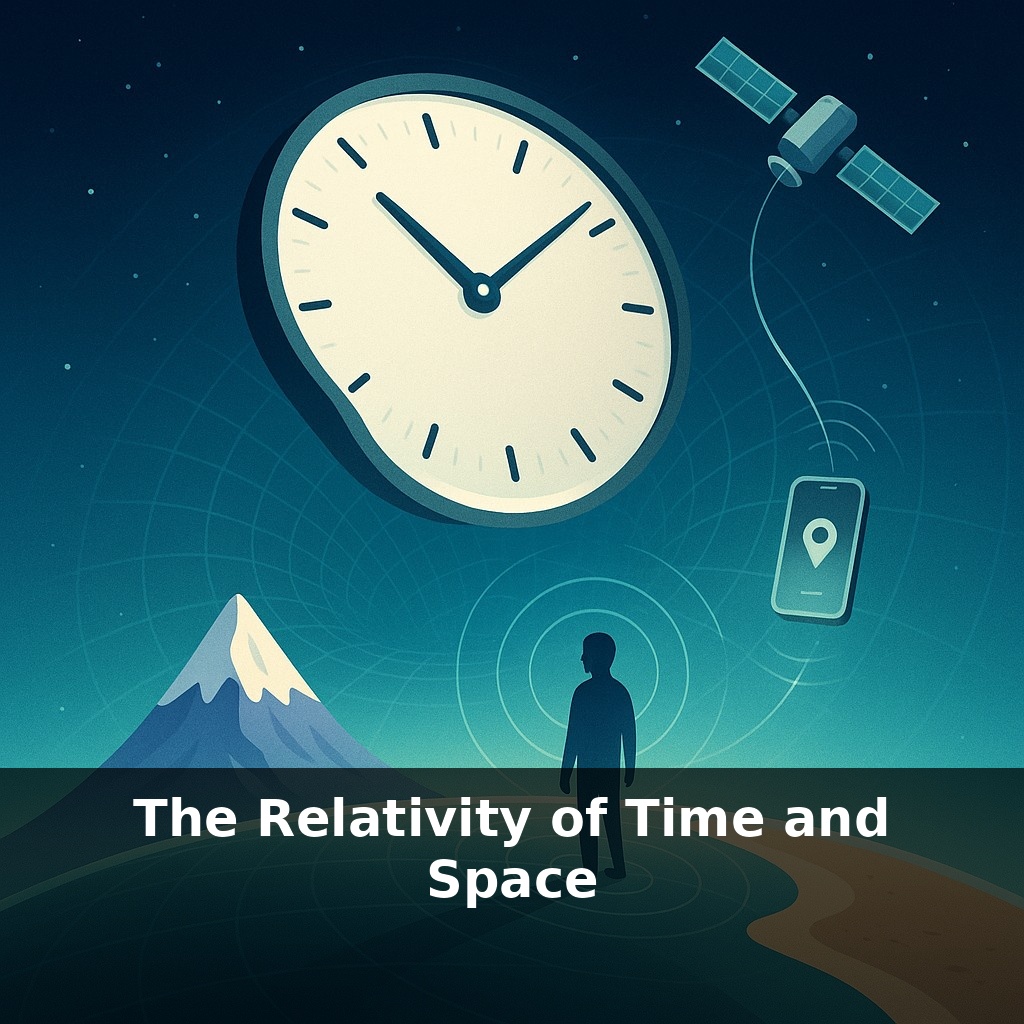
You age faster on a mountain than at the beach. Right now, your head is living in a slightly different time than your feet. As you commute, stream music, or check GPS, the minutes you trust are quietly disagreeing—with space and gravity deciding whose clock is right.
Your daily tech is already negotiating with space-time on your behalf. When your phone guides you through traffic, its GPS chip trusts satellites that are literally living in a slightly different “when” than you are. Engineers don’t just account for signal delays; they bake in the fact that those orbiting clocks tick at a different rate, then pre-offset them so your location doesn’t drift with every passing second. Even power grids rely on precisely synchronized clocks spread over continents, comparing the phase of electrical waves to keep everything humming in step. In high-speed finance, trades crossing oceans must be time-stamped so accurately that regulators can reconstruct events separated by microseconds. Beneath all of this quiet coordination is a simple, unsettling lesson: once motion and gravity enter the story, “now” stops being universal and becomes something we have to carefully define—and constantly correct for.
Physicists didn’t set out to complicate time; they were forced into it. In the late 1800s, railroad networks and telegraph lines pushed cities to agree on “official” time, exposing how slippery simultaneity really was when distances grew. Then experiments with light showed something even stranger: nature protects the speed of light the way a bank vault protects cash—no matter how you chase it, you never gain. To keep that rule unbroken, reality gives way elsewhere: distances stretch or shrink, and the order of far‑flung events can flip depending on who’s moving.
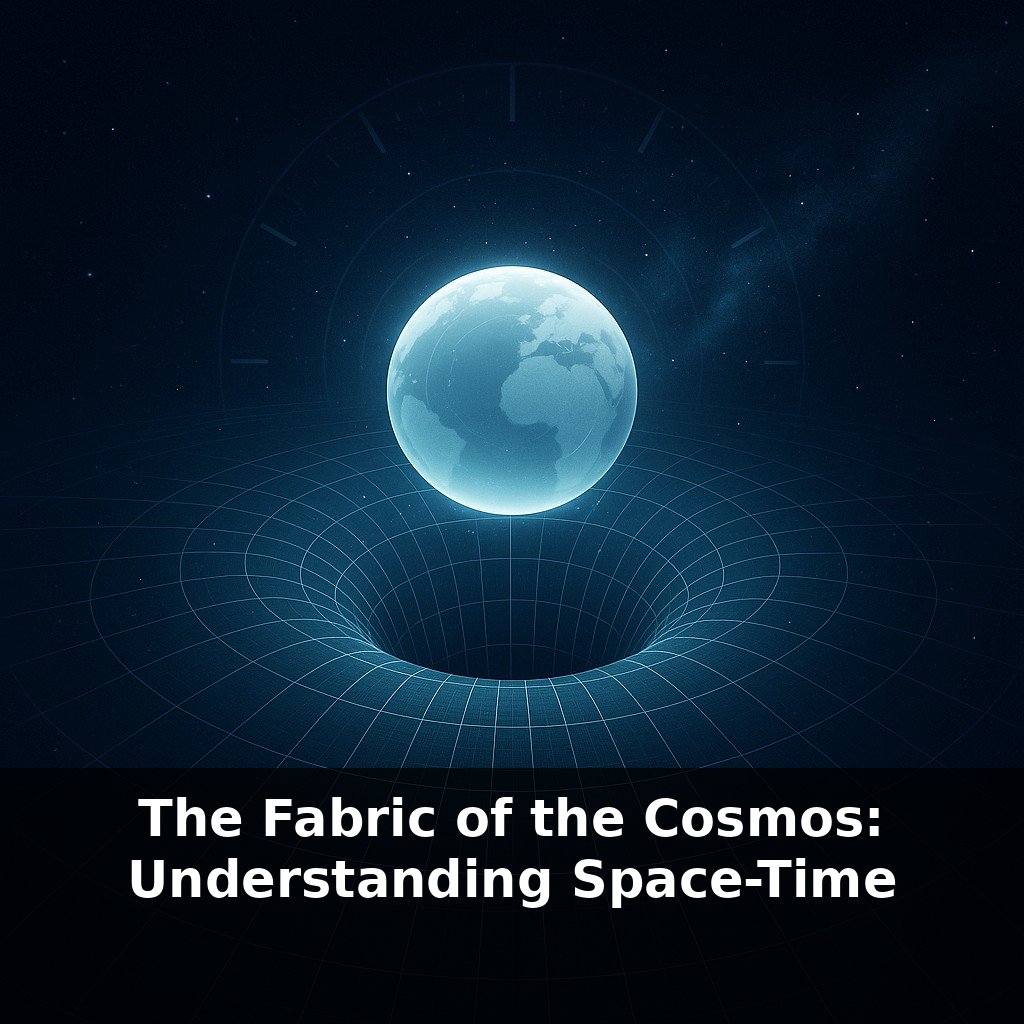
Einstein’s twist was to stop asking, “What time is it really?” and instead ask, “What do clocks actually *do* when we move them or lift them in a gravitational field?” That sounds almost trivial—until you notice that nature answers with math, not opinion. The equations of special relativity say that once you treat the speed of light as a non‑negotiable constant, every ruler and clock in motion must quietly adjust their behavior so that light’s number never budges. General relativity extends that logic to gravity, describing how mass and energy reshuffle the very bookkeeping of “where” and “when.”
This is why experiments don’t just compare one clock to another; they compare *paths through space‑time*. Fly an atomic clock around the world on a jet and bring it home, and its reading disagrees with its stay‑at‑home twin in a way that matches the integrals in Einstein’s equations, down to billionths of a second. Put ultraprecise clocks on different floors of the same lab and you can see height in Earth’s gravitational field register as a measurable offset in elapsed time. These aren’t glitches to be calibrated away; they’re the raw data of how the universe keeps score.
To tame that strange bookkeeping, physicists talk less about separate “space” and “time” and more about *events*—a collision in a particle detector, a photon hitting a sensor, a neuron firing. Relativity doesn’t say “anything goes”; it says that while different observers can slice the story into space and time differently, they must all agree on certain invariants: the spacetime interval between events, the causal order when one event can influence another. No clever motion can make a cause happen after its effect if a light signal—or anything slower—could connect them.
One way to picture this is like a version‑controlled codebase: different developers (observers) can branch, reorder, or reformat files (space and time splits), but they can’t change which commits depend on which. Causality is the dependency graph you’re never allowed to break.
Your challenge this week: treat every timestamp you encounter as an *event in space‑time* rather than a universal “now.” When you see a message arrive, a train schedule, or a live stream, pause and ask: which motion, which gravitational environment, and which path through the world had to line up so that this particular ordering of events made sense from *my* vantage point?
Think about how a global video call actually “happens.” Your coworker in Tokyo laughs at a joke you made “a moment ago,” but on the server logs that laugh might be stamped *before* your punchline, thanks to buffering and routing. Engineers don’t panic; they reconcile all those local event streams into a consistent story, much like relativity insists we do for the universe.
In particle colliders, protons smashing near light‑speed spray debris into detectors that record billions of such stories per second. Analysts reconstruct each collision as a tiny crime scene, drawing cones of what *could* have influenced what without breaking causal order. In astronomy, when multiple observatories catch a neutron‑star merger, each telescope’s “now” is folded into a shared timeline, letting us triangulate not just *where* it happened, but how space‑time rippled as the signal crossed the cosmos.
Time and space turning elastic doesn’t just tweak our maps; it reshapes what “planning ahead” means. Interstellar probes, for example, must treat navigation less like drawing a straight line on a map and more like plotting a route through shifting traffic patterns. As clocks get sharper, we may spot tiny mismatches—like rounding errors in a spreadsheet—that hint our current theory is only an approximation of a deeper, perhaps quantum, architecture of reality.
As our instruments sharpen, “time” starts to look less like a single ticking hand and more like a city skyline of slightly misaligned clocks. Future networks, vehicles, even augmented‑reality glasses may quietly negotiate these mismatches, like musicians tuning mid‑song, so that your personal timeline keeps flowing as one continuous melody.
Here’s your challenge this week: Pick one recurring activity (like your commute, workout, or dishwashing) and deliberately “stretch” and “shrink” your experience of time with two experiments. For the first two days, do that activity while single-tasking and narrating what you notice in real time (sensations, surroundings, thoughts) to see how much richer and “longer” it feels. For the next two days, do the same activity while intentionally fragmenting your attention—switch between your phone, music, and another task every 60 seconds—and compare how “short” and blurry that time block feels. On the last day, decide which version of that time you want more of in your life and lock in one concrete change (for example, “No phone on my commute” or “Music only, no scrolling, during my run”) that you’ll keep for the next week.