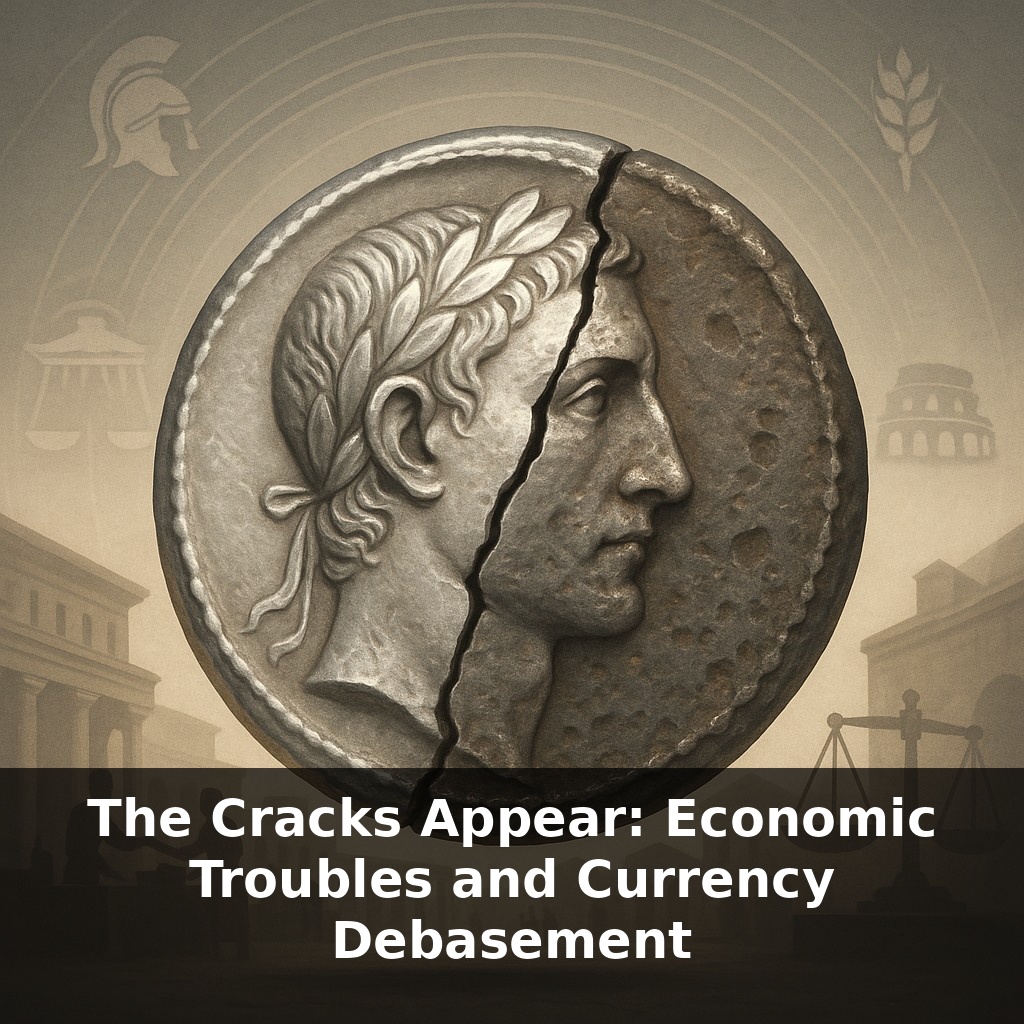
Roman coins once held almost pure silver—by the crisis of the third century, they were mostly scrap metal with a shiny face. A soldier in the frontier market, a baker in Rome, a tax collector in Egypt—all felt the same shock when prices jumped faster than pay.
In the background of this everyday chaos stood a simple, brutal math problem: the empire’s promises cost more than its income. Legions had to be paid, forts repaired, grain shipped, games funded, annuities and handouts maintained. But the easy revenue of conquest had dried up; new provinces were scarce, rebellions and invasions were expensive, and old tax systems leaked like a cracked cistern. Emperors faced a choice that never felt like a choice at all: cut payments to soldiers and risk mutiny, squeeze taxpayers harder and risk revolt, or quietly stretch each coin further. So they turned to the mint, over and over, as if it were a broken thermostat they kept cranking up, hoping the house would somehow warm without burning the fuel they no longer had.
But stretching the money supply had side effects no decree could hide. As silver quietly drained from coins, trust drained from daily transactions. Shopkeepers began weighing currency instead of counting it; caravans raised prices mid-journey to cover the risk that their earnings would melt in value before they got home. The state responded with tighter rules, harsher penalties, and elaborate price lists, trying to pin numbers to a moving target. Meanwhile, more taxes were demanded in grain, oil, and cloth, dragging farmers and landowners into a web of obligations that felt less like commerce and more like a long, inescapable tab.
The key to understanding this slow-motion breakdown is to follow who gained and who lost each time the state clipped a little more silver out of its money.
Start with the people holding power. When an emperor ordered a fresh issue of lighter coins, the first hands to touch them were usually the mints, the army, and court suppliers. They were paid at “official” values, before the wider public had fully adjusted prices. For a brief window, this inner circle could buy goods at yesterday’s prices with tomorrow’s weaker money. By the time the coins reached provincial towns, markets had caught on, and the gains at the top had turned into losses further down the chain.
Provincial taxpayers found the math especially cruel. Assessments were often recorded in older, more valuable units, while payment was taken in newer, weaker ones. Local officials could demand more coins to “make up” the difference, skimming the confusion. The result was a quiet transfer of wealth from smallholders and town councils to imperial agents and military commands. Over decades, that hollowed out municipal finances: city councils, once proud sponsors of baths, theaters, and roads, struggled just to meet imperial quotas.
Debasement also reshaped the army’s role. Soldiers demanded frequent “donatives” to recognize new emperors, and those bonuses were increasingly paid in bad money. Generals who controlled a loyal, recently paid force suddenly held a kind of printing press by proxy: they could make or break emperors who failed to keep the stream of coin and supplies flowing. Political instability wasn’t just about ambition; it was lubricated by a fiscal system that rewarded whoever could promise the biggest, quickest payouts.
As everyday dealings shifted toward in-kind payments, the state’s books changed character too. Ledgers that once tracked sums of money became lists of obligations: so many modii of grain, so many tunics, so many carts and animals. Over time, these obligations clung to the land itself. If you inherited an estate, you inherited its tax burdens and delivery quotas. That logic—tying people to plots to guarantee the state’s take—would echo in the later arrangements we call “feudal,” where status and duty were measured less in coins than in fixed services owed up the chain.
Merchants reacted first, adjusting contracts the way modern businesses rewrite subscriptions when a platform quietly changes its terms. A cloth dealer in Antioch might quote one price for delivery next week, and a sharply higher one for delivery after harvest, baking expected coin-loss into the deal. Long-distance traders began favoring bullion, foreign currency, or even branded ingots from trusted houses—anything with a reputation that outlasted a single emperor’s reign. Some cities quietly developed “shadow” exchange rates, where an official denarius and a “good” denarius no longer meant the same thing on market day.
Debasement also warped careers. Ambitious elites angled for posts near supply depots, mines, or transport hubs, knowing that control over flows of grain and cloth now mattered as much as governorships once had. Bureaucrats who could “translate” between book values, tax quotas, and real purchasing power became indispensable interpreters inside the system. Their calculations, favors, and quiet side-deals formed an invisible layer of policy beneath the laws Rome inscribed on stone.
As Rome learned, once people doubt official money, they start building backup systems. Today that might mean stablecoins, local currencies, or loyalty points that act like private scrip. Power shifts toward whoever controls these new “rails” for value, just as late Roman insiders clustered around supply routes. The deeper risk isn’t any single crisis, but a slow, quiet drift: citizens treating the state’s money as one option among many, not the default glue of the economy.
In the end, Rome’s problem wasn’t just bad coins; it was a shrinking menu of choices. As options narrowed, each “fix” locked in new distortions—like patching a leaky roof so often that the whole frame warps. Watching modern states juggle debt, demographics, and defense, the real lesson is less prophecy than pattern-recognition: which trade-offs are quietly becoming permanent?
Try this experiment: over the next 30 days, track every dollar you receive and spend in two columns: “fiat bucket” (checking account, cash, credit) and “hard/sound bucket” (gold/silver, Bitcoin, T-bills, money market, etc.). At the end of each week, calculate what percentage of your net worth sits in assets that can be easily printed or devalued versus those that can’t, and write down the exact percentages. Then, pick one recurring expense (like streaming, subscriptions, or dining out) and deliberately redirect just that amount this month from the “fiat bucket” into a “hard/sound” asset you’ve researched from the episode. After 30 days, compare how you feel about each bucket—especially your sense of vulnerability to debasement—and decide whether to keep, increase, or reverse that shift.