Invest Smarter — Apple’s IPO Reveals Narrative Power
📝 Transcript
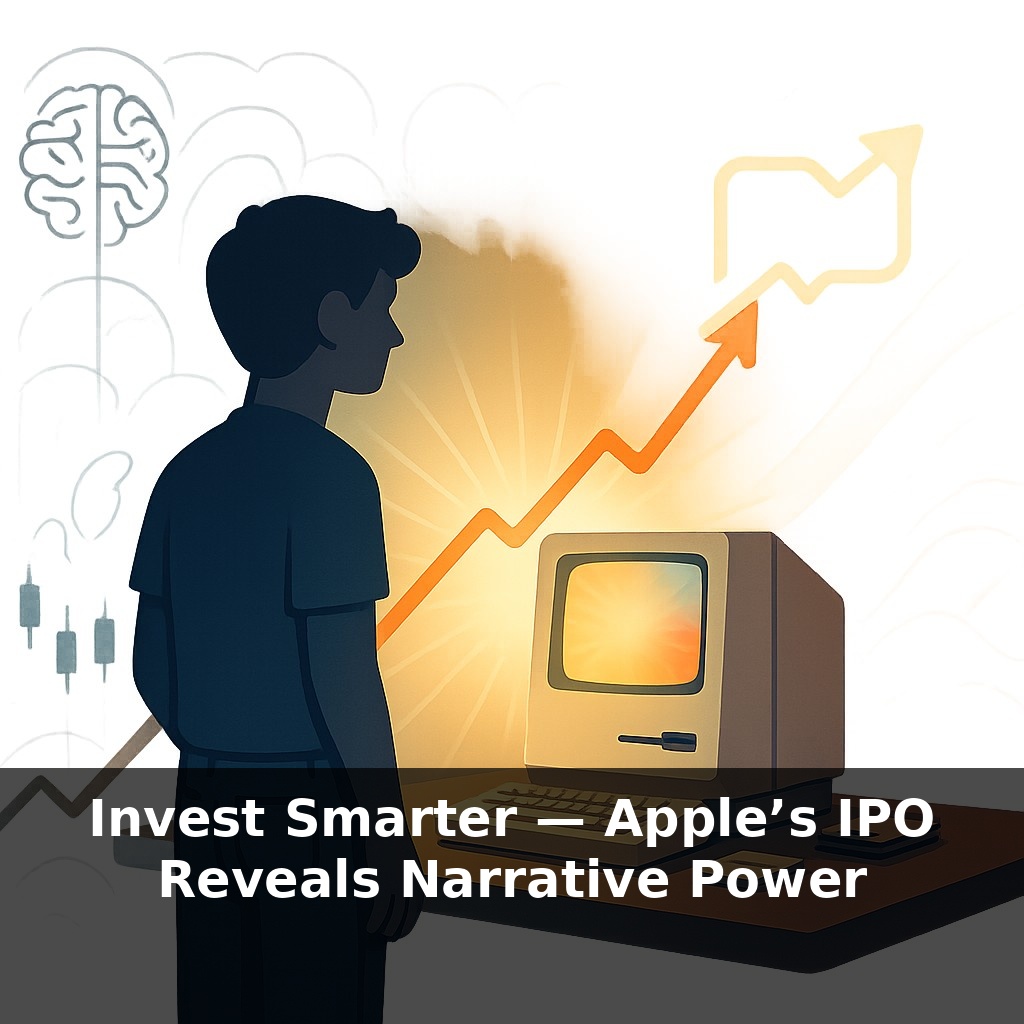
In December 1980, the stock market buzzed as Apple Inc., a then-small tech firm, made headlines by creating overnight millionaires. The twist is this: the real fuel wasn’t the circuit boards—it was the story told about the founders, the future, and who might be left behind.
The Apple IPO shows that markets don’t just price cash flows; they also price feelings, fears, and collective imagination. In 1980, investors weren’t only evaluating terminals and circuit boards—they were reacting to a cultural moment where “personal” technology was starting to seep into everyday life, like a new appliance quietly moving from hobbyist basements into family kitchens. Newspapers framed Apple not as a boring hardware maker, but as a ticket into that cultural shift. That framing mattered. Institutional buyers, who prided themselves on discipline, still had to explain why they *weren’t* in a deal everyone was talking about. Retail investors, seeing headlines and neighbors lining up for shares, felt a mix of FOMO and optimism that spreadsheets alone couldn’t capture. The lesson: sentiment can compress years of expected growth into one fevered morning.
Analysts at the time still published chunky reports: addressable market estimates, unit forecasts, margin assumptions. But around those numbers, a second layer formed—magazine covers, TV segments, gossip on trading desks. That second layer worked like weather: a high-pressure system of optimism pushed expectations higher and compressed doubts into the background. Some funds stretched their mandates to participate; others quietly flipped shares within days, treating hype as a liquidity event. Both groups were reacting not only to models, but to how quickly those models might *change* if the story kept spreading.
Numbers still anchored the deal: Apple’s revenue curve, margins on each machine, and growth in units shipped. But notice where those numbers sat in the pitch. Bankers didn’t lead with spreadsheets; they led with scenes—lines outside computer stores, kids poking at BASIC prompts, teachers running programs in classrooms. The data appeared as supporting evidence for a narrative arc that said: this isn’t a gadget company, it’s an on-ramp to a new normal.
Behind the scenes, underwriters carefully staged the offering. They chose a price range that left “room on the table,” ensuring a strong first-day pop that would generate headlines and validate the buzz. They allocated shares so that a visible mix of institutions and individuals would own the stock, reinforcing the idea that this was a broad cultural bet, not a niche trade. Demand projections, coverage decisions, even which journalists got early access were part of a deliberate script.
Investors, for their part, weren’t passive. Fund managers asked a different kind of question in the roadshow meetings: not just “What’s next year’s earnings?” but “How big could this market be *if* you’re right about behavior change?” They were testing the elasticity of the story. Could computers plausibly move from hobbyist corners into schools, offices, then homes at scale? If that felt believable, they were willing to stretch valuation assumptions far beyond what current sales justified.
This is where narrative power becomes concrete. A single tweak in the story—say, assuming every white-collar worker might eventually use a personal computer—could add billions to implied future value. The model cells in analysts’ workbooks didn’t change because of new historical data; they changed because someone broadened the imagined audience.
Buying into an IPO is like being served a new dish at a packed restaurant: the chef’s back-story and the buzz in the room can make diners more eager to taste it, but the flavor still determines whether they’ll come back for a second helping. In Apple’s case, early financial performance kept validating the story, which in turn attracted more believers, creating a feedback loop between narrative, numbers, and demand.
Crucially, that loop can run in reverse. Once growth stumbles, yesterday’s triumphant storyline can be reread as overconfidence. The same investors who stretched their models upward can compress them just as quickly, and the crowd that once feared missing out can fear looking foolish.
Consider how the same narrative dynamics show up outside 1980s tech. When Google went public in 2004, the auction structure grabbed attention, but a quieter narrative carried weight: a “don’t be evil” research outfit turning its search box into an essential utility. Investors weren’t just buying ad clicks; they were latching onto the idea that the internet’s front door would keep compounding in value.
Or think of Tesla’s 2010 IPO. The financials were fragile, yet the story blended climate urgency, sleek design, and a charismatic founder into a vision of roads humming with electric cars. That framing made it easier for investors to accept a long runway of losses in exchange for possible category dominance.
You can also see the flip side. WeWork’s aborted IPO showed what happens when a sprawling, feel-good narrative (“elevating the world’s consciousness”) collides with detailed disclosures. Once the S-1 forced investors to translate vibes into line items, the spell broke and the story deflated faster than the numbers changed.
Narratives could soon be charted like weather maps: shifting fronts of optimism, skepticism, or boredom sweeping across sectors. That opens space for new tools that scan podcasts, earnings calls, even fan forums to spot turning points before prices react. Your edge won’t be louder conviction, but calmer curiosity: asking where a story is gaining heat, where it’s cooling, and whether the cash flows can survive a climate change in sentiment.
Your challenge this week: each time you read about a hot stock or IPO, pause before checking the numbers and underline every loaded phrase: “revolutionary,” “inevitable,” “category-defining.” Then, like a food critic, taste-test the claims—match each dramatic word to a specific, testable assumption about users, pricing, or profits.

Unlock all episodes
Full access to 10 episodes and everything on OwlUp.
Subscribe — $1.99/monthLess than a coffee ☕ · Cancel anytime