Right now, as you listen, your body is quietly deciding how long you get to stay on this planet—and it’s using your last week of movement as its data. One person walks ten brisk minutes a day, another does nothing. Decades later, their futures look shockingly different.
Here’s the twist: the “right” amount of exercise for longevity is nowhere near what elite athletes do—and it’s far less than most people think. The science keeps pointing to a sweet spot where effort, time, and payoff line up unusually well. Not the all-or-nothing grind of training for a marathon, and not the guilt-soaked plan you abandon by Wednesday, but a kind of movement “budget” you can actually stick to for decades.
You don’t need a perfect routine; you need a consistent one built from a few key ingredients. Think of your week like planning a simple, reliable playlist: some tracks are steady and calm, some are intense and short, others keep you balanced so the whole thing flows. In the next few minutes, we’ll define what those “tracks” are, how much of each you really need, and where the biggest health returns actually come from.
That “playlist” of movement has four main genres: aerobic work that keeps your heart and lungs reliable, strength work that protects muscle and bone, balance work that keeps you off the floor, and flexibility work that lets joints move without complaint. Most people only ever play the first track—some walking, maybe occasional cycling—and wonder why progress stalls or nagging aches show up. The data say the magic isn’t in doing more of one thing, it’s in covering the bases. Think of it like planning a week of meals: you wouldn’t live on just protein or just salad and call it “healthy.”
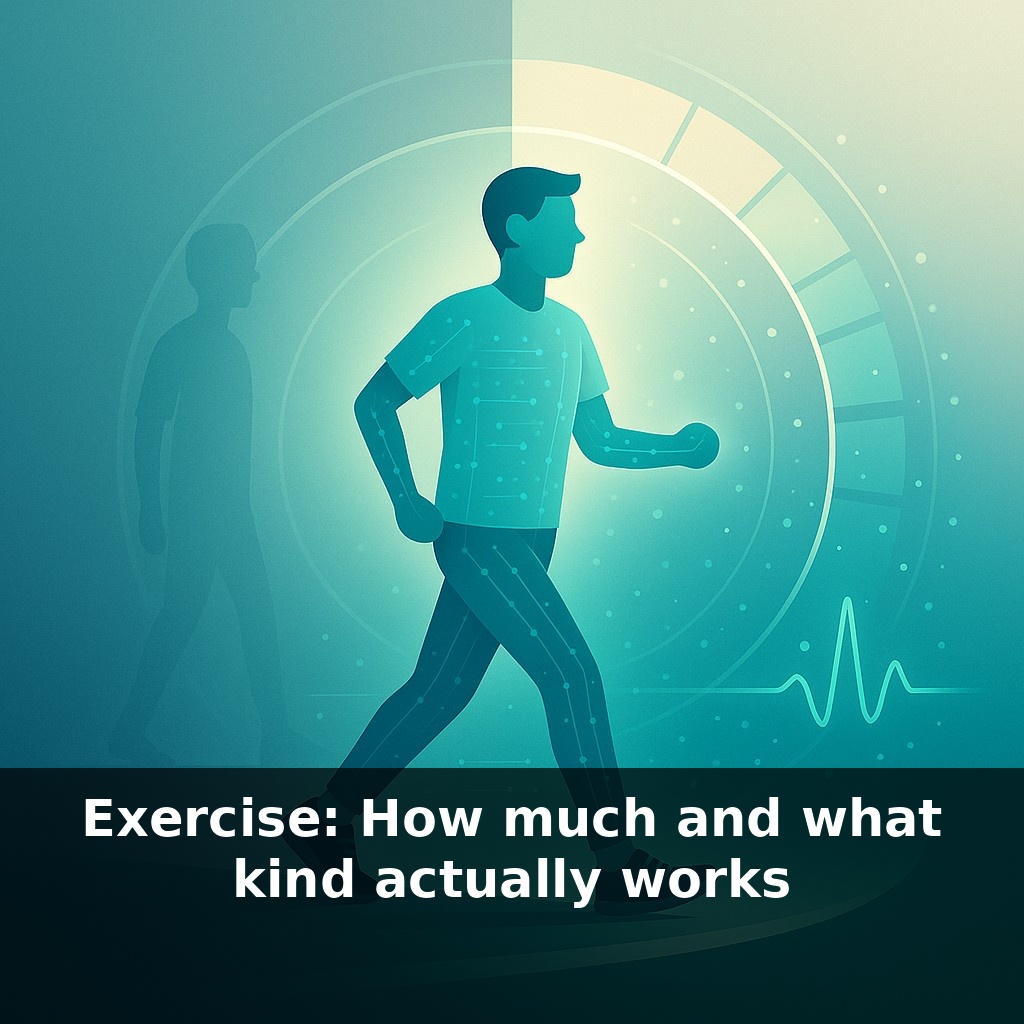
Here’s where the numbers actually help instead of overwhelm. When researchers track hundreds of thousands of people for years, a clear shape emerges. The first jump—from doing almost nothing to doing a little—is enormous. Going from zero to about 60–75 minutes of brisk movement per week (roughly 10 minutes a day) slashes risk of early death far more than upgrading from “pretty active” to “gym hero.” That small, regular rhythm changes blood pressure, insulin sensitivity, and inflammation in ways lab tests can see within weeks.
Push up toward that 150–300 minute range and the curve rises steeply, then gradually flattens. More still helps, but each extra block of time buys you a bit less. Past that, even quite dedicated exercisers keep seeing benefits without obvious harm—unless they’re deep into extreme territory, stacking several hours of intense work almost every day. The issue there isn’t “too healthy,” it’s wear and tear: overuse injuries, stress fractures, arrhythmias in a vulnerable few.
Intensity is where people get confused. “Moderate” doesn’t mean gasping; it usually means you can talk but not sing. Brisk walking, easy cycling, mowing the lawn with purpose—those all count. “Vigorous” is the zone where sentences get choppy. You can trade time for intensity here: roughly half the minutes at higher effort can match the benefits of longer, easier sessions. High-intensity intervals are just a structured way to do that trade, and they’re potent for cardiorespiratory fitness, but they’re optional, not mandatory.
On top of this, adding even modest strength work twice a week shifts the picture again. Muscle is not just for lifting heavier things—it acts like a metabolic organ, soaking up glucose, stabilizing joints, and protecting bones. In older adults, keeping it means the difference between walking across a room independently and needing help.
The quieter pieces—flexibility and balance—often show their value only when they’re missing. A hip that won’t move well changes how you walk; a wobble you can’t control makes every staircase a calculation. Slow, deliberate practices shine here, and their payoff is usually measured in falls that never happen, surgeries never needed, and years of independent living you don’t have to negotiate.
Think of this like planning a short trip instead of moving to a new country. You don’t overhaul your life; you pick a destination, book a few key stops, and let the details stay flexible.
One “it actually fits in my life” template might look like this: two commutes or errands per week done on foot or bike at a slightly pushy pace; one short session where you alternate 30 seconds faster, 60–90 seconds easier for 10–15 minutes; two brief strength “circuits” using bodyweight or dumbbells; and a couple of evenings where you spend 5–10 minutes stretching whatever felt tight that day. That’s not a training plan, that’s just re-allocating time you already spend moving—or sitting.
Another angle: link each type of movement to something you care about. Aerobic for “playing with kids or grandkids without checking your watch.” Strength for “lifting your own suitcase overhead at 75.” Flexibility for “being able to get up off the floor without thinking about it.” Now you’re not chasing workouts; you’re rehearsing the future you actually want.
Longevity science is quietly rewriting city maps and daily schedules. Expect “movement defaults” to replace “workout guilt”: stairs that are slightly more appealing than elevators, sidewalks shaded and cooled, office buildings where short bouts of effort are woven between meetings. AI coaches may soon tune intensity like a sound engineer balancing a mix, nudging you when stress, sleep, and recovery fall out of harmony—so the right kind of effort feels obvious, not heroic.
Longevity isn’t won in a single epic workout; it’s shaped by the next tiny choice: stairs or elevator, couch or quick walk, scrolling or a 5‑minute stretch. Treat each day like tuning an instrument—slight adjustments, repeated often, create harmony over time. Your challenge this week: pick one dial—endurance, strength, or balance—and nudge it up, every day, on purpose.